Atlanta Humidity Home Dehumidifier: Do You Actually Need One?
Short answer: maybe, but a dehumidifier is rarely the first fix. In most Atlanta homes the real culprits are an oversized or dirty air conditioner, a damp crawl space, a clogged drain line or a leaky duct system. Check those first, then decide whether an Atlanta humidity home dehumidifier is worth adding.
If your windows sweat in July, your hardwoods cup, or the closet smells like a wet towel, you are dealing with moisture, not just heat. An Atlanta humidity home dehumidifier can solve part of that problem, but only when the source of the moisture is understood. Buying a unit to fight a crawl space that breathes in outdoor air is like mopping while the tap is still running.
This guide is written for Atlanta homeowners. It explains what indoor humidity should be, why our climate works against you, how crawl spaces and AC sizing change the picture, and when a whole-house dehumidifier makes sense. It also shows where to get official help from the City of Atlanta and federal agencies.
Why Atlanta Homes Hold So Much Moisture
Atlanta sits in IECC climate Zone 3A, which is classed as hot-humid. That means moisture management is part of everyday home care here, not a once-a-year problem. The National Weather Service in Peachtree City reported that Atlanta averaged 80.7°F in summer 2025, with an average low of 72.1°F. When nights stay that warm, the air stays loaded with water vapor and your house never gets a chance to dry out.
Three things make intown and metro homes especially vulnerable:
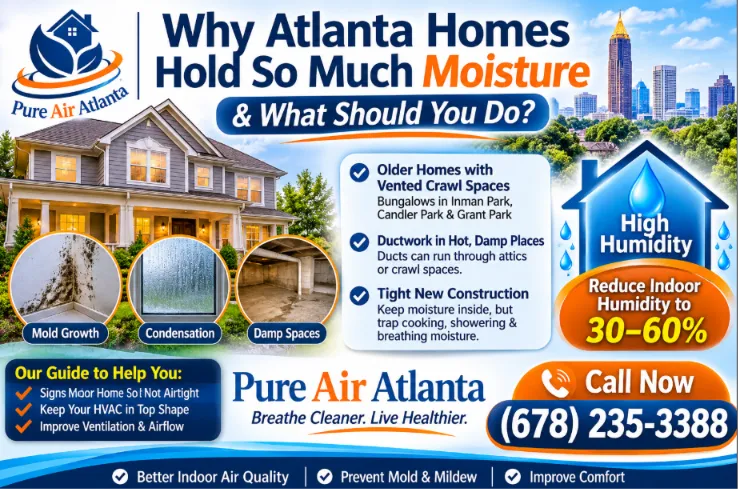
- Older houses with vented crawl spaces. Bungalows in Inman Park, Candler Park and Grant Park often sit over open, dirt-floor crawl spaces that pull in humid outdoor air all summer.
- Ductwork in hot, damp places. Ducts that run through attics or crawl spaces sweat when cold air meets warm, wet air, and any leak pulls that moisture into your system.
- Tight new construction. Modern townhomes and condos in places like Old Fourth Ward and Midtown keep outdoor air out, but they also trap cooking, showering and breathing moisture inside. Our guide to signs your home is too airtight explains how to spot this.
You can browse HVAC services by neighborhood in Atlanta to see how we serve each part of the city.
What Should Indoor Humidity Be in an Atlanta Home?
Aim for 30% to 50% relative humidity. ENERGY STAR calls that range optimal for a building and notes that levels above it may promote mold growth. The EPA gives a slightly wider window and says to reduce indoor humidity to 30–60% to decrease mold growth. For comfort and a safety margin, treat 50% as your summer ceiling.
| Indoor humidity (RH) | What it usually means in Atlanta | What to do |
|---|---|---|
| 30–50% | Comfortable, low mold risk | Keep doing what you are doing |
| 50–60% | Acceptable, but the margin is thin in July and August | Check AC runtime, drain line and filter |
| 60–70% | Musty smells, sticky air, mold can begin on cool surfaces | Find the moisture source and add dehumidification |
| Above 70% | Active mold, rot and pest risk, often in a crawl space | Call a professional for an inspection |
A digital hygrometer costs very little and is the single best tool for this job. Place one in the main living area and another in your crawl space, attic or basement if you have one. Check them for a full week before you spend money on equipment.
Signs Humidity Is Winning in Your House
- A musty smell when the AC starts, which is covered in detail in our post on why your AC vents smell musty
- Condensation on windows, mirrors or cold-water pipes in summer
- Peeling paint, warped floors or doors that stick every summer
- Visible spotting near vents, which may point to mold in air ducts in Atlanta homes (see also how to tell black mold in air ducts from harmless dust)
- Allergy or asthma symptoms that get worse indoors, a topic we cover in air duct cleaning for allergy and asthma
- High electric bills with no change in your habits
Already seeing mold in or around your HVAC? Do not wait for a dehumidifier to fix it. Our mold in HVAC system service removes the growth and addresses the moisture that caused it.
Crawl Space Moisture: The Hidden Source in Many Atlanta Homes
Much of the moisture inside an older Atlanta house comes from below. Damp soil evaporates into the crawl space, and traditional foundation vents invite more humid air in during summer. Green Building Advisor, a respected building-science publication, is blunt about it: in humid climates, venting a crawl space to the outdoors is the worst option, because outside air often carries more moisture than the air it replaces.
Encapsulation plus drying
For humid climates, the same source advises sealing the crawl space and then drying the air inside. A dedicated crawl space dehumidifier responds to conditions below the floor instead of the rooms above, which is why many building scientists prefer it. The trade-offs are equipment cost, upkeep, and the risk of water damage if the drain line fails, so a proper condensate setup matters.
Do not forget the ducts
If your air handler or ducts live in the crawl space, leaks pull damp air straight into the supply side and cold ducts can sweat. Professional duct sealing helps keep that moisture out of your system. Our post on mold in air ducts after water damage shows what happens when it is ignored.
Flooding and drainage are a different problem
Standing water is not a humidity issue and a dehumidifier will not fix it. If your lot collects runoff, start with the City of Atlanta Department of Watershed Management, whose floodplain management page explains how to check whether a property sits in a flood zone, plus flood preparation and recovery steps.
Not Sure Where the Moisture Is Coming From?
Our Atlanta technicians check your AC, drain line, ducts and ventilation, and tell you honestly what is worth fixing.
How an Oversized AC Makes Atlanta Humidity Worse
Your air conditioner removes moisture only while it runs. An oversized system cools the air quickly, satisfies the thermostat and shuts off before it has pulled much water out of the air. The result is a house that feels cold and clammy at the same time. A U.S. Department of Energy fact sheet confirms that short-cycling of air conditioning equipment can lead to poor humidity control, and that correct sizing matters most in humid climates. The same document cites a Florida study in which units oversized by 50% or more used about 9% more cooling electricity annually and drove about 13% higher summer peak demand.
What proper AC sizing looks like
- Sizing should come from a load calculation of your actual house, not from the old unit’s tonnage or a square-foot rule of thumb.
- Variable-speed equipment and well-matched blowers run longer at lower speeds, which improves moisture removal.
- If you are replacing equipment, ask for the load calculation in writing. Our AC replacement service starts with the right size, not the biggest size.
- For a room or addition that never stays comfortable, a right-sized ductless system can be better than pushing a big central unit harder. Our comparison of mini split vs window AC in an old Atlanta house goes through the options.
Why your AC keeps freezing in humid weather
A frozen evaporator coil is a common summer complaint, and it often appears alongside humidity problems. The usual causes are restricted airflow from a dirty filter or dirty coil, low refrigerant, or a failing blower. Start by replacing the filter and turning the system off so the ice can melt. If it freezes again, read our guide to signs your AC is low on freon, or book AC repair in Atlanta. A clogged condensate line can also trigger shutdowns and leaks, which is why many homeowners schedule AC drain line cleaning before summer.
Whole-House Dehumidifier vs Portable Unit
Once the sources are under control, a dehumidifier handles whatever moisture remains. ENERGY STAR says whole-home units use your existing ducts, are typically permanent, and suit humid climates with central air conditioning. It adds that they work best in relatively well-sealed homes where humidity consistently exceeds 55%, and that you should hire an HVAC professional to size and install them.
| Option | Best for | Watch out for |
|---|---|---|
| Whole-house dehumidifier | Sealed homes with central air and humidity that stays above 55% | Needs ductwork, drain and professional sizing |
| Crawl space dehumidifier | Encapsulated crawl spaces and damp lower levels | Failed drain lines, maintenance, unsealed vents |
| Portable dehumidifier | One damp room, a basement corner or a short-term fix | Daily emptying, noise, limited coverage |
| Right-sized AC with good airflow | Most homes as a first step | Will not solve crawl space moisture alone |
How to size a portable dehumidifier
ENERGY STAR sizes capacity in pints removed per day. For a room under 2,000 square feet, it suggests 20–30 pints for slightly to moderately damp space (50–75% RH), 25–40 pints for very damp space (75–90% RH) and 30–50 pints for wet space. Above 2,000 square feet, expect 30+, 40+ and 50+ pints respectively. ENERGY STAR certified models also use about 20% less energy than similarly sized conventional units, and it says oversizing is better than undersizing.
Tip: keep your thermostat fan on Auto, not On. A fan that runs continuously can blow moisture from a wet coil back into the house between cooling cycles.
The Smart Order of Operations
Follow these steps in order and you will often fix the problem before you need to buy anything large.
- Measure. Track humidity for a week with a hygrometer in the living area and the crawl space.
- Vent moisture outside. Run bathroom and kitchen fans, and keep your dryer venting outdoors. A clogged vent traps moisture, so consider dryer vent cleaning in Atlanta.
- Service the AC. Replace filters, clean the coil and flush the drain line through air conditioning cleaning.
- Seal and clean the ducts. Leaky or dirty ducts spread moisture and mold. Air duct cleaning and sealing go hand in hand.
- Fix the crawl space. Close vents, add a vapor barrier or full encapsulation, and dry the air.
- Ventilate tight homes correctly. If your house is airtight, an ERV installation brings in fresh air without dumping humidity inside. Read do I need an ERV in Atlanta and ERV vs HRV for humid climates to compare.
- Add dehumidification. If readings stay above 55% to 60% after steps one to six, a whole-house or crawl space unit makes sense.
- Clean the air you breathe. Damp homes breed spores and dust mites, so pair humidity control with whole-home air purification.
For a broader look at how maintenance affects what you breathe, see how HVAC cleaning improves indoor air quality in Atlanta and our overview of indoor air solutions in Atlanta for mold.
Permits and Official Resources in Atlanta
Before major HVAC or crawl space work inside city limits, check what applies to your project. The City of Atlanta runs an online technical permit application that covers electrical, certain plumbing and reinspection permits for HVAC, and it lists (404) 865-8550 for HVAC questions. Homeowners near creeks or low ground can review flood information on the City of Atlanta floodplain management page. For mold and humidity basics, the EPA’s ten things you should know about mold is a clear starting point, and ENERGY STAR’s dehumidifier buying guide covers efficiency and sizing.
Equipment and labor costs vary with the home, so we do not guess at numbers here. You can start with our Pure Air Atlanta pricing page, and you can read how we work on our about Pure Air Atlanta page.
How Pure Air Atlanta Helps With Humidity Problems
We look at the whole system, not just one gadget. A visit can include checking AC performance and drain lines, inspecting and cleaning ducts, looking for mold in the HVAC system, and advising on ventilation and air purification. If a dehumidifier is the right answer for your house, we will say so, and if it is not, we will tell you that too. When you are ready, our team can schedule an HVAC visit in Atlanta, and you can find quick answers on our HVAC service FAQ page.
Take Control of Humidity Before Next Summer
Get an honest look at your AC, ducts and moisture sources from a local Atlanta team.
Frequently Asked Questions About Humidity in Atlanta Homes
What humidity level should a house in Atlanta have?
Aim for 30% to 50% relative humidity, which ENERGY STAR describes as optimal. The EPA says keeping indoor humidity between 30% and 60% helps reduce mold growth. In Atlanta summers, treat 50% as the target ceiling and act if your hygrometer stays above 60%.
Do I need a whole-house dehumidifier in Atlanta?
Not always. ENERGY STAR says whole-home units work best in relatively well-sealed homes with central air where humidity consistently stays above 55%. If your humidity problem comes from an oversized AC, a leaky duct system or a vented crawl space, fix those first and then re-measure.
Can an oversized air conditioner cause humidity problems?
Yes. An oversized AC cools the air quickly and shuts off before it removes much moisture, which the U.S. Department of Energy calls short-cycling and links to poor humidity control. A proper load calculation is the best prevention.
Should I put a dehumidifier in my crawl space?
In humid climates, building scientists generally recommend sealing the crawl space and then drying the air, and a dehumidifier is a common way to do that. Make sure the drain line is reliable, because a failed drain can cause water damage. A hygrometer in the crawl space tells you whether it is working.
Why does my AC keep freezing up in humid weather?
The usual causes are restricted airflow from a dirty filter or coil, low refrigerant or a failing blower. Turn the system off to let the ice melt, replace the filter and call a technician if it freezes again.
Can humidity make allergies and asthma worse?
High humidity encourages mold and dust mites, which are common indoor triggers. Keeping humidity in the 30% to 50% range and keeping your ducts and filters clean can help reduce them.

HVAC Service Area — ZIP Code Directory
92 ZIP codes served · Tap any ZIP to call +1 (678) 235-3388 · pureairatlanta.com