

Signs Dryer Vent Clogged: Why Atlanta Homeowners Should Check Now
If you are looking up the signs dryer vent clogged homes show before something goes wrong, you are already ahead of most people. A dryer pushes hot, moist air and fine lint out of your house through a duct most families never look at. When that duct narrows with lint, the dryer works harder, laundry takes longer, and heat has nowhere to go.
In Atlanta, where summer humidity is heavy and many homes route dryer vents through long runs, crawlspaces, or finished walls, a restricted vent can go unnoticed for years. This guide covers ten warning signs, a five-minute test you can do yourself, what usually causes the blockage, and the point where it is time to book dryer vent cleaning in Atlanta.
If a normal load needs two cycles, the laundry room feels hot, or you smell something burning, treat the vent as clogged until an inspection proves otherwise. A burning smell means stop using the dryer right away.
Source: U.S. Fire Administration, Clothes Dryer Fires in Residential Buildings (2008-2010), as reported by Fire Engineering.
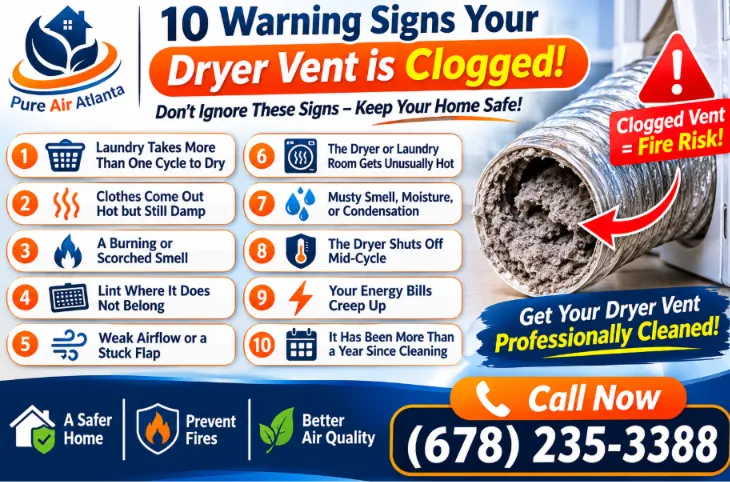
How to Spot a Clogged Dryer Vent: 10 Warning Signs
No single symptom proves a blockage, but these signs tend to show up together. The first three are the ones most Atlanta homeowners notice first.
1. Laundry Takes More Than One Cycle to Dry
This is the classic symptom. Moist air cannot leave the drum fast enough, so the sensor keeps the cycle running and the load never fully dries. If a dryer that used to finish in one cycle now needs two, check the vent before you pay for a repair technician or shop for a new machine.
2. Clothes Come Out Hot but Still Damp
Heat builds up, but the moisture stays trapped. Towels and jeans that feel scorching yet damp usually mean air is not moving through the duct the way it should.
3. A Burning or Scorched Smell
Lint that collects near the heating element or inside an overheated duct can smell like burning dust or hot plastic. Stop the dryer, unplug it, and do not restart it until the vent has been inspected. If you see smoke or flames, leave the house and call 911.
4. Lint Where It Does Not Belong
Lint around the door seal, on the floor behind the machine, or packed into the lint screen slot means air is being forced backward. Lint stuck to the outside vent hood or the siding below it tells the same story from the other end.
5. Weak Airflow or a Stuck Flap at the Outside Vent
With the dryer running, the exterior flap should open fully and push out a steady stream of warm air. A flap that barely moves, or air that you can hardly feel, points to a restriction somewhere in the run.
6. The Dryer or the Laundry Room Gets Unusually Hot
If the top of the dryer is hot to the touch or the laundry room feels like a sauna during a cycle, heat is leaking back into the room instead of leaving the house. In an Atlanta summer, that also makes your air conditioner work harder.
7. Musty Smell, Moisture, or Condensation Near the Dryer
Humid air that cannot exit settles on walls, windows, and laundry. A musty odor on clean clothes or mildew near the laundry closet is a sign that moisture is stuck. If the smell also reaches your supply registers, read our guide on the musty smell from AC vents to rule out a second problem.
8. The Dryer Shuts Off Mid-Cycle
Modern dryers have a thermal safety device that shuts off heat when temperatures climb too high. If your dryer stops mid-cycle or keeps tripping, that is a protection system doing its job. The cause is often a vent that cannot release heat.
9. Your Energy Bills Creep Up
Longer run times mean more electricity or gas for every load. A slow rise in your utility bill with no change in laundry habits is easy to miss, and it often disappears after a vent cleaning.
10. It Has Been More Than a Year Since the Last Cleaning
Many homeowners have never had the vent cleaned at all. If you bought or rented the home recently, consider the vent part of your move-in checklist, just like air duct cleaning before moving in.
Five-Minute Test: Is Your Dryer Vent Really Clogged?
You do not need tools to get a good first read. Work through these steps in order:
- Clean the lint screen and housing. Remove the lint screen, clear it by hand, and look into the lint slot for packed lint.
- Run the dryer empty on high heat. Start an empty cycle on a high-heat setting so the vent moves its full volume of air.
- Check airflow at the outside vent hood. Go outside and hold your hand at the vent hood. You should feel strong, warm airflow and see the flap open fully. Weak airflow or a flap that barely moves points to a restriction.
- Inspect the duct behind the dryer. Turn the dryer off, unplug it, and look at the connector duct for crushing, kinks, sagging, or loose joints. Do not move a gas dryer if you are unsure about the gas connection.
- Look for obstructions at the exterior hood. Check the hood for lint buildup, nesting material, or a damaged flap that keeps it from opening.
Keep in mind: strong airflow at the hood is encouraging, but it does not guarantee a clean duct. A partial blockage deep in a long run can still hide behind decent airflow. If your symptoms continue after this test passes, schedule an inspection.
What Causes Dryer Vents to Clog in Atlanta Homes?
Most blockages come from a handful of repeat offenders:
- Fine lint that passes the screen. Even a clean screen lets some fibers through, and they settle at bends and joints.
- Long runs and sharp turns. Building codes generally limit total vent length and count bends against it, because every elbow slows air and catches lint. Check your local code and your dryer manual for exact limits.
- Foil or vinyl accordion duct. Ribbed flexible duct traps lint in its folds and crushes easily behind the dryer. Smooth metal duct is the standard recommendation.
- Blocked exterior hoods. Birds, rodents, and wasps like warm, sheltered openings, and nesting material can block the flap completely.
- Heavy loads. Towels, bedding, and pet blankets shed far more lint than shirts and socks.
- Humidity. Moisture in Atlanta’s climate makes lint cling and mat together instead of blowing out.
- Roof or multi-story vent routes. The farther air has to travel, the more it depends on a smooth, clear duct.
Is a Clogged Dryer Vent a Fire Risk?
Yes, and it is one of the best-documented household fire causes. Lint is dry, fine, and flammable, and a restricted vent traps the heat that ignites it. In the U.S. Fire Administration data above, failure to clean was the leading cause of home clothes dryer fires.
Gas dryers add one more concern. If the vent is blocked, exhaust gases that should leave the house can back up into the living space. That is why it is worth installing working smoke and carbon monoxide alarms near the laundry area. For a deeper look at the hazard, see our post on dryer vent fire risk in Atlanta.
What to Do Right Now If You Notice These Signs
- Stop the dryer if you smell burning or see smoke. Unplug it and keep the area clear.
- Clean the lint screen and the housing by hand, then wipe lint off the outside hood.
- Run the five-minute test above and note how strong the airflow is.
- Avoid temporary fixes. Do not run a damaged or crushed duct, and do not tape over gaps with plastic or foil tape that is not rated for dryer venting.
- Book an inspection before small symptoms become a service call you did not plan for.
When to Call a Professional Dryer Vent Cleaner
Call a pro when the test shows weak airflow, when you cannot reach the full run, when the vent exits through the roof, or when symptoms return soon after you clear the lint screen. A professional cleaning typically includes clearing the duct with rotary brushes, inspecting joints and the exterior hood, and checking airflow once the work is done.
Wondering what it costs? Price depends on vent length and access, and our guide to dryer vent cleaning cost in Atlanta explains what changes the number. You can also review our pricing page or read about the technicians who handle your home before you book. If you are comparing local providers, see our dryer vent cleaning service near me page.
Think Your Dryer Vent Is Clogged?
Talk to a local Atlanta technician today. We will tell you honestly whether you need a cleaning.
How Often Should You Clean a Dryer Vent?
The common guideline is at least once a year. Your household can push that number up or down:
| Your Situation | Suggested Schedule |
|---|---|
| 1 to 2 people, light laundry | Once a year |
| Family of four or more, daily laundry | Every 6 to 12 months |
| Pets, heavy towels, or bedding loads | Every 6 months |
| Long run, many bends, or roof exit | Inspect yearly, clean as needed |
| Just moved in | Before the first load |
This is general guidance, so always follow your dryer manual too. If your ducts also need attention, combining both jobs saves time. Our team handles air duct and dryer vent cleaning in Atlanta in one visit, and our guide on how often to clean air ducts in Atlanta covers the other half of your airflow.
Atlanta Fire Safety Resources
Dryer care is only one part of home fire safety. The City of Atlanta offers resources worth bookmarking:
- The Atlanta Fire Rescue Department page explains the department’s divisions and community programs.
- The City’s Public Safety resources for Atlanta residents list the closest fire station finder, SMART 911 sign-up, and the Atlanta Smoke Alarm Program, which offers free smoke alarms to homes in the city. The City lists 404.546.2733 for that program.
For further reading on dryer fire statistics, see the NFPA clothes dryer fact sheet hosted by the U.S. Department of Energy.
Dryer Vent Cleaning Across Metro Atlanta
Pure Air Atlanta serves homes in the city and across the metro area. Choose your area for local service details:
- Dryer vent cleaning in Alpharetta
- Dryer vent cleaning in Roswell
- Dryer vent cleaning in Marietta
- Dryer vent cleaning in Smyrna
- Dryer vent cleaning in Douglasville
- Dryer vent cleaning in Lawrenceville
Planning a budget? Compare pricing for dryer vent cleaning cost in Alpharetta, Roswell, Smyrna, Douglasville, and Lawrenceville. In the city itself, we also cover Buckhead, Midtown, and Virginia-Highland. You can browse all HVAC services by neighborhood in Atlanta or see our full list of service locations.
Living outside the city? Fire-risk guidance is also available for dryer vent fire risk in Alpharetta, Douglasville, and Lawrenceville.
Frequently Asked Questions About Clogged Dryer Vents
How do I know if my dryer vent is clogged?
The most reliable clues are laundry that needs more than one cycle, clothes that come out hot but damp, a burning or musty smell, lint around the dryer or outside vent hood, and weak airflow at the exterior vent while the dryer runs. If you notice two or more of these, treat the vent as restricted and have it inspected.
Can a clogged dryer vent cause a fire?
Yes. Lint is fuel, and a restricted vent traps heat inside the dryer. The U.S. Fire Administration found that failure to clean was the leading cause of clothes dryer fires in homes, at 34 percent of cases in its 2008 to 2010 data.
How long should a normal load take to dry?
A normal load should finish in one standard cycle. If a load that used to dry in one cycle now needs two, the vent is the first thing to check, before you pay for a dryer repair or replacement.
How often should a dryer vent be cleaned?
At least once a year is the common guideline. Large households, homes with pets, heavy towel or bedding loads, and long or bent vent runs often need cleaning every six months. Always follow your dryer manufacturer’s instructions as well.
Can I clean my dryer vent myself?
You can and should clear the lint screen after every load and wipe lint from the housing and the outside hood. Cleaning the full duct run usually takes rotary brushes, extension rods, and access to the exterior or roof termination, which is why many Atlanta homeowners hire a professional.
Does emptying the lint screen prevent a clogged vent?
It helps, but it does not stop fine lint that slips past the screen from settling inside the duct. Over months, that lint builds up at bends, joints, and the exterior hood, so the vent still needs periodic cleaning.
How much does professional dryer vent cleaning cost in Atlanta?
Price depends on the length of the vent run, how easy it is to reach, and whether the vent exits through a wall or the roof. Our guide to dryer vent cleaning cost in Atlanta breaks down what affects the price, and you can call (678) 235-3388 for a quote.
Do Not Wait for the Dryer to Tell You Twice
A dryer that takes longer, runs hotter, or smells off is giving you a warning. The signs dryer vent clogged homes show are easy to dismiss one at a time, but together they point to a problem that costs energy, shortens the life of your dryer, and raises fire risk. A quick test today can save a lot of trouble later.
If you would like a professional to take a look, call (678) 235-3388 or contact Pure Air Atlanta online. You can also read what neighbors say on our customer testimonials page, browse our HVAC FAQ, or learn more about our company, and find more guides on the Pure Air Atlanta blog.
HVAC Service Area — ZIP Code Directory
92 ZIP codes served · Tap any ZIP to call +1 (678) 235-3388 · pureairatlanta.com