Air Duct Cleaning Pollen Atlanta Homeowners Ask About Every Spring
Every March, Atlanta turns yellow. Pine pollen settles on windshields, porch rails and window sills, and sooner or later the same question comes up: if it is coating everything outside, is it also piling up inside the ducts? Searches for air duct cleaning pollen Atlanta climb every spring, and the honest answer sits somewhere between “absolutely” and “don’t waste your money.”
Duct cleaning removes buildup that has already collected inside your supply and return ducts. It does not stop new pollen from arriving, and it is not a medical treatment. This guide covers Atlanta’s real pollen calendar, how pollen travels through an HVAC system, when a cleaning actually helps, what does more good than cleaning, and the best window to book. Where cleaning is not the right call, we will say so.
The short answer
- Worth it when you can see dust or debris at the registers, you just finished a renovation, you have had pests, mold has been confirmed, or nobody knows when the system was last serviced.
- Not a fix for pollen blowing in through doors and windows, leaky return ducts, or a filter you forgot to change.
- Best timing: after the heaviest tree-pollen weeks (mid-May through early summer) or in September and October, before the heat comes on.
Not sure if your ducts need cleaning? Talk to a local technician before you spend a dollar.
Atlanta’s Pollen Season: Dates, Peaks and Why It Hits So Hard
Atlanta’s pollen is not one season but three that overlap. According to FOX 5 Atlanta’s pollen season explainer, tree pollen runs from late February into May and peaks from late March to mid-April, grass pollen takes over from late April through June, and weed pollen, ragweed in particular, follows in late summer and fall.
Atlanta pollen calendar (approximate)
Darker bars mark the usual peak. Dates shift with each winter’s weather, so treat this as a planning guide, not a forecast.
Pollen is measured in grains per cubic meter of air over 24 hours. Atlanta Allergy & Asthma publishes the daily count and reports it seven days a week during peak season. Tree pollen is labeled “extremely high” once it passes 1,500 grains, and in March 2025 the count hit a record 14,801, nearly double the previous year’s peak, according to the AJC. A warm February and several tree species blooming at once drove that spike, so a strong year can arrive with very little warning.
Why Atlanta’s tree canopy matters for your HVAC system
Atlanta is one of the most heavily wooded big cities in the country, and the City takes that seriously: the City of Atlanta Arborist Division exists to protect and grow the tree canopy. That canopy is a big part of what makes the city beautiful. It is also why older, tree-lined neighborhoods such as Virginia-Highland, Inman Park and Buckhead tend to see more pollen drifting around homes every spring.
Pine gets the blame, but oak and birch cause more symptoms
The yellow film you see is mostly pine pollen. It is visible, but it is also heavy and not the main allergy trigger for most people. Oak and birch release finer pollen that does most of the damage to eyes and noses. That matters for your ducts, because a duct full of pine dust looks alarming yet may not be what is bothering anyone in the house.
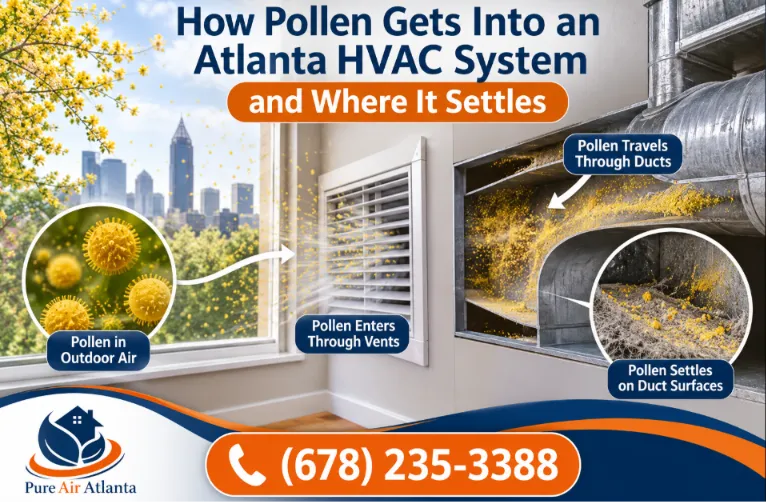
How Pollen Gets Into an Atlanta HVAC System and Where It Settles
Pollen does not teleport into ductwork. It follows a handful of predictable paths, and knowing them tells you where to spend money.
- Doors, windows and people. Shoes, jackets, hair and pets carry pollen inside, and every open door during peak week lets in a fresh load.
- The filter slot. A filter catches a large share of pollen only if it fits snugly. A loose or missing filter, or a gap around the frame, lets unfiltered air go straight to the blower.
- Return-side leaks. Many Atlanta homes have ducts running through attics, crawlspaces and basements. A leak on the return side pulls in whatever is in that space, including dust, insulation fibers and pollen. That is a sealing problem, which is why professional duct sealing often matters more than cleaning.
- The coil and blower. Our humidity makes fine dust sticky. Pollen and dust that reach the evaporator coil and blower wheel can cake on, which hurts airflow and efficiency.
Once particles are in the ducts, much of the dust sticks to the duct surfaces rather than blowing back into the room. The U.S. EPA’s duct cleaning guidance says that duct cleaning has never been shown to prevent health problems and that a light layer of household dust in ducts is not known to be a health risk. It also says the most effective way to prevent contamination is to keep water and dirt from entering the system in the first place. In other words, entry points come first and cleaning comes second.
Tighter homes make this more noticeable. If your house feels stuffy in spring, our guide to the signs a house is too airtight in Atlanta explains why trapped dust and humidity build up, and whether you need an ERV in Atlanta covers the ventilation fix.
When Air Duct Cleaning Helps With Pollen and When It Doesn’t
Cleaning helps when
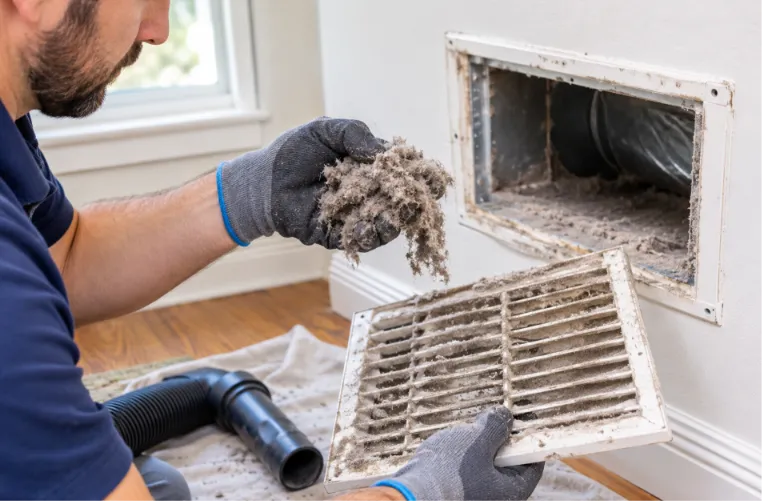
- Dust or a yellow film shows at the registers and returns
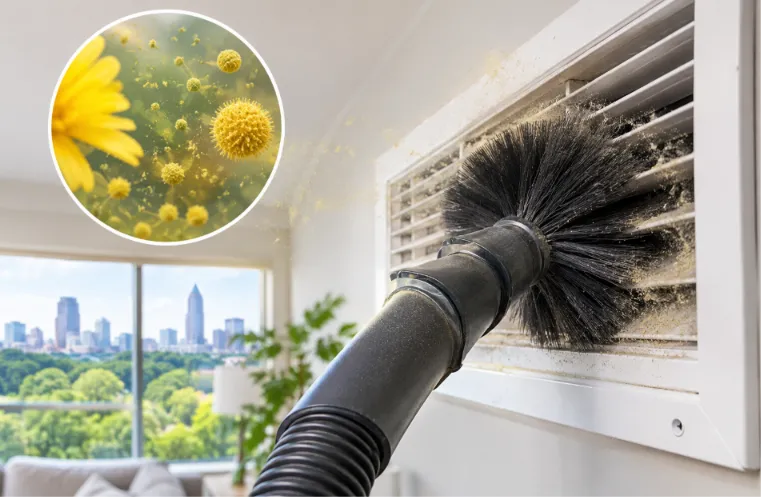
- Dust puffs out when the system starts
- You recently renovated or remodeled
- Rodents or insects have been in the ducts
- You moved into a home with no service history
- Debris is restricting airflow
Cleaning will not
- Stop new pollen from entering your home all season
- Treat allergies or asthma
- Replace a good filter and a filter schedule
- Seal leaky ducts that keep pulling in attic air
- Solve a moisture problem behind mold growth
The EPA lists three situations where cleaning is worth considering: substantial visible mold growth, a rodent or insect infestation, and ducts so clogged with dust and debris that particles are released into the home through the registers. Outside those, cleaning is a judgment call. Our own breakdown of whether air duct cleaning is worth it walks through the same decision, and the page on the benefits of air duct cleaning explains what you can reasonably expect.
Which fix solves which pollen problem?
| What you notice | Most likely fix | Where to start |
|---|---|---|
| Dust or pollen film at registers and returns | Air duct cleaning | Air duct cleaning service in Atlanta |
| Dusty attic or crawlspace air reaching the system | Duct sealing | Duct sealing in Atlanta |
| Filter turns yellow within weeks | Better filter, fit and change schedule | Whole-home air purification |
| Weak airflow, dirty coil or blower | Coil and blower cleaning | Air conditioning cleaning in Atlanta |
| Musty smell, sticky air, visible growth | Moisture control and a mold check | Mold in HVAC system service |
| Sneezing, itchy eyes, asthma flare-ups | See an allergist, then combine the fixes above | Air duct cleaning for allergy and asthma |
If you are weighing a duct-only visit against a deeper service, the post on air duct cleaning vs HVAC cleaning explains the difference, and our full HVAC cleaning service covers the blower, coils and cabinet along with the ducts.
Signs Pollen and Dust Have Built Up Inside Your Ducts
You do not need a camera to get a first read. Check for these before you decide anything:
- A fine yellow-green or gray film on register covers and return grilles, especially a few weeks after peak season
- Dust that blows out when the blower kicks on, or a haze in sunlit rooms
- Filters that clog far faster than the schedule on the package suggests
- Rooms that stay dusty a day after you clean them
- Uneven airflow, with some rooms noticeably weaker than others
- A musty or earthy smell when the AC starts, which points toward moisture, not just pollen
One sign alone rarely settles it. If you see several, read the signs you need air duct cleaning in Atlanta and the broader checklist on when your HVAC system needs cleaning. If the main sign is a smell, jump to the mold section below.
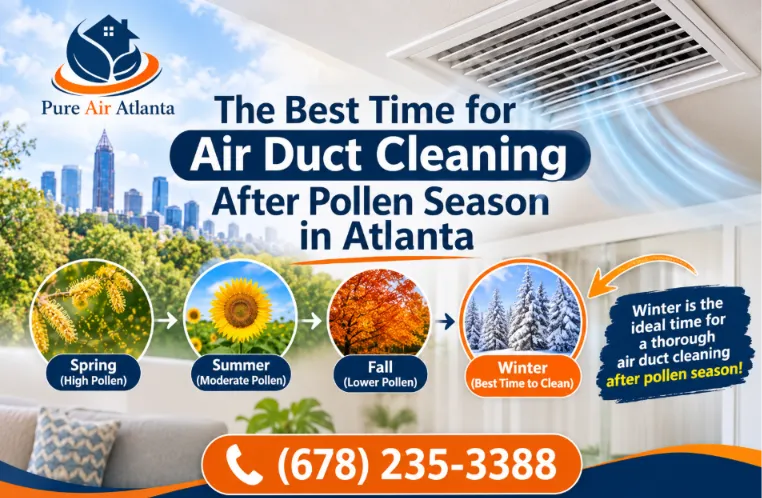
The Best Time for Air Duct Cleaning After Pollen Season in Atlanta
Timing is where most homeowners lose money. Clean the ducts in the middle of peak week and the system starts collecting a new load almost immediately. Here is how the year works for most Atlanta homes:
You do not need to clean every year. The EPA does not recommend routine cleaning, and how often depends on pets, renovations, humidity and filter habits. Our guide on how often to clean air ducts in Atlanta gives a realistic schedule, and the page on air duct cleaning before moving in covers the one case where an early cleaning almost always makes sense. If a sudden problem cannot wait, same-day air duct cleaning in Atlanta is available.
Reading this in winter? You are in the best position. Fix leaks and swap filters now, and decide on a cleaning after you see how your registers look in late May.
The Pollen-Season HVAC Checklist for Atlanta Homes
These steps cost less than a cleaning and usually do more for your daily air. Do them in order before the season starts.
- Choose the right filter. The EPA points homeowners toward MERV 13 or the highest rating their system can handle. Not every blower can push air through a dense filter, so ask a technician before you upgrade an older system. A deeper media filter often handles pollen with less strain than a thin one-inch filter.
- Check the fit. The filter should sit snug with no gaps at the edges. A gap lets air bypass it entirely.
- Set a pollen-season change schedule. Look at the filter every two to four weeks from March through May and swap it when it is visibly loaded.
- Seal return leaks. Gaps at the return plenum, panel seams and attic or crawlspace runs pull in unfiltered air. This is the fix most homes skip.
- Keep windows and doors closed on high-count days. Check the daily count from Atlanta Allergy & Asthma and plan fresh-air time for low days.
- Run the fan thoughtfully. Air is only filtered while it moves through the system. A continuous fan setting can help in dry spring weather, but in humid summer it can re-evaporate moisture off the coil, so ask your technician before leaving it on all year.
- Control humidity. The EPA suggests keeping indoor humidity roughly between 30 and 50 percent. Our post on managing Atlanta humidity with a home dehumidifier explains when a whole-home unit makes sense.
- Cut what comes in on you. Leave shoes at the door, change clothes after yard work, wash bedding often, wipe registers, and use a vacuum with a HEPA filter.
- Service the coil and blower. A dirty coil reduces airflow and efficiency. The AC maintenance service in Atlanta and air conditioner coil cleaning costs in Atlanta pages show what that visit covers.
What a Proper Air Duct Cleaning Includes (and the Red Flags)
If you decide cleaning makes sense, the quality of the job decides whether it helps or just makes noise. A thorough visit covers the whole system, not just the vents you can see:
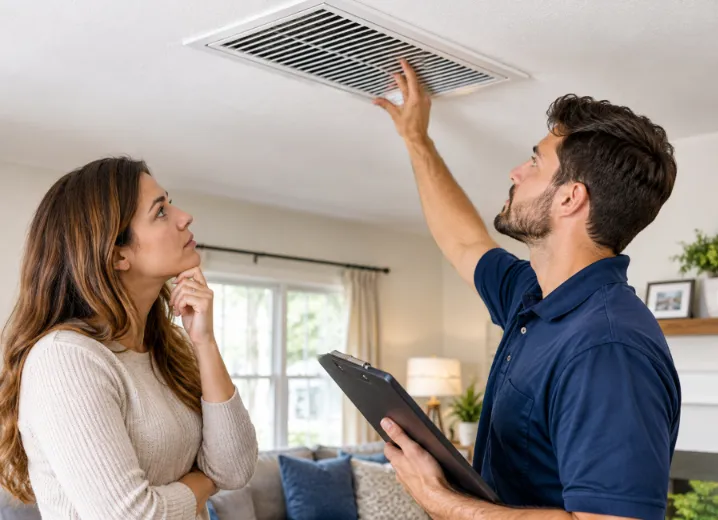
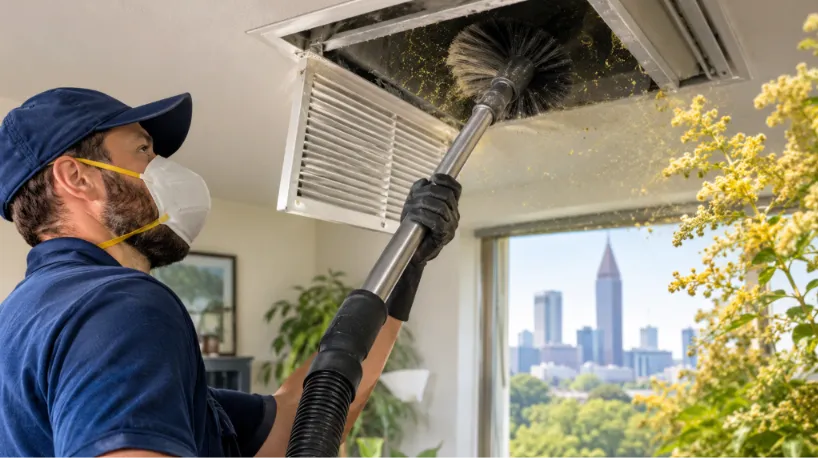
- Inspection first. The technician looks inside the ducts, tells you what they found and explains what needs cleaning and why before any work starts.
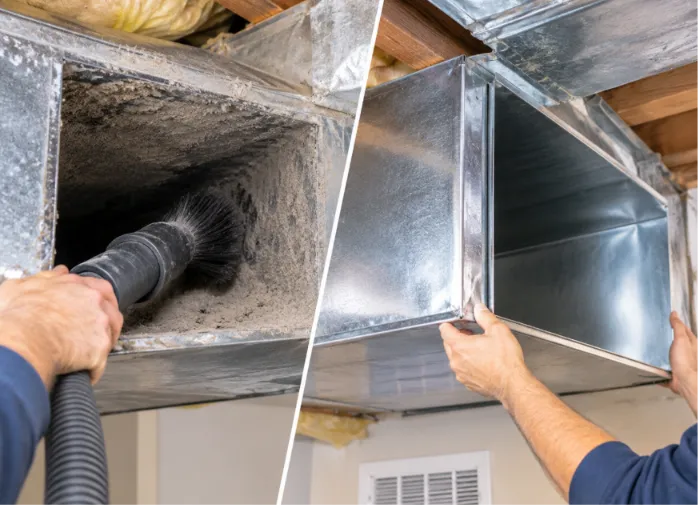
- Negative pressure. A powerful vacuum keeps the system under negative pressure so loosened debris is captured instead of pushed into your rooms.
- Mechanical agitation. Brushes or air tools loosen debris from duct walls, then the vacuum removes it. Vacuuming alone leaves buildup behind.
- The whole system. Supply ducts, return ducts, registers, grilles, and the blower and coil where needed.
- Proof of work. Before and after photos let you see what was done.
Look for crews that follow industry standards. The National Air Duct Cleaners Association publishes guidance for homeowners on indoor allergies and duct cleaning, and our post on NADCA-certified duct cleaning in Atlanta explains what certification means in practice. Our guide to choosing among the best air duct cleaning companies in Atlanta adds a vetting checklist.
Red flags to walk away from
- Whole-house “specials” priced so low that the real price appears after the crew arrives
- Promises to “eliminate allergies” or “purify your air.” Ducts are one source among many
- Pushing sanitizer, biocide or sealant without a clear reason. The EPA says no biocides are currently registered for internally insulated duct systems
- No inspection, no explanation and no photos
For price context without surprises, see the pricing page and the detailed air duct cleaning cost guide for Atlanta.
When Pollen Meets Humidity: Mold Risk in Atlanta Ducts
Pollen on its own is dust. Pollen plus moisture is a different story. Atlanta’s humid summers can leave moisture on the coil and inside ducts, and organic debris like pollen gives mold something to grow on. This is the one pollen scenario where cleaning alone does not solve anything. The moisture source has to be found and fixed, or the problem returns.
Watch for a musty smell when the AC starts, visible spotting on registers, or condensation on duct surfaces. Our posts on mold in air ducts in Atlanta, musty smells from AC vents and what black mold in air ducts really means explain what to check. Do not assume dark dust is mold, and do not assume it is harmless. Get it looked at.
Where Pollen Hits Hardest: Atlanta Neighborhoods and Nearby Cities
Pollen load follows tree cover and housing age. Older homes tend to have leakier ducts, and tree-lined streets tend to have more pollen. If you live in one of these areas, here is where to go next:
- Air duct cleaning in Buckhead
- Midtown Atlanta HVAC services
- Virginia-Highland HVAC services
- Inman Park HVAC services
- Morningside-Lenox Park HVAC services
- Candler Park HVAC services
- Decatur duct cleaning and HVAC
- Sandy Springs air duct cleaning
- Dunwoody air duct cleaning
- Smyrna air duct cleaning
- Marietta HVAC cleaning services
- Alpharetta air duct cleaning
- Roswell air duct cleaning
- Kennesaw HVAC services
Suburban readers dealing with allergy-heavy springs may also find the local versions useful: air duct cleaning for allergy and asthma in Alpharetta and the Lawrenceville version. For the full list of service areas, see all Pure Air Atlanta locations and the Atlanta neighborhoods hub.
City of Atlanta Resources Worth Knowing
Duct cleaning itself is maintenance, but pollen season often leads to bigger HVAC decisions, and a few City of Atlanta offices are worth knowing:
- Office of Buildings. If cleaning reveals ducts that need to be replaced, or you decide to replace equipment, mechanical work generally requires a permit. The City of Atlanta Office of Buildings explains the process and current requirements, so confirm with them before work starts.
- Arborist Division, private property. The Arborist Division in the Department of City Planning handles tree questions on private property, and Atlanta’s tree protection rules apply, so check before removing a large tree to cut pollen.
- Arborist Division, public trees. For trees on public property, the Parks and Recreation Arborist Division is the right contact.
A quick note: removing trees rarely fixes a pollen problem, because pollen travels from well beyond your own yard. Filtration and sealing work better and cost less.
Air Duct Cleaning Pollen Atlanta: Frequently Asked Questions
Does air duct cleaning help with pollen in Atlanta?
It can help when pollen, dust and debris have built up inside the ducts, but it does not stop new pollen from coming in. Filters, sealed ducts, closed windows and humidity control do most of the daily work. Cleaning is a reset, not a shield.
Can pollen get into air ducts?
Yes. Pollen enters on clothing and pets, through doors and windows, and through gaps around filters and leaky return ducts. A good filter catches much of it, and what gets past can settle on duct surfaces with household dust.
When is the best time for air duct cleaning after pollen season?
For most Atlanta homes, mid-May through early summer is the best window, once the heaviest tree pollen has passed. September and October also work well, before you switch to heat. Avoid scheduling a full cleaning in the middle of peak weeks from late March to mid-April.
Will air duct cleaning help my allergies?
It may reduce dust and debris in the system, but it has not been proven to prevent health problems or treat allergies. If you have symptoms, talk to a doctor or allergist. Use cleaning as one part of a plan alongside filtration and humidity control.
How do I get pollen out of my house and HVAC system?
Keep windows closed on high-count days, leave shoes at the door, vacuum with a HEPA filter, wipe registers, wash bedding often, and change your HVAC filter every two to four weeks during peak season. Seal return leaks and keep indoor humidity under control.
What MERV filter is best for pollen?
The EPA points homeowners toward MERV 13 or the highest rating their system can handle. Some older systems cannot move enough air through a dense filter, so ask a technician before upgrading. A deeper media filter is often a better fit than a thin dense one.
How often should I clean my air ducts in Atlanta?
There is no fixed schedule. Clean when you see buildup, after renovations, after pest activity, after confirmed mold, or when you move into a home with unknown history. Many Atlanta homes need it far less often than once a year.
Is yellow dust coming out of my vents pine pollen?
It might be, especially in March and April, but check the source. Yellow dust at registers can also come from leaky returns, attic insulation or a loose filter. A technician can trace where it enters before you pay for a cleaning that will not fix the cause.
How much does air duct cleaning cost in Atlanta?
Cost depends on home size, number of vents, accessibility and condition. See our pricing page and cost guide for current ranges, and get a written scope before work starts so there are no surprises.
Book Air Duct Cleaning Before Next Pollen Season
If your registers show buildup, your filter clogs fast, or you simply do not know when the system was last cleaned, a quick inspection is the smartest next step. We will tell you honestly whether cleaning, sealing or just a better filter is the right call for your home. Browse our complete air duct cleaning guide for Atlanta, read customer testimonials, or check the service FAQ before you call. Homeowners with a dryer that runs long can also add dryer vent cleaning to the same visit.
Ready to book or just want a straight answer about your ducts?
Keep reading
HVAC Service Area — ZIP Code Directory
92 ZIP codes served · Tap any ZIP to call +1 (678) 235-3388 · pureairatlanta.com