Alpharetta Homeowner Guide
Air Duct Cleaning for Allergy And Asthma Alpharetta GA
Air Duct Cleaning for Allergy and Asthma Alpharetta GA: Does It Actually Help?
If allergies or asthma flare up in your home even with the windows shut, your air ducts could be part of the problem. Your HVAC system pulls household air in and pushes it back out several times a day, and everything riding along in that air — dust, pollen, pet dander, mold spores — settles inside the ductwork over time. Every time the system runs, some of that buildup gets stirred back into the rooms you’re breathing in. For Alpharetta households managing allergies or asthma, air duct cleaning is one of the more overlooked steps in actually reducing indoor triggers, not just masking them.
How Dirty Air Ducts Trigger Allergy and Asthma Symptoms
Think of your ductwork as the lungs of your house. Air gets pulled in through the return vents, passes through the system, and gets pushed back out through supply vents — over and over, all day. Along the way, it carries in whatever is floating around your home: skin cells, pet hair, fabric fibers, outdoor pollen tracked in on shoes and clothes. Over months and years, that debris builds a layer inside the ducts that keeps recirculating every time the AC or heat kicks on.
For someone with asthma or allergies, that means constant low-level exposure to triggers even when they’re staying indoors specifically to avoid them. The CDC lists dust mites, mold, and pet dander among the most common asthma triggers found inside homes — and all three are exactly what accumulates in uncleaned ductwork.
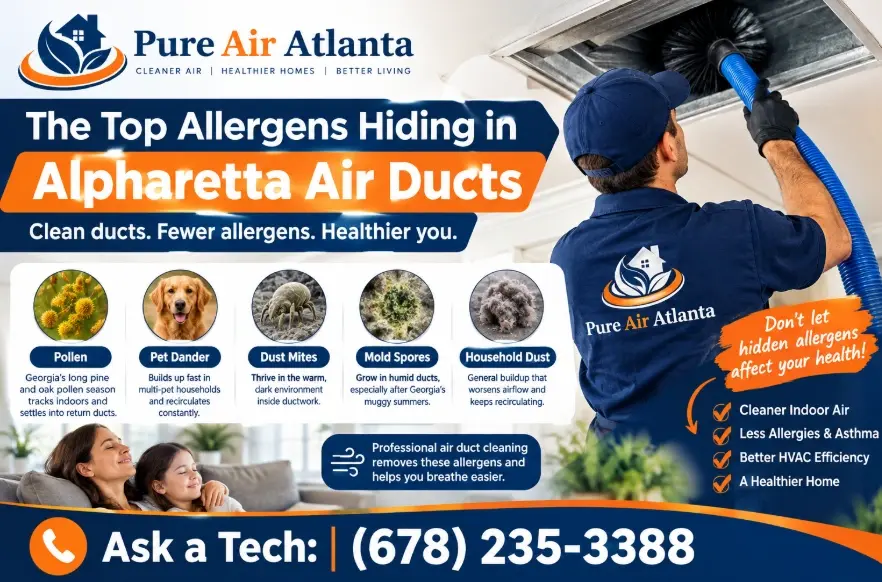
The Top Allergens Hiding in Alpharetta Air Ducts
| Allergen | Why It Matters |
|---|---|
| Pollen | Georgia’s long pine and oak pollen season tracks indoors and settles into return ducts |
| Pet dander | Builds up fast in multi-pet households and recirculates constantly |
| Dust mites | Thrive in the warm, dark environment inside ductwork |
| Mold spores | Grow in humid ducts, especially after Georgia’s muggy summers |
| Household dust | General buildup that worsens airflow and keeps recirculating |
Why Georgia’s Pollen Season Makes This Worse
Alpharetta sits right in the middle of one of the heavier pollen zones in the Southeast each spring. Pine, oak, and other tree pollen doesn’t just coat cars and driveways — it gets tracked indoors and pulled into the HVAC return before most homeowners even think about their ducts. Once it’s in the ductwork, it keeps circulating well after pollen counts outside have dropped, which is part of why some households feel like their allergies “never really go away” even during lower-pollen months. It’s also why this is a slightly different problem than in drier climates — Georgia’s combination of heavy pollen and high humidity gives allergens more places to collect and linger.
Signs Your Symptoms Are Coming From Your Ducts, Not Just the Outdoor Air
- Sneezing, congestion, or itchy eyes that are worse indoors than outdoors
- Symptoms that flare up specifically when the AC or heat turns on
- Visible dust blowing from vents or settling around registers
- A musty smell when the system runs — often a sign of mold; see our mold in Alpharetta air ducts guide
- It’s been more than a couple of years since your ducts were cleaned — check our guide on how often to clean air ducts in Alpharetta
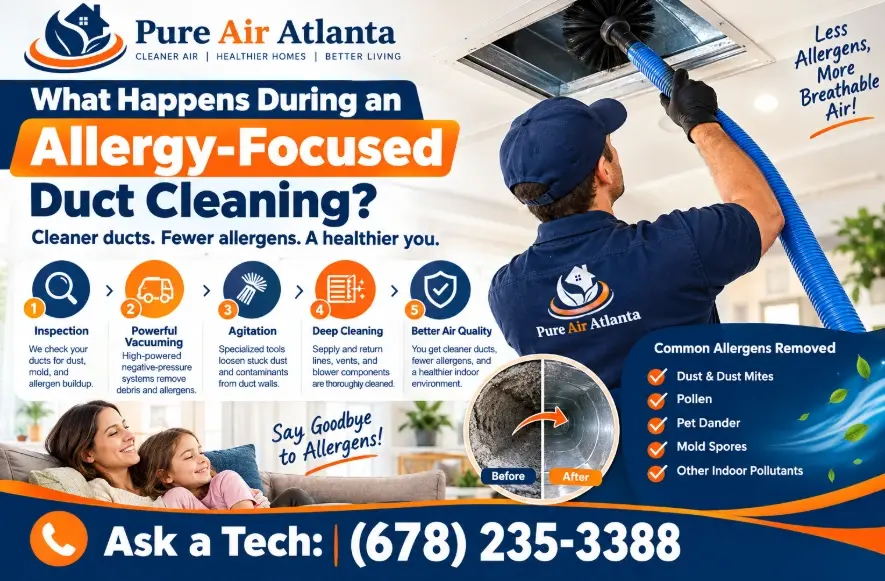
What Happens During an Allergy-Focused Duct Cleaning
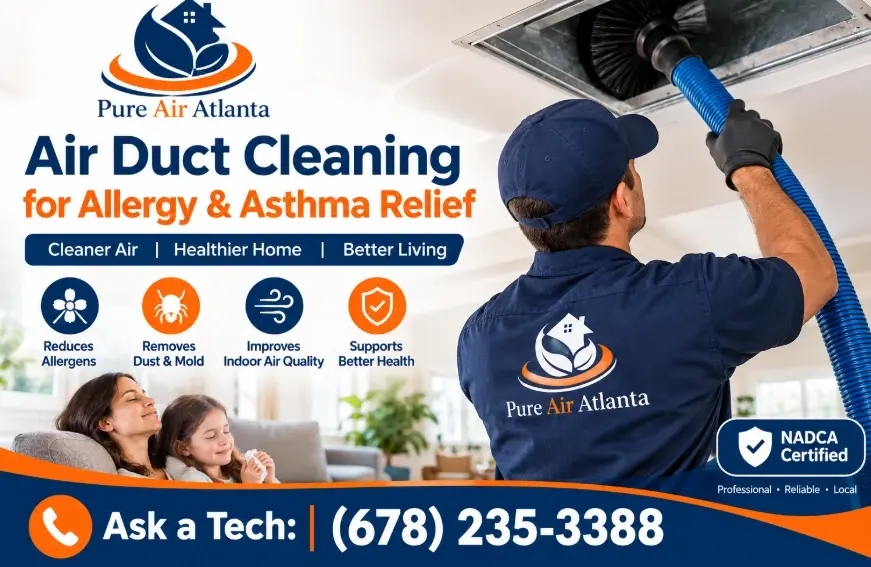
A proper cleaning uses negative-air-pressure equipment connected to the ductwork, agitation tools to dislodge debris stuck to duct walls, and HEPA-filtered vacuum extraction so the dislodged allergens actually leave the house instead of just getting stirred up and resettling. Reputable technicians follow NADCA-certified standards, which matter more for allergy-sensitive households than for the average home, since an incomplete cleaning can leave contamination behind that recirculates right back into the air. If you haven’t compared providers yet, our best air duct cleaning companies in Alpharetta guide is a good starting point, and our Alpharetta cost guide covers what to expect to pay.
Air Duct Cleaning vs. Just Changing Filters: Why Filters Alone Aren’t Enough
Filters only catch what passes directly through them, and by the time air reaches your filter it has often already passed through ductwork that’s carrying its own buildup. A high-quality filter changed on schedule absolutely helps, but it doesn’t remove what’s already settled and hardened inside the ducts themselves. For allergy and asthma households, the two work together: filters manage what’s coming in going forward, while duct cleaning removes what’s already accumulated. If you’re weighing a full system service instead, our air duct cleaning vs. HVAC cleaning comparison breaks down the difference.
Frequently Asked Questions
Can air duct cleaning really help with allergies and asthma?
Yes, for many households. Removing built-up pollen, dust mites, pet dander, and mold spores from the ductwork reduces one of the sources that keeps recirculating triggers through the home, though it works best alongside other steps like regular filter changes and household cleaning.
How do I know if my Alpharetta home’s ducts are affecting my allergies?
If symptoms are noticeably worse indoors than outdoors, flare up specifically when the HVAC system turns on, or you can see dust blowing from the vents, your ductwork is a reasonable place to start looking.
Does Georgia’s pollen season make indoor allergies worse?
Yes. Heavy spring pollen gets pulled into the HVAC return and settles in the ductwork, where it can keep recirculating through the house even after outdoor pollen counts have dropped.
Is duct cleaning enough on its own, or do I still need a good air filter?
Both matter. A filter helps going forward, but it doesn’t remove buildup that’s already inside the ducts — that only comes out with an actual cleaning.
How often should allergy or asthma households in Alpharetta clean their ducts?
Households with allergies or asthma generally benefit from cleaning every 2 to 3 years rather than the standard 3 to 5 year window, especially through Georgia’s heavy pollen seasons.
Breathing Easier Starts With Clean Ducts
We’ll check your ductwork for the allergens and buildup actually affecting your air — no guessing, no upsell, just an honest look.
Get a Free Alpharetta Inspection →📞 Call (678) 235-3388
Alpharetta, GA Service Area — ZIP Code Directory
5 ZIP codes served · Tap any ZIP to call +1 (678) 235-3388 · pureairatlanta.com