

Dryer Vent Fire Risk in Alpharetta, GA: What Every Homeowner Should Know
Dryer vent fire risk Alpharetta families face is real, and it is almost entirely preventable. Every load of laundry sheds lint, and whatever the lint trap misses travels down the exhaust duct, where it settles, packs together, and traps heat. Left alone for months or years, that dry, feathery buildup becomes the fuel a dryer fire needs.
Yes, a clogged dryer vent can start a house fire. Federal fire data lists failure to clean as the leading factor behind residential dryer fires. Clean the lint filter after every load, check your vent for warning signs, and book a professional dryer vent cleaning in Alpharetta at least once a year.
This guide explains how dryer fires start, what the national numbers say, the warning signs you can spot today, and the specific places Alpharetta homes tend to hide trouble. If you already suspect a blockage, you can jump straight to our dryer vent cleaning in Alpharetta, GA guide to see what a professional visit includes.
How a Clogged Dryer Vent Turns Into a Fire
A dryer is basically a heater with a fan. It needs a clear path to push hot, moist air outdoors. When that path narrows, heat has nowhere to go, and the sequence below can unfold quietly over many cycles.
- Lint escapes the trap. Even a clean filter lets fine fibers through, and they coat the duct walls and the area behind the drum.
- Airflow drops. A narrowed vent means hot air lingers. Clothes take longer to dry, so the dryer runs longer and hotter.
- Heat builds up. Trapped heat raises temperatures in the cabinet and duct, and lint is highly combustible.
- Ignition happens. A spark, a hot element, or sustained high temperature ignites the lint, and flames can travel along the duct into wall cavities or attics.
Gas dryers add one more consideration: a restricted exhaust can also interfere with safe venting of combustion gases, which is why a working carbon monoxide alarm near the laundry area is smart for any home with a gas dryer.
Dryer Fire Statistics Alpharetta Homeowners Should Know
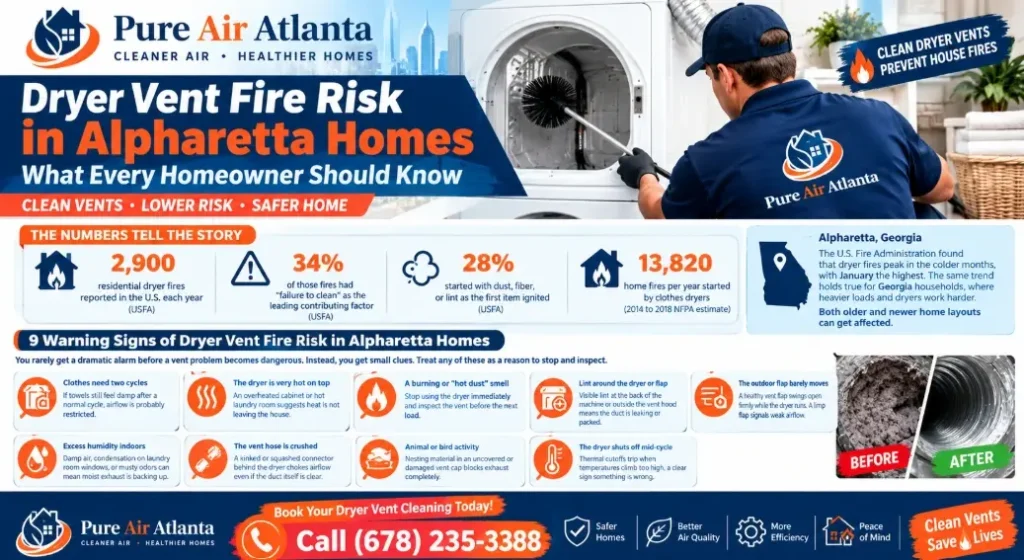
Local fire-by-fire figures for dryers are not published in a simple public dashboard, so the best evidence comes from national data that applies to any home with a dryer, including yours.
Two more details matter for Georgia households. First, the U.S. Fire Administration found that dryer fires peak in the colder months, with January the highest, since people run heavier loads and dryers work harder. Second, the same agency notes that newer home layouts often place laundry away from exterior walls, such as in bedrooms, second-floor hallways, and closets, which makes the vent run longer and harder to inspect. Numbers differ between the USFA and the National Fire Protection Association because each uses different data sources and time periods, but both reach the same conclusion: unclean dryers and vents are a top cause.
9 Warning Signs of Dryer Vent Fire Risk in Alpharetta Homes
You rarely get a dramatic alarm before a vent problem becomes dangerous. Instead you get small clues. Treat any of these as a reason to stop and inspect.
If towels still feel damp after a normal cycle, airflow is probably restricted.
An overheated cabinet or hot laundry room suggests heat is not leaving the house.
Stop using the dryer immediately and inspect the vent before the next load.
Visible lint at the back of the machine or outside the vent hood means the duct is leaking or packed.
A healthy vent flap swings open firmly while the dryer runs. A limp flap signals weak airflow.
Damp air, condensation on laundry room windows, or musty odors can mean moist exhaust is backing up.
A kinked or squashed connector behind the dryer chokes airflow even if the duct itself is clear.
Nesting material in an uncovered or damaged vent cap blocks exhaust completely.
Thermal cutoffs trip when temperatures climb too high, a clear sign something is wrong.
Not sure whether your symptoms point to the vent or to the whole duct system? Our guide to signs you need air duct cleaning in Alpharetta helps you tell the difference.
Where Dryer Vent Fire Risk Alpharetta Homes Face Is Usually Hiding
Alpharetta has a wide mix of housing, from established neighborhoods to newer subdivisions, townhomes, and condos. Each type tends to hide different problems.
Second-floor and interior laundry rooms
When the washer and dryer sit upstairs or in the middle of the house, the exhaust duct has to travel farther before reaching the outdoors. More distance and more elbows mean more places for lint to snag. Long runs also make DIY cleaning harder, since a standard brush cannot reach the full length.
Roof and wall terminations
Some homes vent through the roof, which makes the outlet hard to see and easy to forget. Debris, pine needles, and nesting animals can block a cap you never look at. A quick look from outside during a dryer cycle is worth doing at least twice a year.
Foil and plastic transition hoses
The short connector behind the dryer is often the weakest link. Flimsy foil or plastic ducts sag, trap lint in their ridges, and can fail under heat. We cover materials in the next section.
Townhomes, condos, and shared walls
In attached homes, a vent fire can spread to neighboring units. If you rent or live in an HOA community, report a slow dryer or a damaged exterior vent to your property manager promptly, since the vent may be a shared responsibility.
Gas dryers
The NFPA recommends that a qualified professional inspect gas dryers so that the gas line and connection are intact and free of leaks. Combine that with a clean vent and a CO alarm for the best protection.
Dryer Vent Materials: Safe vs. Risky
The material between your dryer and the wall matters nearly as much as the cleanliness of the duct itself. The NFPA advises using rigid or flexible metal venting material to maintain proper airflow and drying time.
| Vent type | Fire safety | Notes |
|---|---|---|
| Rigid metal duct | Best choice | Smooth walls resist lint buildup and hold up under heat. Ideal for the main run. |
| Semi-rigid metal duct | Good | Fine for short connectors, though its ridges collect more lint than rigid pipe. |
| Thin foil accordion hose | Risky | Easily crushed, traps lint in its folds, and does not contain flame well. |
| Plastic or vinyl hose | Avoid | Can melt or burn. Replace it with metal as soon as possible. |
A 5-Minute Dryer Vent Safety Check You Can Do Today
You do not need tools to spot the most common problems. Set aside five minutes and work through this list.
- Empty the lint filter and look inside the slot. Remove any lint you can reach with a vacuum crevice tool.
- Run the dryer on a no-heat or air-only setting. Go outside and confirm the vent flap opens fully and strong air flows out.
- Check the connector behind the dryer. Make sure it is metal, not crushed, and firmly attached at both ends.
- Inspect the outdoor cap. Look for lint clumps, nesting material, or a flap that sticks.
- Time a normal load. If drying takes noticeably longer than it used to, schedule a professional cleaning.
This check catches obvious issues, but it cannot show what is hiding in the middle of a long duct. That is where a professional inspection earns its keep.
How Often Should You Clean Your Dryer Vent in Alpharetta?
The NFPA recommends cleaning lint out of the vent pipe at least once a year, or sooner if clothes take longer than normal to dry. Many households benefit from a shorter interval:
- Large families or heavy laundry users: consider every six months.
- Homes with long, bent, or roof-vented ducts: once a year at minimum.
- Households with pets: pet hair adds to lint, so lean toward more frequent cleaning.
- Moving into a new home: have the vent checked before your first load.
Since fire incidents rise in winter, scheduling a cleaning in early fall puts you ahead of the busiest season. If you are also thinking about your home’s ductwork, our post on how often to clean air ducts in Alpharetta explains how the two schedules line up.
DIY Cleaning vs. Professional Dryer Vent Cleaning in Alpharetta
A vacuum and a lint brush kit can handle the first few feet of duct. They are a useful habit between professional visits. The risk is that DIY work often clears only what you can see, leaving the middle and far end of the run untouched, and pushing lint into a tighter clump.
A professional service uses rotary brushes and high-powered suction to clear the entire duct, checks the termination, and flags damaged or unsafe venting. Pricing varies by vent length and access, and our dryer vent cleaning cost in Alpharetta breakdown walks through what affects the price. You can also read our shorter dryer vent cleaning pricing near you in Alpharetta overview, or see how we stack up in our best dryer vent cleaning in Alpharetta comparison. For a broader look at pricing across our services, visit our pricing page.
Prefer to read about the wider Atlanta area? Our dryer vent fire risk in Atlanta article covers the same hazards for metro-wide readers, and our dryer vent cleaning services in Atlanta page lists everything we offer.
Local Fire Safety Resources in Alpharetta
Good fire safety combines clean equipment with local knowledge. These official City of Alpharetta pages are worth bookmarking:
- City of Alpharetta Public Safety Services, the starting point for fire, police, and emergency resources.
- Alpharetta Fire Marshal’s Office, which handles fire and life-safety inspections, permits, and code questions.
- Alpharetta Fire Investigations, for information on how the city reviews fire incidents.
For national safety guidance on clothes dryers, the U.S. Fire Administration and the National Fire Protection Association both publish free dryer safety tips and research reports.
Dryer Vent Fire Risk Alpharetta FAQs
Can a clogged dryer vent cause a house fire?
Yes. Lint is combustible, and when it packs into a vent it restricts airflow and traps heat. Federal data identifies failure to clean as the leading contributing factor in residential dryer fires.
How do I know if my dryer vent is clogged?
Common signs include longer drying times, a dryer that feels very hot, a burning smell, lint around the vent hood, and an outdoor flap that barely opens. Any one of these is a reason to inspect or call a professional.
How often should dryer vents be cleaned in Alpharetta?
At least once a year, according to NFPA guidance, and more often for large households, pet owners, or homes with long or roof-vented ducts.
Is a foil or plastic dryer hose dangerous?
It can be. Foil accordion hoses trap lint and crush easily, and plastic can melt. Rigid or semi-rigid metal duct is the safer option.
Can I clean my dryer vent myself?
You can clean the lint filter, the filter slot, and the first few feet of duct yourself. A full-length cleaning of the duct and termination is better handled by a professional with the right equipment.
Do gas dryers carry extra risk?
Gas dryers add a gas line and combustion exhaust. The NFPA recommends a professional inspect the gas line and connection, and keeping the vent clear helps exhaust leave the home safely. A carbon monoxide alarm nearby is a good safeguard.
Protect Your Alpharetta Home From Dryer Fires
Slow drying, a hot laundry room, or lint around the vent? Do not wait for the next load to find out. Our team can inspect and clear your dryer vent so your family and your home stay safe.
Schedule Dryer Vent Cleaning Explore Alpharetta ServicesWant a clean duct system too? See our air duct cleaning in Alpharetta service, our local air duct cleaning overview, or browse the Pure Air Atlanta FAQ.
Sources: U.S. Fire Administration, Clothes Dryer Fires in Residential Buildings (2008 to 2010); National Fire Protection Association, home fires involving clothes dryers and dryer safety tips; City of Alpharetta official website. Statistics are national estimates and are provided for general safety awareness.