Chimney Inspection Atlanta: What It Is and Why It Matters Before Heating Season
A chimney inspection in Atlanta is a structured safety check of your fireplace, flue and chimney, done to a recognised standard rather than a quick glance with a flashlight. In metro Atlanta, where many homes burn wood only a handful of evenings each winter, the chimney sits idle for months while moisture, animals and old mortar do their work. That is exactly why the first cold snap is a bad time to find out something is wrong.
The short answer
Book a Level 1 chimney inspection every year before your first fire. Step up to a Level 2 (with a camera scan of the flue) when you buy or sell a home, change fuel or appliance, or after a chimney fire or storm damage. A Level 3 is only for hidden hazards that cannot be judged without opening up part of the structure.
Need it done now? Call (678) 235-3388 or read about our chimney cleaning and inspection service in Atlanta.
- The three NFPA 211 inspection levels
- Which level do you actually need?
- The best time for a chimney inspection in Atlanta
- Warning signs you should not wait
- What an inspector checks
- Chimney inspection cost in Atlanta
- Buying or selling a home with a fireplace
- Atlanta homes, climate and gas fireplaces
- How to choose an inspector
- City of Atlanta and Georgia safety resources
- Frequently asked questions
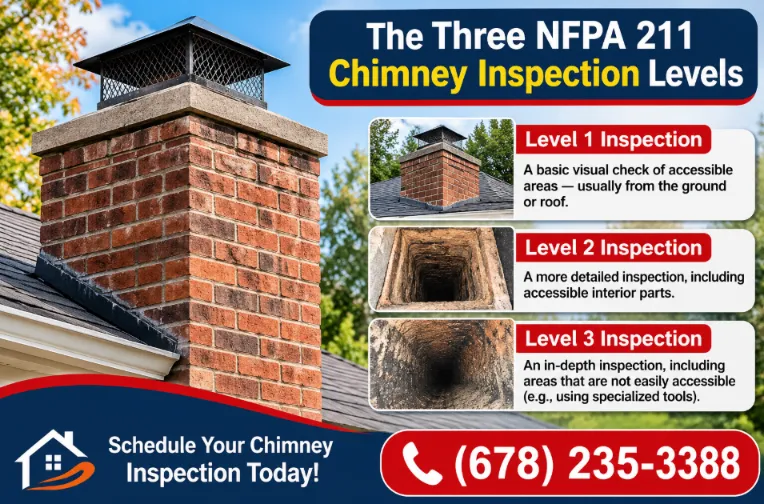
The Three NFPA 211 Chimney Inspection Levels
The levels come from NFPA 211, the national standard for chimneys, fireplaces, vents and solid-fuel-burning appliances. The Chimney Safety Institute of America (CSIA) explains the three levels in detail, and reputable sweeps base their reports on them. The important point is that these are three different inspections, not three price tiers for the same job.
Level 1: the routine annual check
The technician examines the readily accessible parts of the chimney exterior and interior, the fireplace or appliance, and the connection between them. The goal is to confirm the structure is sound, the flue is free of obstructions and combustible deposits such as creosote, and the installation is basically correct. Level 1 is intended for a chimney that is used the same way, with the same fuel and appliance, as before.
Level 2: Level 1 plus a camera scan and access areas
Level 2 includes everything in Level 1, then adds the accessible areas of the attic, crawl space and basement, and a video scan of the flue interior. That camera work matters because a clean-looking firebox says almost nothing about the condition of the liner higher up. It also checks clearances to combustible framing wherever there is access.
Level 3: opening up concealed areas
A Level 3 inspection includes everything in Levels 1 and 2 and also requires removing parts of the building or chimney, such as sections of masonry or finishes, to reach hidden areas. It is recommended only when a Level 1 or Level 2 inspection points to a hidden hazard that cannot be evaluated any other way. Most homeowners never need one.
| Level | What it covers | Typical trigger |
|---|---|---|
| Level 1 | Visual check of accessible chimney, flue and appliance connection | Annual check, no changes to the system |
| Level 2 | Level 1, accessible attic, crawl space and basement areas, plus video flue scan | Sale or transfer, fuel or appliance change, after a fire or storm, before relining |
| Level 3 | Levels 1 and 2, plus removal of building or chimney parts to reach concealed areas | A hidden hazard suspected after Level 1 or 2 |
Which Chimney Inspection Level Do You Actually Need?
Choose by what has happened to the chimney, not by what sounds most thorough. Paying for a Level 3 when a Level 1 is enough wastes money, and accepting a Level 1 when a Level 2 is required leaves a real gap.
- Same fireplace, same fuel, nothing unusual: Level 1 each year, ideally combined with a sweep.
- You are buying or selling the home: Level 2. NFPA 211 calls for it on sale or transfer of the property.
- You are switching from wood to gas, adding an insert or stove, or relining the flue: Level 2 before the change.
- A chimney fire, lightning strike, fallen tree or other external event: Level 2, and do not use the fireplace until it is done.
- A Level 1 or 2 found something it could not fully evaluate: Level 3, scoped to the area in question.
The Best Time for a Chimney Inspection in Atlanta
Atlanta’s heating season is short and uneven, which is why fireplace users often leave the chimney until the first cold night. A better rhythm looks like this:
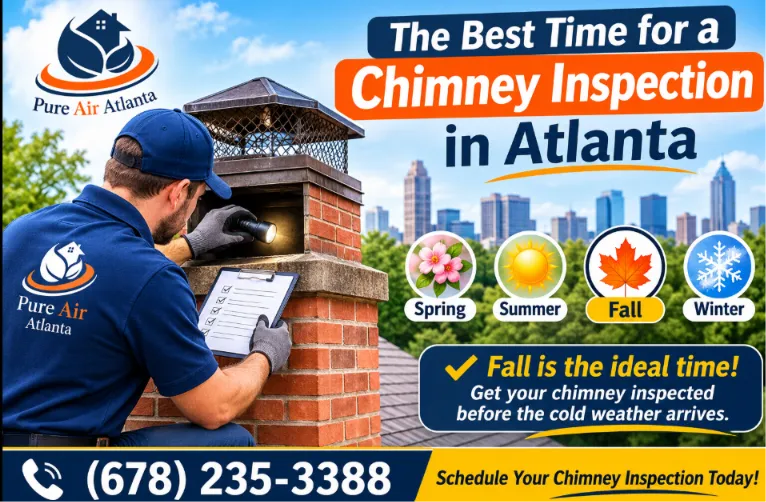
- Late summer to early fall: the ideal window. Technicians have openings, repairs can be scheduled before the first fire, and you are not competing with the rush that follows an early cold snap.
- Right now, if the season has already started: do not use the fireplace until it has been inspected. Heating season is active and the risk is real, so book the earliest slot rather than waiting for a perfect one.
- After any event: a chimney fire, a severe storm, or a sudden change in how the fireplace draws or smells.
- Spring, after a heavy burning season: a good time to catch creosote buildup and water damage before a humid summer makes it worse.
If you also want your furnace ready for cold weather, our Atlanta winter weather furnace guide and the winter storm warning furnace checklist make a useful pairing.
Get your chimney checked before the next cold night
Call now or send a request and we will help you find the right inspection level.Warning Signs You Should Not Wait for the Annual Check
Some symptoms mean the chimney needs attention immediately. Stop using the fireplace and schedule an inspection if you notice any of these:
- Black, glossy or tar-like buildup on the flue walls or damper, which can indicate heavy creosote.
- Smoke coming back into the room instead of rising, or a fire that is hard to start or keep going.
- A strong, persistent smell from the fireplace, especially in humid weather.
- Crumbling mortar, loose bricks, white staining or rust on the chimney, firebox or damper.
- Cracked or missing flue tiles, a damaged chimney crown, or a cap that is bent or gone.
- Water stains on the ceiling or wall around the chimney, or damp inside the firebox.
- Nesting debris, birds or animal noises in the flue, common after an idle summer.
- Any recent chimney fire, even a small one that seemed to burn out by itself.
Persistent musty odours do not always start at the fireplace. If the smell is coming from the vents, see our guide on musty smell from AC vents, or check whether a clogged dryer vent is part of the problem with our post on the signs your dryer vent is clogged.
What a Chimney Inspector Checks
The exact list depends on the level and on whether the chimney is masonry or a factory-built metal system, but a thorough chimney inspection in Atlanta should cover:
- The firebox, hearth, damper and smoke chamber for cracks, gaps and heat damage.
- The flue liner for cracks, spalling, gaps between tiles or deterioration, using a camera at Level 2 and above.
- Creosote, soot or other combustible deposits that could feed a chimney fire.
- Obstructions such as nests, debris or a collapsed liner section.
- The chimney crown, cap, flashing and exterior masonry for water entry.
- Clearances between the chimney and nearby framing, wherever they can be reached.
- The connection between the appliance, insert or stove and the flue.
- Signs of carbon monoxide risk, such as backdraft staining or a blocked vent.
Ask for a written report with photos or video stills. It gives you something concrete to compare year to year and to hand to a buyer, insurer or repair contractor.
Chimney Inspection Cost in Atlanta
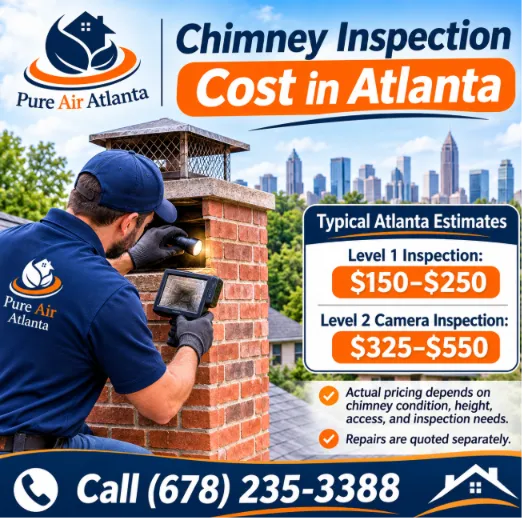
Prices vary with the level, the number of flues, the height and access of the chimney, and whether the inspection is bundled with a sweep. Published local and national guides generally place a Level 1 inspection at roughly $100 to $300 and a Level 2 with camera scan at roughly $250 to $550, while Level 3 work depends entirely on what has to be opened and can run into the thousands. Treat those figures as a rough orientation, not a quote.
Two practical tips keep costs sensible. First, a combined sweep and Level 1 each year is usually better value than booking them separately. Second, ask for the inspection finding to be itemised before approving any repair, so you can see what is urgent and what can wait.
For local cleaning prices, our city cost guides show how the market looks in nearby areas: chimney cleaning cost in Smyrna, chimney cleaning cost in Douglasville, chimney cleaning cost in Alpharetta and chimney cleaning cost in Lawrenceville. You can also review our pricing ranges before you call.
Chimney Inspection When Buying or Selling an Atlanta Home
If the house has a fireplace, a stove or a gas log set, the chimney deserves its own inspection, separate from the general home inspection. A home inspector will usually note what is visible from the firebox and the roofline, but a flue can hide cracks and gaps that only a camera will find.
- Buyers: ask for a Level 2 chimney inspection during the inspection period, before you are committed. A relining quote discovered after closing is a much harder conversation.
- Sellers: a recent written inspection can answer questions up front and reduce last-minute repair negotiations.
- Both: keep the report. It documents the condition on a specific date.
Buying in an older intown area? The neighbourhood pages for Virginia-Highland, Inman Park, Grant Park, Morningside-Lenox Park and Candler Park are a good starting point, and the full list is on our Atlanta neighborhoods page.
Atlanta Homes, Climate and Gas Fireplaces
Humidity and idle seasons
Atlanta’s warm, wet summers are hard on chimneys. Water entering through a worn crown, cap or flashing can soak masonry, rust dampers and damage liners long before the first fire of the year. Because many households light the fireplace only occasionally, small problems can go unnoticed for years.
Older homes and historic character
Many older Atlanta houses have masonry chimneys that have been repaired, relined or altered over the decades. If you are restoring one, our posts on radiator heat in a historic Atlanta home and AC replacement in Atlanta’s historic districts cover the wider comfort-system picture.
Gas fireplaces still need inspection
No soot does not mean no risk. Gas appliances vent carbon monoxide and moisture through the flue, and a blocked, deteriorated or poorly connected vent can send those gases back into the living space. If you also run a gas furnace or water heater on the same system, a blocked flue is a shared safety problem, so see our gas furnace repair and furnace maintenance and tune-up pages.
Fire risk goes beyond the chimney
Lint is another quiet fire hazard in winter homes. Read our guide to dryer vent fire risk in Atlanta and consider a dryer vent cleaning visit alongside your chimney service.
How to Choose a Chimney Inspector in Atlanta
The industry is crowded with directories and lead-generation pages, so it pays to ask a few direct questions before you book:
- Which inspection level are you quoting, and why? A good answer references your situation, not a package.
- Do you follow NFPA 211? This is the standard that defines the levels.
- Is the technician CSIA-certified? It is not a legal requirement everywhere, but it is a recognised sign of training.
- Will I get a written report with photos or video? You need evidence, not a verbal summary.
- Is the price for the inspection only, or does it include cleaning? Compare like with like.
You can meet the people behind the service on our technician page, browse the frequently asked questions, or see how often homeowners in other cities need a sweep in our guide on how often to clean a chimney in Douglasville.
City of Atlanta and Georgia Safety Resources
Official sources are worth bookmarking, especially if repairs, relining or masonry rebuilding are on the table:
- The City of Atlanta’s Office of Buildings handles building permits within city limits. If an inspection leads to structural chimney work or a new appliance installation, confirm with them whether a permit is needed before work starts.
- The City of Atlanta winter fire safety tips from Atlanta Fire Rescue cover smoke and carbon monoxide alarms and how to vent fireplaces and heaters properly. Check the current contact details with the department before relying on older phone numbers.
- Georgia’s Insurance and Safety Fire Commissioner has published home heating safety guidance that stresses keeping anything that can burn at least three feet from fireplaces and heaters and cleaning equipment before the season.
- The U.S. Fire Administration offers winter fire safety outreach materials for households.
Schedule your chimney inspection in Atlanta
Talk to our team about the right level, timing and a clear next step.Chimney Inspection Atlanta: Frequently Asked Questions
How often should a chimney be inspected in Atlanta?
At least once a year. A Level 1 inspection is the normal annual check for a chimney that is used the same way it always has been. Book it before the first fire of the season so any repairs are done before you need the fireplace.
What is the difference between a Level 1 and Level 2 chimney inspection?
A Level 1 inspection is a visual check of the readily accessible parts of the chimney and fireplace. A Level 2 inspection includes everything in Level 1 plus accessible attic, crawl space and basement areas and a video scan of the flue interior.
Do I need a Level 2 chimney inspection when buying a house in Atlanta?
Yes, it is the standard recommendation. NFPA 211 calls for a Level 2 inspection when a property is sold or transferred, so a Level 1 check or an old sweep receipt is not enough on its own.
Does a gas fireplace need a chimney inspection?
Yes. Gas appliances still vent combustion gases, including carbon monoxide, through the flue. Blockages, deterioration and a poorly connected vent can cause dangerous backdrafting even when there is no soot.
How long does a chimney inspection take?
A Level 1 inspection on a well-kept chimney is often done in under an hour. A Level 2 inspection with a camera scan usually takes one to two hours, depending on the number of flues and how easy the attic and basement areas are to reach.
Can I use my fireplace after a chimney fire?
No. After a chimney fire the system should not be used until a Level 2 inspection has been completed and the chimney has been cleared for use.
Chimney Services Near You
We serve homeowners across metro Atlanta. Choose your city for local chimney cleaning details:
- Chimney cleaning in Atlanta
- Chimney cleaning in Smyrna
- Chimney cleaning in Marietta
- Chimney cleaning in Roswell
- Chimney cleaning in Alpharetta
- Chimney cleaning in Lawrenceville
- Chimney cleaning in Douglasville
- All Pure Air Atlanta service areas
Heating season also puts load on your ducts and furnace. If your home feels dusty or uneven once the heat is on, our air duct cleaning service and furnace repair service are a short call away.
HVAC Service Area — ZIP Code Directory
92 ZIP codes served · Tap any ZIP to call +1 (678) 235-3388 · pureairatlanta.com