Gas Furnace Repair Atlanta: Common Problems, Signs & Cost
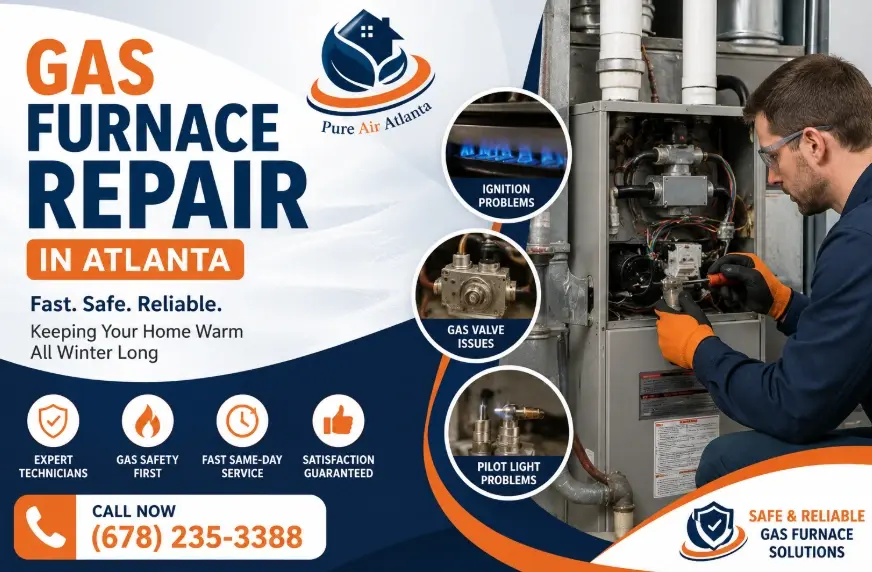
Gas furnaces make up the majority of heating systems in Metro Atlanta homes, and most gas furnace repair atlanta calls trace back to one of a handful of recurring issues — a pilot light that won’t stay lit, an ignition system that clicks but never fires, or a gas valve that isn’t opening properly. Unlike a simple thermostat glitch, gas-specific problems involve combustion, so they require a technician who understands exactly how your furnace’s ignition sequence works, not just a general repair visit.
If your gas furnace repair near me search turned up more confusion than answers, this guide walks through the most common gas furnace problems in Atlanta, what causes them, real 2026 pricing, and — most importantly — exactly what to do if you ever smell gas near your unit. For general furnace troubleshooting, see our full furnace repair service page.
Gas furnace not lighting or smells off? Get a same-day diagnostic.
Call (678) 235-3388Common Gas Furnace Problems in Atlanta Homes
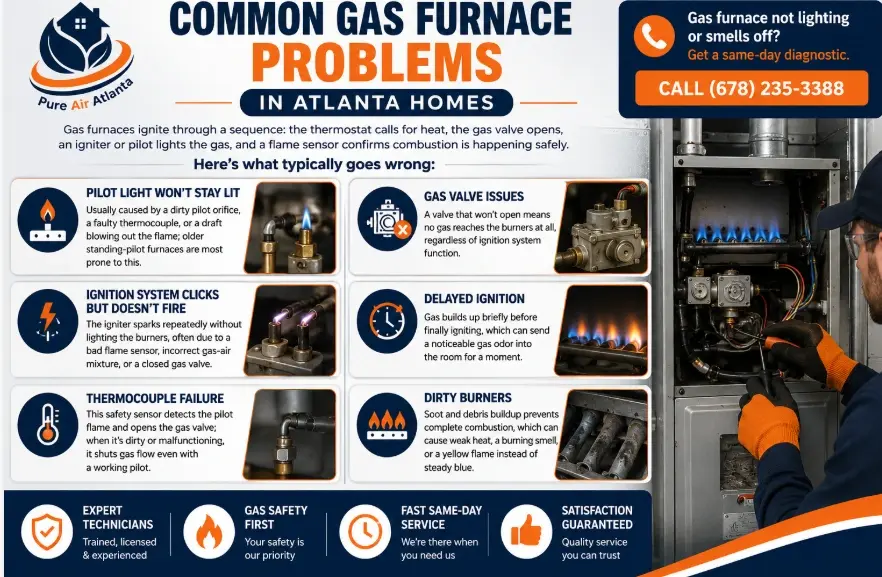
Gas furnaces ignite through a sequence: the thermostat calls for heat, the gas valve opens, an igniter or pilot lights the gas, and a flame sensor confirms combustion is happening safely. A failure at any step in that sequence stops the whole system. Here’s what typically goes wrong:
- Pilot light won’t stay lit — usually caused by a dirty pilot orifice, a faulty thermocouple, or a draft blowing out the flame; older standing-pilot furnaces are most prone to this
- Ignition system clicks but doesn’t fire — the igniter sparks repeatedly without lighting the burners, often due to a bad flame sensor, incorrect gas-air mixture, or a closed gas valve
- Thermocouple failure — this safety sensor detects the pilot flame and opens the gas valve; when it’s dirty or malfunctioning, it shuts gas flow even with a working pilot
- Dirty burners — soot and debris buildup prevents complete combustion, which can cause weak heat, a burning smell, or a yellow flame instead of steady blue
- Gas valve issues — a valve that won’t open means no gas reaches the burners at all, regardless of ignition system function
- Delayed ignition — gas builds up briefly before finally igniting, which can send a noticeable gas odor into the room for a moment
Gas Furnace Repair Cost in Atlanta (2026)
| Gas Furnace Problem | Typical Atlanta Repair Cost | Notes |
|---|---|---|
| Pilot light / thermocouple repair | $100 – $250 | One of the most common and least expensive gas furnace fixes |
| Ignitor or flame sensor replacement | $150 – $350 | Common on furnaces with electronic ignition instead of a standing pilot |
| Gas valve replacement | $300 – $700 | More involved repair; requires shutting off and safely testing the gas supply |
| Burner cleaning and adjustment | $150 – $300 | Often paired with a full maintenance tune-up |
| Full gas furnace diagnostic | $75 – $150 | Typically applied toward the repair if you move forward |
Pricing compiled from published Metro Atlanta HVAC company rates for gas furnace-specific repairs (2026).
Warning Signs Your Gas Furnace Needs Repair
- Pilot light or burner flame is yellow or flickering instead of steady blue
- The furnace clicks repeatedly on startup but never ignites
- A brief gas odor when the furnace starts, especially if it doesn’t fade
- Soot buildup around the burner compartment or visible on the furnace casing
- Frequent pilot light outages, especially in windy or drafty conditions
- Weak or uneven heat despite the furnace running normally
Smell Gas Near Your Furnace? Here’s What to Do
Natural gas is naturally odorless — utilities add a chemical called mercaptan specifically so a leak smells like rotten eggs and gets noticed. If you ever smell that odor near your furnace, treat it as a safety emergency, not a repair to schedule later.
- Do not use light switches, phones, or anything that could create a spark
- Leave the house immediately and get everyone to a safe distance
- Once safely away, call Atlanta Gas Light’s 24-hour emergency line at 877-427-4321, or call 911
- Do not go back inside until Atlanta Gas Light or emergency responders confirm it’s safe
Gas furnaces also produce carbon monoxide as a normal byproduct of combustion, which stays safely vented outside in a properly working system. According to the CDC, a malfunctioning gas appliance is one of the most common sources of CO poisoning in U.S. homes, which is exactly why gas furnace repair atlanta service should always include a safety check, not just a fix for the immediate symptom. See our emergency furnace repair guide for full guidance on carbon monoxide and no-heat emergencies.
Gas Furnace vs. Electric Furnace Repair: Why Gas Costs More
Gas furnace repairs typically run higher than electric furnace repairs for one main reason: combustion safety. Electric furnaces have no gas valve, no pilot light, and no combustion byproducts to test for, so repairs are usually limited to electrical components and airflow. Gas systems require a technician to safely test gas pressure, ignition sequencing, and venting — which takes more time, more specialized tools, and more liability, all reflected in the price.
Gas Furnace Repair vs. Replacement
Most gas furnace issues — pilot lights, thermocouples, ignitors — are inexpensive, straightforward repairs on a furnace of any age. Replacement becomes the better option when:
- The heat exchanger shows cracks, rust, or corrosion — a genuine safety issue, not just a performance one
- Your gas furnace is 15+ years old and has needed multiple repairs this season
- Repair costs approach 50% of a full furnace replacement
Our technicians give you an honest recommendation either way — see our full pricing approach for how every job is quoted.
Gas Furnace Repair Across Metro Atlanta
We repair gas and electric furnaces throughout Metro Atlanta. See city-specific pricing guides below:
Roswell
Furnace repair cost in RoswellLawrenceville
Furnace repair cost in LawrencevilleHow Pure Air Atlanta Handles Gas Furnace Repairs
- Full diagnostic — we check the entire ignition sequence: pilot or igniter, thermocouple or flame sensor, gas valve, and burners.
- Combustion safety check — we confirm proper venting and combustion, not just that the furnace turns on.
- Written, upfront quote — you approve the price before any repair work begins.
- Repair or honest replace guidance — if a cracked heat exchanger or repeated failures point to replacement, we’ll explain your options clearly.
- Prevent repeat issues — ask about annual maintenance to catch pilot light and burner issues before they cause a breakdown.
Gas furnace acting up? Get a written diagnostic and repair quote today.
Request Your Free QuoteGas Furnace Repair in Atlanta: Frequently Asked Questions
How much does gas furnace repair cost in Atlanta?
Gas furnace repair cost in Atlanta typically ranges from $100 for a simple pilot light or thermocouple fix up to $700 for a gas valve replacement, depending on the specific problem.
Why does my gas furnace click but not light?
This usually means the igniter is sparking but the burners aren’t receiving gas or the flame sensor isn’t confirming ignition. Common causes include a bad flame sensor, closed gas valve, or incorrect gas-air mixture — all issues a technician can diagnose safely.
Is it dangerous if my gas furnace smells like gas?
Yes. Leave the house immediately, avoid anything that could create a spark, and call Atlanta Gas Light’s emergency line at 877-427-4321 or 911 from a safe location. Do not attempt to diagnose or repair the issue yourself.
Why is gas furnace repair more expensive than electric furnace repair?
Gas furnace repairs involve combustion safety testing — gas pressure, ignition sequencing, and venting — that electric furnaces don’t require, which adds time, specialized tools, and liability to the job.
Can a gas furnace pilot light problem cause carbon monoxide issues?
A pilot light itself going out isn’t a CO source, but the underlying issues that cause ignition and combustion problems — like a cracked heat exchanger or blocked venting — can allow carbon monoxide to enter the home. Any gas furnace repair should include a combustion safety check.
For more, see our guides on furnace installation cost, emergency furnace repair, or frequently asked questions.
HVAC Service Area — ZIP Code Directory
92 ZIP codes served · Tap any ZIP to call +1 (678) 235-3388 · pureairatlanta.com