What a Winter Storm Warning Georgia Alert Means for Your Furnace
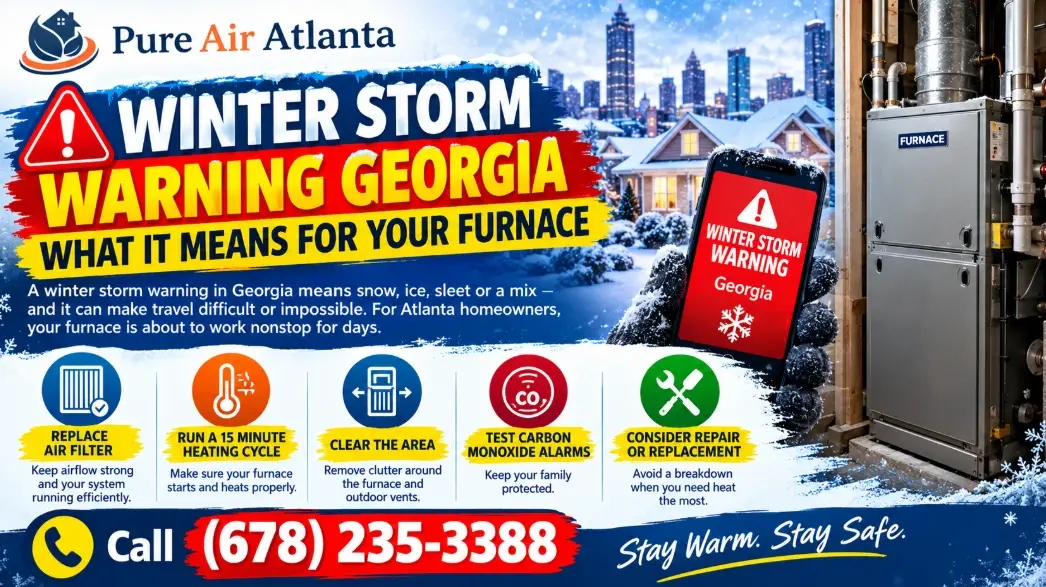
A winter storm warning Georgia residents receive on their phones is not routine weather chatter. It means the National Weather Service expects a significant winter event, such as snow, ice, sleet or a mix, that can make travel difficult or even impossible. For Atlanta homeowners there is a second problem hiding behind the forecast: the furnace that has barely run since spring is about to be asked to work nonstop for days.
Metro Atlanta does not get hard freezes often, and that is exactly why heating systems here get caught off guard. A gas furnace can sit idle for months, collect dust, and then fail on the coldest night of the year, right when technicians are booked solid and the roads are slick. This guide shows you what to do before, during and after a storm, so you can decide whether you need furnace repair in Atlanta, a replacement, or simply a quick tune-up.
Within 72 hours of a winter storm warning, replace the air filter, run a 15 minute heating cycle, clear the space around the furnace and outdoor vents, and test your carbon monoxide alarms. If the furnace is around 15 years old, short cycles, or needs repeated repairs, ask about replacement before the cold arrives, not after.
Winter Storm Watch vs Warning vs Advisory in Georgia
The National Weather Service uses several alert levels, and each one tells you how much time you have left to prepare. A winter storm watch Georgia forecasters issue usually comes first, and the warning follows when the storm becomes more certain. Here is how the alerts compare, based on the NWS definitions, along with what each one should trigger at home.
| Alert | What it means | What to do for your heating |
|---|---|---|
| Winter Weather Advisory | Snow, blowing snow, ice or sleet is expected, but not at a level that meets warning criteria. | Check the filter and thermostat, and avoid unnecessary driving. |
| Winter Storm Watch | Conditions favor a significant winter storm, such as heavy sleet, heavy snow or an ice storm, but it is not certain yet. | This is your prep window. Run the full checklist below today. |
| Winter Storm Warning | A significant winter event is expected or underway, and travel may become difficult or impossible. | Finish preparations, stay home, and call for service only if heat is urgent. |
| Ice Storm Warning | Ice accumulation of roughly a quarter inch or more, which can snap power lines and tree branches. | Plan for a power outage, because most gas furnaces cannot run without electricity. |
You can read the official wording on the National Weather Service page for winter weather warnings, watches and advisories, and follow live local forecasts from the NWS Atlanta and Peachtree City forecast office.
One detail trips people up: alerts are issued by county. A ga winter storm warning for north Georgia counties does not automatically include Fulton, DeKalb, Cobb or Gwinnett, so a winter storm warning Georgia news story may not apply to your address, and a winter weather advisory Georgia counties receive may be upgraded later. Always check the alert for your own county, and check it again before bed.
Why Furnaces Fail During an Atlanta Winter Storm
Most no-heat calls during a cold snap trace back to a handful of causes. Knowing them helps you spot trouble early, and it explains why a furnace that worked fine in November can quit in the middle of a storm. If your system already struggles, our guide to a furnace not heating in Atlanta homes covers the most common symptoms.
Clogged filter and dusty parts
Restricted airflow makes the furnace overheat and trip its safety limit switch, so it shuts off just as demand peaks.
Ignition and flame sensor trouble
After months of sitting idle, a dirty flame sensor or weak igniter can let the furnace light and then shut down seconds later.
Frozen or blocked pipes
High-efficiency furnaces use plastic intake and exhaust pipes and a condensate drain. Ice, snow or a frozen drain line in a cold garage or attic can lock the system out.
Power outages
Gas furnaces still need electricity for the igniter, control board and blower, so a downed line means no heat even with gas service on.
Heat pump limits
Heat pumps lose capacity as temperatures drop and lean on electric backup heat, which raises bills. Ice on the outdoor unit makes it worse. See our heat pump repair and installation costs in Smyrna for a local breakdown.
Age and wear
Furnaces commonly last around 15 to 20 years. Older units are far more likely to fail under the stress of continuous winter operation.
Before The 72-Hour Winter Storm Warning Georgia Furnace Checklist
Work through these steps as soon as a watch appears. Each one takes minutes, and together they remove most of the surprises that lead to emergency calls.
72 hours out- Replace the air filter. A fresh filter protects airflow and the heat exchanger. During heavy winter use, check it monthly.
- Run a 15 minute test cycle. Set the thermostat to heat and a few degrees above room temperature. Warm air should reach every vent. A faint dusty smell for the first minutes is normal, but a burning or gas smell is not.
- Book a professional inspection. A technician can test the igniter, flame sensor, safety switches and venting. Our furnace maintenance and tune-up service covers exactly these checks, and professional furnace cleaning removes dust that causes ignition trouble.
- Clear the area. Keep at least three feet of open space around the furnace, and make sure supply registers and return grilles are not blocked by furniture or rugs.
- Check outdoor vents and units. Clear leaves and debris from furnace intake and exhaust terminations and from the heat pump. After the storm, remove snow gently by hand, and never chip ice with tools.
- Test carbon monoxide and smoke alarms. The Consumer Product Safety Commission recommends a carbon monoxide alarm on every level of the home and outside sleeping areas. Replace weak batteries now.
- Find your shutoffs. Know where the gas shutoff, main water valve and electrical panel are located before you need them.
- Keep the thermostat steady. Avoid deep overnight setbacks, and if you will be away, do not let the house drop below 55 degrees Fahrenheit, which helps protect pipes.
- Protect your pipes. Open cabinet doors under sinks on exterior walls and let faucets drip slowly during hard freezes.
- Stock a three-day kit. Include flashlights, blankets, water, medications, phone chargers and batteries, and check on elderly neighbors and relatives.
Using a fireplace as backup? Have it inspected first. Our chimney cleaning service removes creosote buildup, and a sealed-up house also benefits from clean ducts, so consider air duct cleaning and air purification after the storm.
Furnace Repair or Furnace Replacement Before the Storm?
A forecast is the worst time to learn that your furnace is beyond saving, and it is also the moment many homeowners start asking whether to repair or replace. The honest answer depends on age, repair history and safety, not on the weather alone. Ideally you settle it before a winter storm warning Georgia forecasters issue forces a rushed decision.
| Situation | Usually repair | Usually replace |
|---|---|---|
| Age | Under roughly 10 to 12 years | Around 15 years or older |
| Problem | One small part such as an igniter, flame sensor, capacitor or thermostat | Cracked heat exchanger, failed control board, or repeated breakdowns |
| Cost | Repair is a small fraction of a new system | Repair quote approaches half the cost of a new furnace |
| Comfort and bills | Even heat and stable energy bills | Cold rooms, short cycling and rising bills |
| Safety | No carbon monoxide or flame issues | Yellow flame, soot, or any carbon monoxide concern |
Replacing before a storm gives you time to compare options, while a rushed install after a freeze limits choices and scheduling. If replacement looks likely, start with our furnace replacement service and review what furnace installation costs in Atlanta. Homeowners in nearby cities can compare furnace replacement costs in Smyrna, in Alpharetta and in Marietta, or check typical furnace repair costs in Marietta and Alpharetta furnace repair prices before deciding. You can also see our service pricing or contact our team for an inspection and honest recommendation.
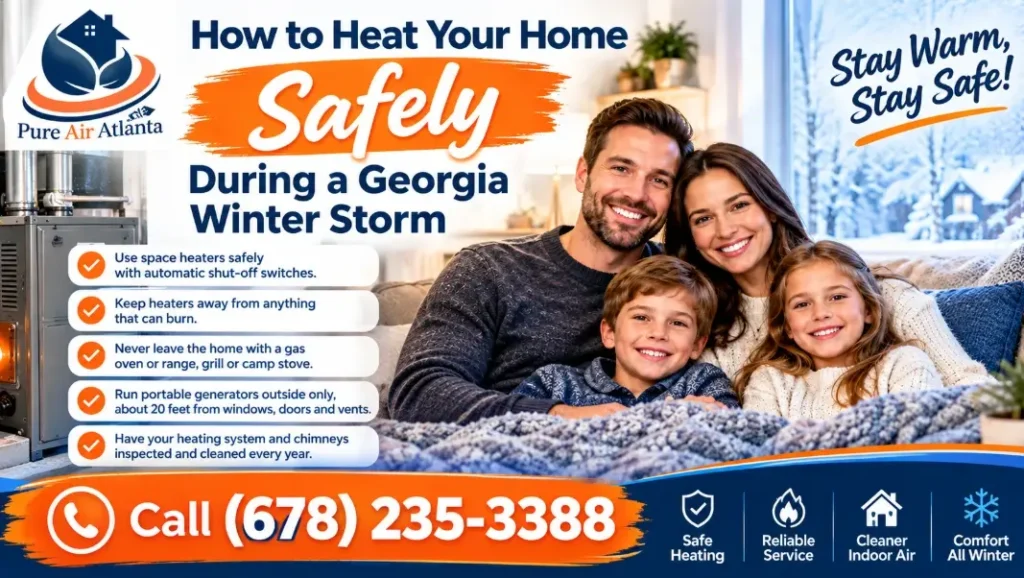
How to Heat Your Home Safely During a Georgia Winter Storm
Every winter storm warning Georgia households face brings a spike in improvised heating, and home heating is the second leading cause of home fires, according to Ready.gov’s winter preparedness guidance, and carbon monoxide is the silent danger when people improvise heat. The Georgia Emergency Management and Homeland Security Agency repeats the same core rules on its winter weather safety page.
- Use space heaters with automatic shut-off switches, plug them directly into a wall outlet, and keep them at least three feet from anything that can burn.
- Turn space heaters off when you leave the room or go to sleep.
- Never heat the home with a gas oven or range, a grill or a camp stove.
- Run portable generators outside only, about 20 feet from windows, doors and vents.
- Have heating equipment and chimneys professionally inspected and cleaned every year.
Know the warning signs of carbon monoxide poisoning: headache, dizziness, weakness, nausea, sleepiness and confusion. The Consumer Product Safety Commission explains them in its carbon monoxide information center. If an alarm sounds or anyone feels these symptoms, get everyone outside to fresh air and call 911.
The City of Atlanta publishes cold weather guidance as well. See the Atlanta Fire Rescue Department cold weather fire safety tips, and watch city announcements, because Atlanta has opened warming centers ahead of past freezing events, as described in this City of Atlanta update on serving residents during extreme cold.
What to Do If Your Furnace Stops Working During the Storm
If the furnace quits after a winter storm warning Georgia counties have already issued, do not panic, and do not start tampering with safety controls. Work through these steps in order:
- Check the thermostat. Make sure it is on heat, set above room temperature, and has fresh batteries if it uses them.
- Check power. Look at the breaker, the furnace power switch and the door panel switch. A tripped breaker is a quick fix, but a breaker that trips again needs a technician.
- Check the filter. A clogged filter can trigger a safety shutdown. Replace it if it is dirty.
- Look outside. Make sure ice or snow is not blocking the furnace exhaust and intake pipes, and that a condensate line has not frozen.
- Smell gas? Leave immediately. Do not flip switches or use your phone inside. Call 911 or your gas utility from outside.
- Call for help. If the steps above do not restore heat, contact a technician. Our guides to emergency furnace repair in Atlanta and gas furnace repair explain what to expect, and the furnace won’t turn on troubleshooting guide for Douglasville homes covers more no-start causes.
While you wait, gather the household in one room, close interior doors, add layers and blankets, and keep the room warm without using ovens, grills or unvented fuel heaters. Before you head out for supplies or to meet a technician, check road conditions on the Georgia Department of Transportation winter weather page and the live 511GA traffic map.
Don’t wait for the storm to find out your furnace is failing
Our technicians can inspect, repair or replace your furnace before the next winter storm warning arrives.
Call (678) 235-3388 Request an InspectionOfficial Georgia and Atlanta Winter Weather Resources
Bookmark these trusted sources before the next alert, so you are not searching for them in the dark.
- NWS Atlanta and Peachtree City: live forecasts and alerts
- NWS winter alert definitions: watch, warning, advisory
- Georgia GEMA winter safety: state preparedness guidance
- GDOT winter weather: road treatment and travel tips
- 511GA: real-time Georgia road conditions
- Atlanta Fire Rescue Department: City of Atlanta fire safety
- Ready.gov Winter Ready: federal winter preparedness
- USFA heating safety flyer: heating your home safely
Furnace Repair and Replacement Near You in Metro Atlanta
Pure Air Atlanta serves homeowners across the metro area. Pick your city to see local furnace information, and visit our service areas page for the full list.
- Furnace repair in Smyrna and emergency furnace repair in Smyrna
- Furnace repair in Marietta
- Furnace repair in Alpharetta and emergency furnace repair in Alpharetta
- Furnace repair in Roswell and Roswell furnace repair costs
- Furnace repair in Lawrenceville and Lawrenceville furnace repair costs
- Furnace repair in Douglasville and Douglasville furnace repair costs
- Furnace repair in Kennesaw
- Furnace repair in Sandy Springs
- Furnace repair costs in Cumming
- Furnace installation in Decatur
Curious who is behind the work? Read about Pure Air Atlanta, meet our technicians, or see what neighbors say in our customer testimonials. Have a quick question first? Our frequently asked questions cover scheduling and service basics, and you can browse more articles on the Pure Air Atlanta blog.
Winter Storm Warning Georgia FAQs
What does a winter storm warning mean in Georgia?
A winter storm warning means the National Weather Service expects a significant winter weather event, such as heavy snow, ice, sleet, blowing snow or a combination, and travel may become difficult or impossible. In Georgia, treat it as the final signal to finish your furnace and home preparations and stay off the roads.
What is the difference between a winter storm watch and a winter storm warning in Georgia?
A winter storm watch means conditions are favorable for a significant winter storm but it is not certain yet. A winter storm warning means the significant event is expected or already happening. Use the watch period to test your furnace and stock supplies, and use the warning period to stay safe at home.
Will my gas furnace work if the power goes out during a winter storm?
Usually not. Most gas furnaces still need electricity to run the igniter, control board and blower fan, so a power outage can leave you without heat even when gas service is on. Never run a portable generator, grill or camp stove indoors, because of the carbon monoxide risk.
How do I know if my furnace is ready for a winter storm?
Replace the filter, set the thermostat to heat, and let the furnace run a full 15 minute cycle. Warm air should reach every vent without banging, rattling or a burning smell that lasts. The burner flame should be steady and blue. If anything seems off, book a professional tune-up before the storm arrives.
Should I repair or replace my furnace before winter in Atlanta?
Repair a newer furnace that needs one small part. Consider replacement when the furnace is around 15 years old or older, needs repeated repairs, has a cracked heat exchanger, or produces uneven heat and rising bills. A technician can inspect the system and give you both options with clear numbers.
What should I do if my furnace stops working during a winter storm?
Check the thermostat settings, the breaker, the furnace power switch and the air filter. Look for ice or snow blocking the outdoor vent pipes. If you smell gas, leave the home right away and call 911 or your gas utility from outside. For any other failure, call a heating technician and warm one room safely in the meantime.
Get your furnace storm-ready today
Call (678) 235-3388 or send a message, and we will help you decide between a tune-up, a repair and a replacement.
Call (678) 235-3388 Contact Pure Air Atlanta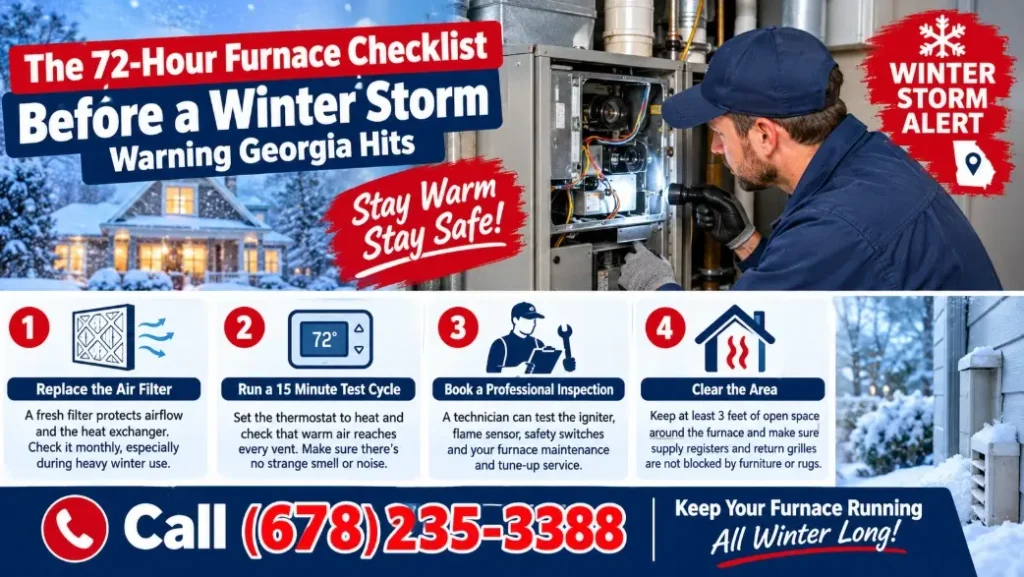
HVAC Service Area — ZIP Code Directory
92 ZIP codes served · Tap any ZIP to call +1 (678) 235-3388 · pureairatlanta.com