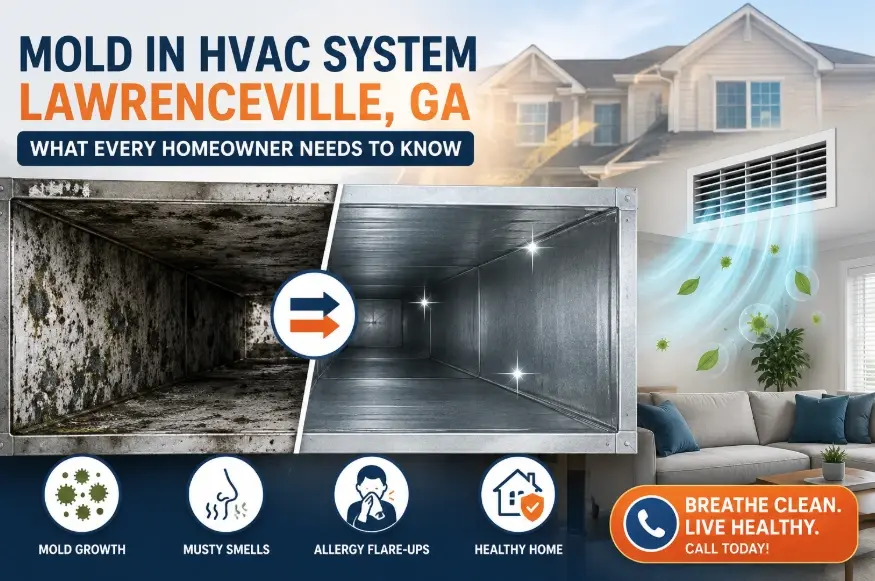
Mold in HVAC System Lawrenceville GA: What Every Homeowner Needs to Know
Musty smells, allergy flare-ups, and visible spots near your vents are usually your HVAC system telling you something is wrong. Here’s how to spot it, why it happens so often in Lawrenceville homes, and what a real fix costs.
If you searched for mold in HVAC system Lawrenceville GA, you already suspect something is off — a musty odor when the air kicks on, a spike in allergy symptoms, or a technician who mentioned buildup during a routine visit. Georgia’s humidity and Gwinnett County’s clay-heavy soil moisture make HVAC systems here especially prone to mold growth inside coils, drain pans, blower compartments, and ductwork. This guide walks through the warning signs, the health risks, what professional remediation actually involves, and realistic 2026 pricing so you can make an informed decision.
This guide covers mold anywhere inside the system itself — coils, drain pans, blower housings, and the air handler. If your concern is specifically about the ductwork running through your attic or crawlspace, our Mold in Air Ducts Lawrenceville GA guide covers that in more depth.
Why Lawrenceville Homes Are Prone to HVAC Mold
Lawrenceville sits in Gwinnett County, where summer humidity regularly climbs above 70%. When an air conditioner runs, it pulls moisture out of the air and that condensation collects on the evaporator coil and drips into the drain pan. If a system is oversized, a drain line is clogged, or a home simply runs the AC in short bursts, that moisture never fully evaporates — and mold spores that are already floating through every home’s air find the damp surface they need to colonize. Add an aging duct system, a musty crawlspace, or a recent roof leak, and the odds of HVAC mold in a Gwinnett County home go up considerably.
Warning Signs of Mold in HVAC System Lawrenceville GA Homes
Most homeowners notice one of these signs before they ever see visible mold:
Musty Odor on Startup
A damp, earthy smell that appears specifically when the AC or heat kicks on and fades when it shuts off.
Increased Allergy Symptoms
Sneezing, congestion, or watery eyes that improve when you leave the house and return when the system runs.
Visible Spots at Vents
Black, green, or gray specks around supply registers or on the return air grille.
Standing Water Near the Unit
A clogged condensate drain line or overflowing drain pan near the indoor air handler.
Recent Water Damage
A roof leak, burst pipe, or flooded crawlspace within the last several months.
Higher Humidity Indoors
Condensation on windows or a sticky feeling in the air even with the AC running.
Not sure if what you’re smelling is mold or just dust? Our Musty Smell from AC Vents Lawrenceville guide breaks down how to tell the difference before you call anyone out.
Health Risks: Why This Isn’t Just a Smell Problem
According to the EPA’s guidance on mold and moisture, mold produces allergens and irritants that can trigger allergic reactions, and the agency specifically warns against running an HVAC system that is known or suspected to be contaminated, since it can spread spores through every room the ductwork reaches. The CDC’s mold and health resources note that people with asthma, chronic respiratory conditions, or weakened immune systems are more likely to experience symptoms from exposure. Households with young children, older adults, or anyone with pre-existing respiratory issues should treat suspected HVAC mold as a priority, not a someday project.
What Professional Mold Remediation for an HVAC System Involves
A proper fix goes well beyond spraying a can of disinfectant into the vents. Here’s what our NADCA-certified process looks like:
1. Full System Inspection
A technician inspects the evaporator coil, drain pan, blower compartment, air handler cabinet, and accessible ductwork with a camera to confirm the extent of contamination and identify the moisture source.
2. Source Correction
Mold keeps coming back if the underlying moisture problem — a clogged drain line, an undersized return, a leaking duct seam — isn’t fixed first. This is why our duct sealing service in Lawrenceville is often paired with mold remediation.
3. Negative-Pressure Containment
Contaminated sections are isolated with negative air pressure so spores don’t spread to the rest of the home during cleaning.
4. HEPA-Filtered Cleaning
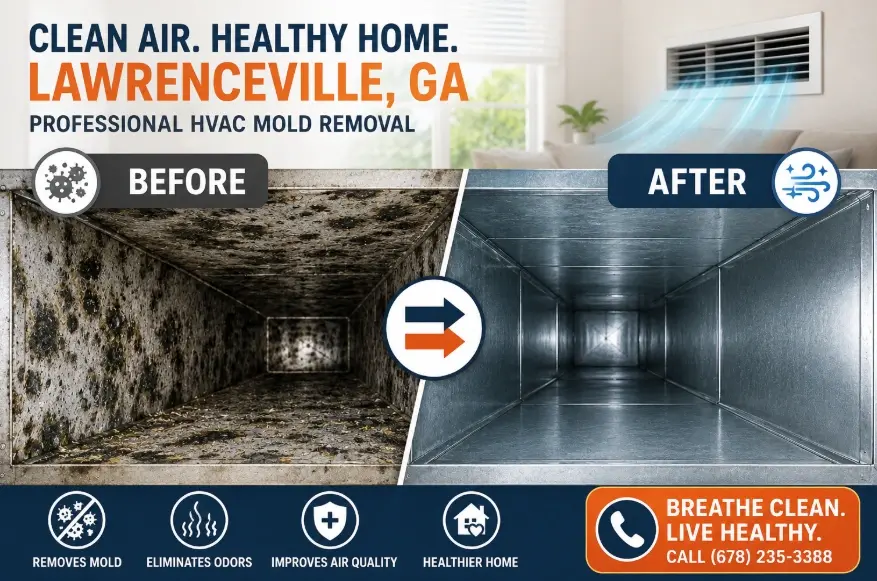
Coils, drain pans, and ductwork are cleaned using HEPA vacuum equipment and EPA-registered antimicrobial treatments rather than bleach, which the EPA notes does not fully kill mold on porous surfaces.
5. Post-Cleaning Verification
A final inspection confirms the system is clean before it’s put back into regular use, and we walk through prevention steps with the homeowner.
For homes where the mold has spread through the full duct run, our air duct cleaning service in Lawrenceville is typically performed alongside HVAC system remediation.
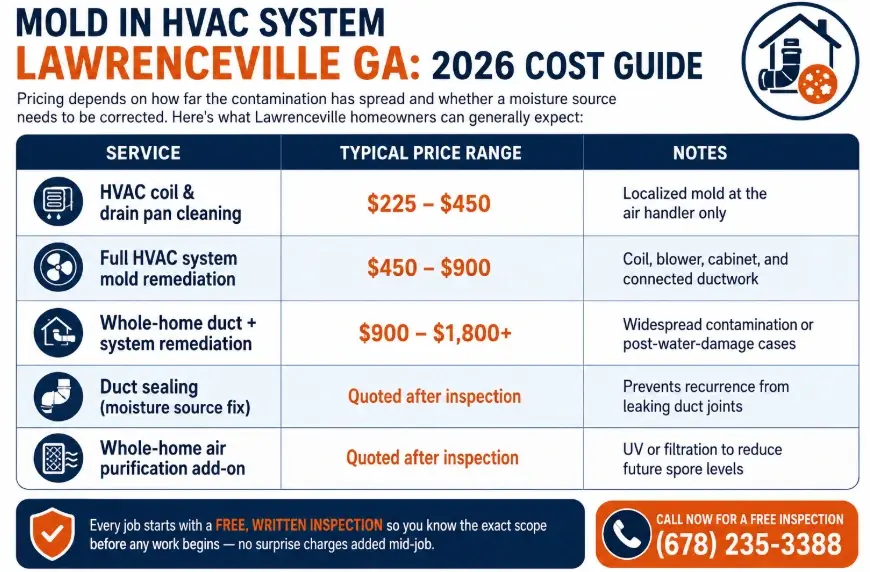
Mold in HVAC System Lawrenceville GA: 2026 Cost Guide
Pricing depends on how far the contamination has spread and whether a moisture source needs to be corrected. Here’s what Lawrenceville homeowners can generally expect:
| Service | Typical Price Range | Notes |
|---|---|---|
| HVAC coil & drain pan cleaning | $225 – $450 | Localized mold at the air handler only |
| Full HVAC system mold remediation | $450 – $900 | Coil, blower, cabinet, and connected ductwork |
| Whole-home duct + system remediation | $900 – $1,800+ | Widespread contamination or post-water-damage cases |
| Duct sealing (moisture source fix) | Quoted after inspection | Prevents recurrence from leaking duct joints |
| Whole-home air purification add-on | Quoted after inspection | UV or filtration to reduce future spore levels |
Every job starts with a free, written inspection so you know the exact scope before any work begins — no surprise charges added mid-job.
Preventing Mold From Coming Back
Once a system is clean, a few habits keep it that way in Lawrenceville’s climate:
- Change air filters every 60–90 days (more often with pets)
- Have the condensate drain line flushed during annual maintenance
- Keep indoor humidity between 30–50% with a dehumidifier if needed
- Seal leaking duct joints so humid attic or crawlspace air can’t infiltrate the system — see our duct sealing page
- Consider a whole-home air purification system with UV-C to continuously reduce airborne spore counts
- Schedule annual HVAC cleaning even if you don’t smell anything unusual yet
Why Lawrenceville Homeowners Choose Pure Air Atlanta
Pure Air Atlanta is a NADCA-certified air duct and HVAC cleaning company serving Lawrenceville and the rest of Gwinnett County. Our technicians follow EPA-aligned remediation practices, provide free written quotes before any work starts, and specialize in getting to the actual moisture source instead of just masking the smell. Learn more about our Lawrenceville service area and the full range of indoor air quality services we offer locally.
Homeowners dealing with local permitting or code questions related to moisture damage can also reference resources from Gwinnett County Government and the City of Lawrenceville for local building and inspection guidance.
Frequently Asked Questions
How do I know if it’s mold or just dust in my HVAC system?
Dust tends to be gray or beige and dry to the touch, while mold typically appears black, green, or dark spotted and can look slightly fuzzy or slimy near moisture sources like the drain pan or coil. A musty odor that appears only when the system runs is a strong indicator of mold rather than ordinary dust buildup.
Can I clean HVAC mold myself?
Small amounts of surface mold on accessible, hard, non-porous parts can sometimes be wiped with a mild detergent, but the EPA advises against using bleach on porous ductwork and recommends professional remediation once mold covers more than a small area or is inside the system itself, since disturbing it without containment can spread spores through the home.
How much does mold remediation cost in Lawrenceville GA?
Localized coil or drain pan cleaning typically runs $225–$450, while full HVAC system remediation with connected ductwork ranges from $450–$900, and whole-home cases involving water damage can run $900–$1,800 or more. A free written inspection gives you an exact number before work begins.
Will mold come back after remediation?
It can if the underlying moisture source isn’t corrected. That’s why professional remediation always includes fixing the cause — a clogged drain line, leaking duct seam, or humidity imbalance — rather than just cleaning the visible mold.
Is HVAC mold dangerous for kids or people with asthma?
Yes. The CDC notes that people with asthma, allergies, or compromised immune systems are more likely to experience symptoms from mold exposure, and children can be especially sensitive. Households in these categories should treat suspected HVAC mold as a priority repair.
Think You Have Mold in Your HVAC System?
Get a free, no-obligation inspection from a NADCA-certified Pure Air Atlanta technician serving Lawrenceville and greater Gwinnett County.
Lawrenceville, GA Service Area — ZIP Code Directory
6 ZIP codes served · Tap any ZIP to call +1 (678) 235-3388 · pureairatlanta.com