
Boiler Not Heating Atlanta? Safety Stops Come First
Few things sting like a boiler not heating Atlanta on the first cold morning after a long Atlanta summer. The good news: most no-heat calls start with a thermostat setting, a switch, low pressure or trapped air. The bad news: a few causes are dangerous. This guide gives you nine checks in a safe order, a symptom table, and a clear line for when to stop and call a technician.
- A gas or rotten-egg smell. Leave the building, then call 911 or your gas utility from outside.
- A carbon monoxide alarm sounding, or headaches and dizziness indoors.
- Water spraying or steadily running from the relief valve.
- Loud banging, hissing, scorch marks or soot around the boiler.
Atlanta Fire Rescue’s winter fire and carbon monoxide safety tips advise alarms outside sleeping areas and a professional heating inspection each fall.
Why a Boiler Stops Heating After an Atlanta Summer
Atlanta heating season is short and unpredictable. The National Weather Service lists November 13 as Atlanta’s average first freeze, so many boilers sit idle for seven or eight months. Idle equipment fails in predictable ways: circulator shafts stick, zone valves seize, pilots go out, pressure drifts, and dust or debris blocks vents.
If you own an older home or apartment building in intown neighborhoods such as Midtown, Inman Park or Virginia-Highland, your heat may come from a boiler and radiators instead of ducts. Not sure which you have? A boiler heats water or steam that flows to radiators or baseboards. A furnace blows warm air through vents. If you have vents, read our furnace not heating guide instead.
Steam or Hot Water: Know Your Boiler Before You Troubleshoot
The checks below focus on hot water (hydronic) systems, the most common type in homes. Steam boilers work differently: they depend on a water level in a sight glass, not a pressure gauge reading of 12 to 15 psi. Our guide to steam vs hot water boilers in Atlanta shows how to tell which one you own. If yours is steam, stop at check 2 and call.
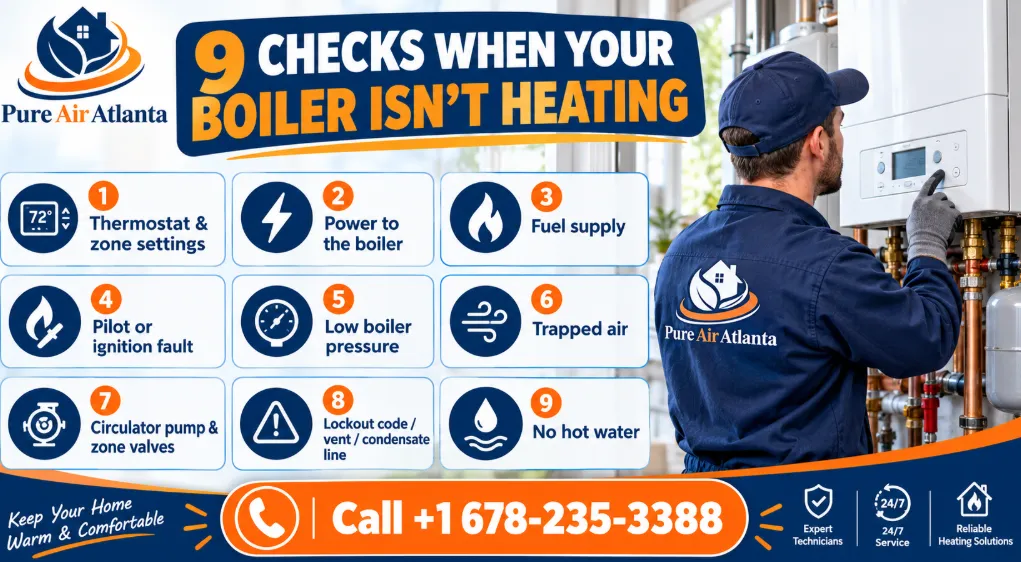
9 Checks When Your Boiler Is Not Heating
Thermostat and zone settings
Set the mode to Heat and raise the setpoint at least 5°F above room temperature. Replace dead batteries. On multi-zone systems, test each zone’s thermostat separately. One cold zone with others working points to that zone, not the boiler.
Power to the boiler
Find the service switch (it looks like a light switch, often on or near the boiler) and confirm it is on. Check the breaker and the display. A boiler with no lights and no display usually has a power problem, a blown fuse or a failed control board.
Fuel supply
For gas boilers, confirm the manual gas valve handle sits in line with the pipe. Never hunt for a gas leak yourself. For oil or propane, check the tank level. Other gas appliances not working at all suggests a supply problem.
Boiler pilot or ignition fault
Older boilers use a standing pilot. If it is out, relight it once exactly as the label directs, and only if you smell no gas. Newer boilers use electronic ignition: clicking with no flame points to a dirty flame sensor, a weak igniter or a gas valve problem. If the pilot will not stay lit, a failing thermocouple is likely. That is a repair for a technician.
Boiler losing pressure
Read the gauge on a cold boiler. Most residential hot water systems sit around 12 to 15 psi cold and rise as they heat, staying under the relief valve rating, commonly 30 psi. Very low pressure can shut the boiler down. If the fill valve restores pressure, fine. If you need to refill repeatedly, the system has a leak. Never add water to a hot boiler. Pressure above about 25 to 30 psi or a dripping relief valve often means a waterlogged expansion tank or a bad fill valve.
Air trapped in the system
Gurgling, cold upper floors or radiators warm at the bottom and cold at the top suggest air. Bleed radiators only as your manual describes, with the boiler off, and watch the pressure afterward. If air keeps returning, something is letting it in.
Circulator pump and zone valves
If the boiler is hot but rooms stay cold, the circulator may be stuck, or a zone valve may not be opening. A pump that hums without spinning, or stays silent when the thermostat calls, needs service. This is the classic “woke up from summer” failure.
Lockout code, vent and condensate line
Write down any fault code, then reset once. If it locks out again, stop. High-efficiency (condensing) boilers also shut down when the plastic vent is blocked or the condensate trap clogs. From the ground, look for leaves or a nest at the outdoor vent. Do not climb or open the unit.
Boiler no hot water
If radiators heat but taps stay cold, or the reverse, the issue is often the aquastat, the indirect tank loop or a tankless coil, not the whole boiler. Note which one is missing and tell your technician.
Symptom Guide: What You See and What It Usually Means
| What you notice | Likely cause | Your move |
|---|---|---|
| Radiators cold on top, gurgling | Trapped air | Bleed per manual, then call if it returns |
| Boiler hot, every room cold | Circulator or zone valve | Call a technician |
| Pressure near zero, repeated refills | Leak in the system | Call a technician |
| Relief valve dripping, pressure high | Expansion tank or fill valve | Call a technician |
| Clicking, no flame | Igniter, flame sensor or gas | Reset once, then call |
| Pilot will not stay lit | Thermocouple or draft | Call a technician |
| Fault code or lockout | Sensor, vent or condensate | Note the code, reset once, call |
| One zone cold only | Thermostat or zone valve | Test thermostat, then call |
What Not to Do With a Boiler That Won’t Heat
Do not bypass limit controls, plug or cap the relief valve, repeatedly relight a pilot, or pour water into a hot boiler. Do not heat with an oven or a generator indoors; both raise carbon monoxide risk. If you need temporary warmth, use only a properly placed, listed electric space heater, plugged directly into a wall outlet, and keep it clear of anything flammable. The City of Atlanta’s winter weather preparedness checklist covers cold-weather safety and warming centers.
Apartment, Office and Multi-Unit Owners: Inspections and Permits
Building owners carry extra obligations. Georgia requires regular inspection of boilers and pressure vessels, with certain exemptions, and the state’s Office of Insurance and Safety Fire Commissioner boiler division handles inspections and certificates of authority for companies that install or service boilers. Our breakdown of Georgia boiler inspection requirements explains who needs a certificate and how often. Replacing a boiler or changing a system also usually involves permits, so ask your contractor to confirm requirements with the City’s Office of Buildings permitting page before work begins.
Prepare Your Boiler for Atlanta’s First Cold Snap
The best fix is a fall test run. Turn the heat on during a mild week, confirm every zone warms, and check pressure, leaks and noises while you can still schedule service. Then review our Atlanta winter weather heating guide and the Georgia winter storm heating checklist. If your heating fails during an emergency, our emergency heating repair page explains how fast service works.
When to Call a Boiler Repair Technician in Atlanta
Call if you reach check 7, see a fault code that returns, lose pressure repeatedly, or notice any item in the safety box above. Pure Air Atlanta handles hot water and steam boiler troubleshooting across Metro Atlanta. Meet our service technicians or send details through our contact page.
Boiler not heating right now? Talk to a real person today.
Call +1 678-235-3388Boiler Not Heating: Frequently Asked Questions
Why is my boiler on but my radiators are cold?
Common causes are trapped air, a stuck circulator pump, a closed or failed zone valve, or low system pressure. Check the gauge first, then listen for the pump. If the boiler heats but rooms do not, call a technician.
What pressure should my boiler be at?
Many residential hot water boilers read about 12 to 15 psi cold and rise as they heat, staying well under the relief valve rating, often 30 psi. Always follow your manufacturer’s label, because systems vary.
Can I reset my boiler more than once?
No. Reset once as the manual directs. Repeated lockouts mean a fault, such as a flame sensor, vent or condensate issue, and repeated resets can hide a safety problem.
Why is my boiler not heating after sitting all summer?
Idle months let circulators seize, zone valves stick, pilots go out and pressure drift. A fall test run catches these before the first freeze.
Is it safe to keep running a boiler with a pilot or ignition problem?
If you smell gas, leave and call 911 or your gas utility. Otherwise, avoid repeatedly relighting. A boiler that will not hold a flame needs a technician.
Do I need a permit to replace a boiler in Atlanta?
Replacement and system changes generally involve mechanical permits. Rules change, so have your contractor confirm with the City of Atlanta Office of Buildings before starting.
Related Heating Guides From Pure Air Atlanta
HVAC Service Area — ZIP Code Directory
92 ZIP codes served · Tap any ZIP to call +1 (678) 235-3388 · pureairatlanta.com