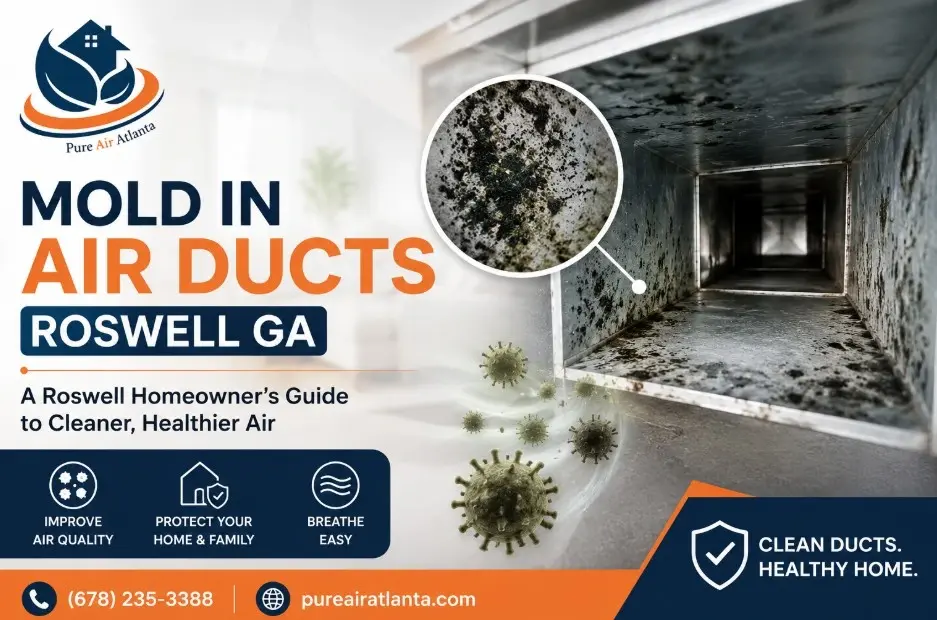
Mold in Air Ducts: A Roswell Homeowner’s Guide
Updated for 2026 | Pure Air Atlanta
Mold inside ductwork is more common in humid climates than most homeowners realize, and Roswell’s proximity to the Chattahoochee River corridor puts it at higher risk than drier parts of Metro Atlanta. This guide covers why it happens, how to spot it, what it means for your household’s air quality, and what a proper fix actually looks like.
Why Mold Grows in Ductwork
Mold needs moisture, a food source like dust or organic debris, and darkness, all three of which exist inside a typical duct system. Condensation on the evaporator coil, a slow condensate drain, or ductwork running through a damp crawlspace can all create the conditions mold needs. Homes near Nesbit Lakes and older properties in the Historic Roswell District tend to see this more often given the area’s ambient humidity.
The EPA notes that controlling moisture is the key step in preventing mold, since cleanup without addressing the source usually leads to regrowth. The CDC similarly points out that mold exposure can trigger allergic reactions, and in people with asthma or existing respiratory sensitivity, symptoms can be more pronounced, which is worth keeping in mind if anyone in your household already deals with allergies.
For a broader look at how mold interacts with the rest of your HVAC system, our Roswell HVAC cleaning page covers the full picture beyond just the ducts, including the coil and blower housing where moisture problems often start.
How to Tell If You Have a Problem
- A musty or damp odor when the HVAC system runs
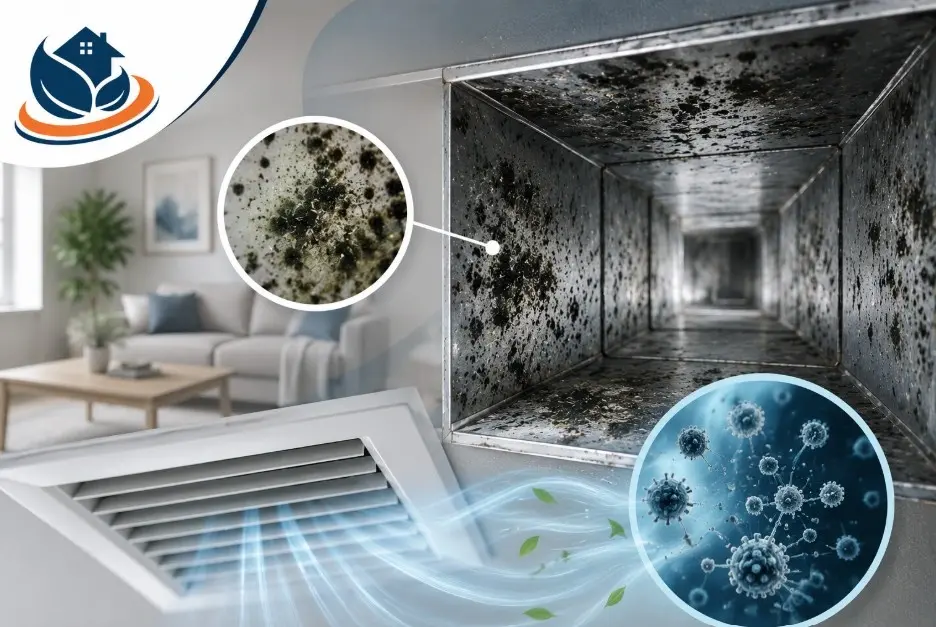
- Visible dark spots around vents or on the indoor unit
- Allergy symptoms that spike specifically when the system is on
- A history of water intrusion or high indoor humidity
- Condensation or visible moisture around supply and return vents
If the musty smell is the main symptom you’re noticing, our dedicated guide on what a musty smell from AC vents actually means walks through how to narrow down whether it’s mold, a dirty filter, or a drain line issue before you spend money on the wrong fix.
Quick note: Not every dark spot is black mold. Some species are more aggressive than others, and identifying which type you’re dealing with matters for how it should be handled. See our breakdown of black mold in air ducts: how to identify it and what to do for a closer look.
What Happens If It’s Left Alone
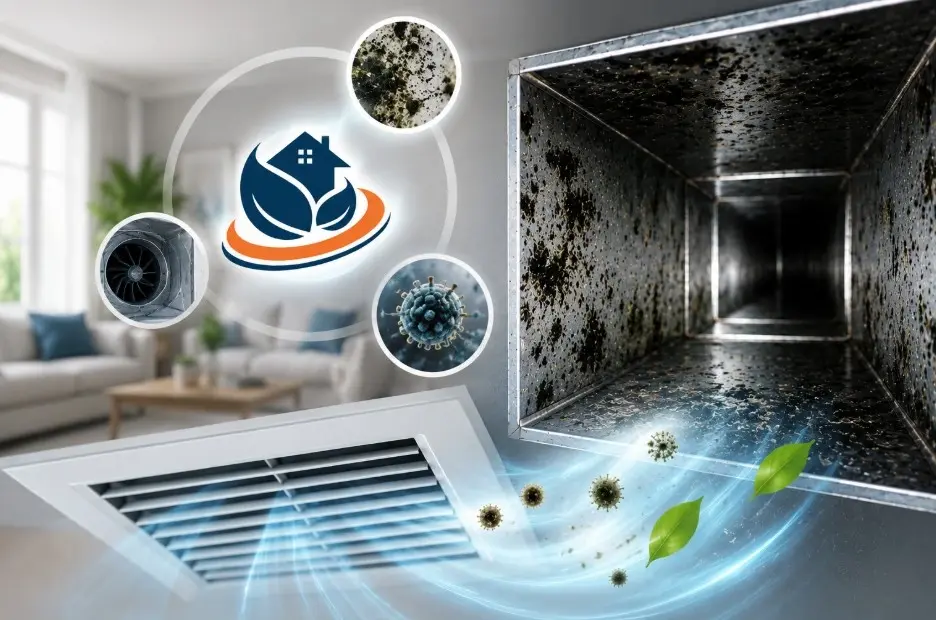
Every time the HVAC system runs, spores from mold inside the ducts can circulate through the air you breathe. Left unaddressed, growth typically spreads rather than staying contained, and the underlying moisture problem driving it often gets worse over time, particularly during Georgia’s humid summer months.
This is also where duct sealing comes in. Gaps and leaky joints in the ductwork let humid attic or crawlspace air infiltrate the system, which feeds exactly the kind of condensation mold needs to keep growing. If your ducts run through an unconditioned space, it’s worth reading about duct sealing in Roswell alongside any mold remediation, since sealing without cleaning (or cleaning without sealing) tends to be a half-measure.
How Professional Remediation Works
A proper process starts with identifying the moisture source, not just cleaning the visible mold. Technicians should follow standards set by the National Air Duct Cleaners Association (NADCA), which outlines how ductwork should be accessed, agitated, and vacuumed under negative pressure so spores aren’t just pushed further into the system. Best practice guidance from the Indoor Air Quality Association (IAQA) also recommends confirming the moisture source is corrected before any cleaning is considered complete.
From there, affected areas are cleaned and the underlying cause, whether it’s a drainage issue, a duct leak, or a humidity problem, is addressed to prevent it from returning. Learn more on our mold in HVAC system page, which goes into detail on coil and blower cleaning specifically.
If the moisture source turns out to be the furnace side of the system rather than the AC coil, our Roswell furnace cleaning service covers that half of the equation. And once remediation is done, routine air duct cleaning in Roswell on a regular schedule is what keeps dust levels low enough that mold has less to feed on going forward.
Preventing Mold From Coming Back
- Keep indoor humidity below roughly 50%, using a dehumidifier if needed
- Have the condensate drain line checked and cleared each cooling season
- Replace air filters on schedule so airflow and moisture control stay balanced
- Seal any duct leaks running through attics, crawlspaces, or garages
- Schedule periodic professional duct cleaning rather than waiting for symptoms
For whole-home moisture control beyond the ducts themselves, our air purification services in Roswell can help manage airborne spore levels while any structural moisture issue is being resolved. If your ducts also handle dryer exhaust, note that a separate dryer vent cleaning is worth scheduling too, since a clogged dryer vent adds its own moisture and lint load into the home.
Get a Mold Inspection for Your Roswell Home
We find the source, not just the symptom.
Call (678) 235-3388Quick Questions
Can I clean duct mold myself?
Surface-level cleaning of visible household mold is sometimes manageable, but mold inside ductwork is harder to fully reach and address without professional equipment.
Will regular duct cleaning prevent mold?
Routine cleaning helps by removing dust that mold feeds on, but it doesn’t fix a moisture source if one exists.
How do I know if it’s actually mold and not just dust?
Mold tends to appear as dark, irregular spots and often comes with a musty smell, while dust looks more uniform and gray. An inspection can confirm which is present.
Does homeowners insurance cover mold remediation?
Coverage varies by policy and usually depends on whether the mold resulted from a sudden covered event, like a burst pipe, versus ongoing neglect. Check with your insurer directly for specifics.
See our full range of Roswell indoor air quality services, from duct cleaning to HVAC mold remediation.
Explore Roswell ServicesRoswell, GA Service Area — ZIP Code Directory
3 ZIP codes served · Tap any ZIP to call +1 (678) 235-3388 · pureairatlanta.com
warning signs early