Published: March 2026 | By: Pure Air Atlanta Team | Location: Metro Atlanta, GA | Read Time: 8 minutes
⚠ Health Warning: A musty smell from AC vents is rarely just a minor inconvenience. According to the CDC’s official mold health guidelines, exposure to mold spores in indoor air can cause serious respiratory symptoms, trigger allergies, and worsen asthma, especially in children, the elderly, and anyone with a compromised immune system.
What Does a Musty Smell from AC Vents Actually Mean?
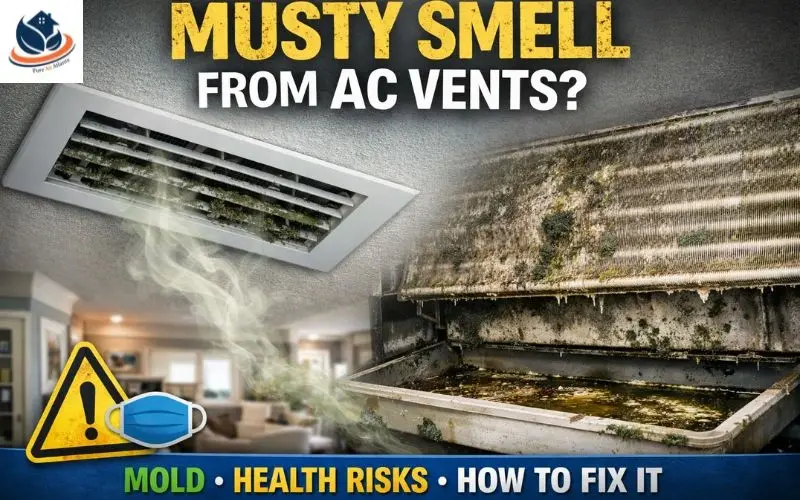
When you switch on your air conditioner and immediately notice a musty, damp, or earthy smell, your HVAC system is sending you an important warning: moisture has built up somewhere inside, and where there is moisture, there is mold.
The musty odor you smell is caused by microbial volatile organic compounds (mVOCs), gases released by actively growing mold colonies. Because your HVAC system moves air throughout your entire home, even a small patch of mold growing on evaporator coils or inside a duct can spread its byproducts into every room within minutes of turning the system on.
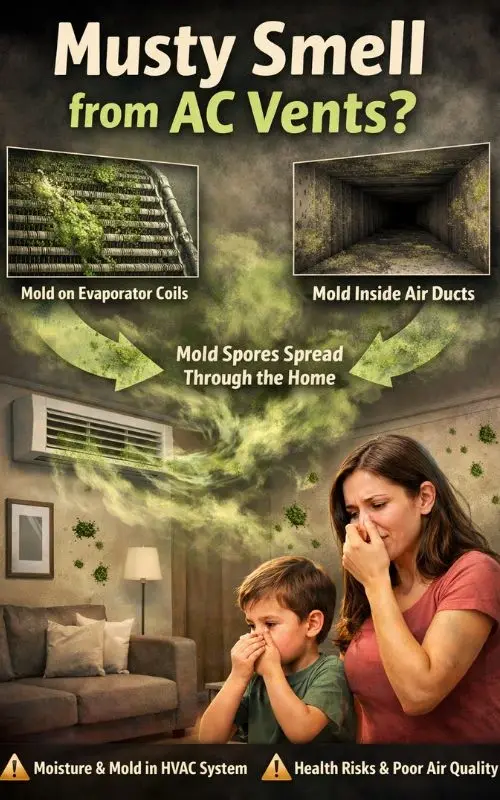
This is why a musty AC smell should never be ignored or masked with air fresheners. The smell is a symptom. The underlying cause, mold contaminationc, is what needs to be treated.
According to the EPA’s indoor air quality mold resources, mold can begin growing on a damp surface within 24 to 48 hours, which is why prompt action is always recommended.
➡ Related: Mold in HVAC System: Signs, Symptoms & Professional Removal
7 Most Common Causes of Musty Smell from AC Vents
Understanding what is causing the musty smell in your HVAC system is the first step toward fixing it permanently. Here are the most frequent culprits:
1. Mold on Evaporator Coils Evaporator coils stay cold and damp during operation, making them a prime location for mold growth. This is the single most common cause of musty AC smell in Atlanta homes. Professional HVAC cleaning in Atlanta includes thorough evaporator coil treatment to remove this contamination at its source.
2. Clogged Condensate Drain Line When the condensate drain line gets blocked, water backs up into the drain pan and creates standing moisture that feeds mold colonies. This is especially common after long periods of inactivity such as winter months.
3. Dirty Air Ducts Dust, debris, and organic matter that accumulates inside ductwork absorbs moisture over time and creates ideal conditions for mold colonies to form and spread. The National Air Duct Cleaners Association (NADCA) recommends professional duct inspection whenever musty odors are detected from vents. Scheduling professional air duct cleaning in Atlanta removes this accumulated contamination and significantly improves airflow throughout your home.
4. High Indoor Humidity Atlanta’s humid climate means indoor humidity can easily exceed 60%,the threshold above which mold grows rapidly inside HVAC systems. If your AC is not adequately dehumidifying, mold will follow. The EPA recommends keeping indoor humidity between 30% and 50% to prevent mold growth in residential spaces.
5. Oversized AC Unit An AC unit that is too large for your home cools quickly but runs in short cycles, meaning it does not run long enough to adequately dehumidify the indoor air, leaving excess moisture that feeds mold. Energy Star’s HVAC sizing guidelines explain how proper unit sizing directly affects indoor humidity control and air quality.
6. Dirty or Clogged Air Filter A saturated, overdue air filter traps moisture and becomes a breeding ground for mold. That mold then gets distributed through your vents every time the system runs.
7. Poor Home Ventilation Inadequate airflow allows moisture to stagnate inside your HVAC system instead of being removed from the air efficiently. Installing a quality air purification system in your Atlanta home can help maintain healthy airflow and reduce airborne mold spore concentrations between professional cleanings.
8. Frozen and Thawing Evaporator Coils When coils freeze and then thaw, which can happen due to restricted airflow or low refrigerant, they create excess moisture that pools in the unit and promotes rapid mold growth.
Is a Musty AC Smell Dangerous? The Health Risks Explained
Yes, and this is not something to dismiss. When mold grows inside your HVAC system, every time the system runs it acts like a biological pump, actively spreading mold spores throughout your home.
The CDC states that mold exposure can cause a range of health effects depending on the individual’s sensitivity, the type of mold present, and the duration of exposure.
Common health symptoms caused by HVAC mold exposure:
- Sneezing and runny nose
- Persistent coughing
- Eye irritation and watering
- Skin rashes or irritation
- Headaches
- Chronic fatigue
- Shortness of breath
- Worsening of existing asthma
- Throat irritation
- Sinus congestion
Who is most at risk:
- Children, their immune systems are still developing and they breathe in more air relative to body weight
- Elderly individuals, reduced lung capacity and weakened immune systems increase the risk of serious complications
- Asthma and allergy sufferers, even low levels of mold spore exposure can dramatically worsen existing conditions
Important warning sign: If anyone in your household notices that their symptoms improve when they leave the home and worsen when the AC or heating is running, HVAC mold is very likely the cause. This pattern is one of the clearest indicators of mold contamination inside the ventilation system.
If you or anyone in your home has been experiencing unexplained respiratory symptoms, your HVAC system should be inspected immediately. Read our detailed guide on mold in HVAC system symptoms and health risks to understand what to look for and when to act.
📞 Call Pure Air Atlanta now for a FREE inspection: (678) 235-3388
How to Check If Mold Is the Source of the Musty Smell
Before calling a professional, here are steps you can take to assess the situation and identify where the odor might be coming from:
Step 1 — Smell each vent individually Turn on the AC and go to each vent in your home. If the musty smell is stronger at some vents than others, this can help identify which section of your ductwork may be most affected.
Step 2 — Inspect your air filter Pull out your current air filter. If it is dark, clogged, or visibly dirty, replace it immediately. A dirty filter can harbor mold and restrict airflow, worsening the contamination. Also inspect the filter housing itself for signs of moisture or discoloration.
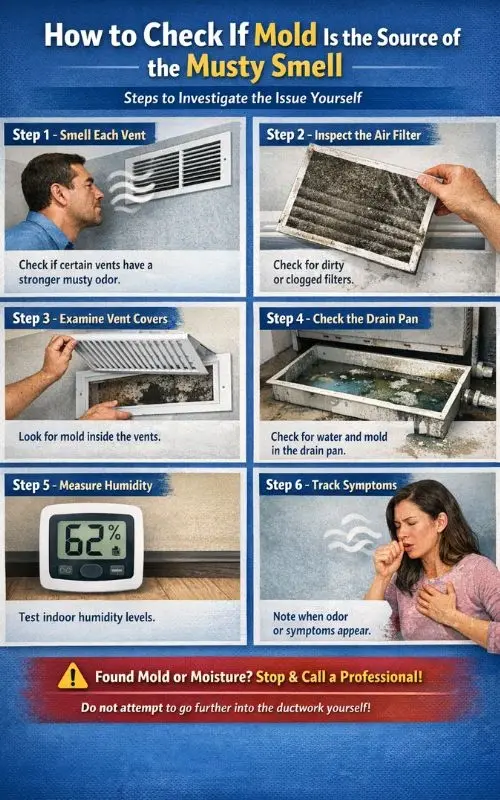
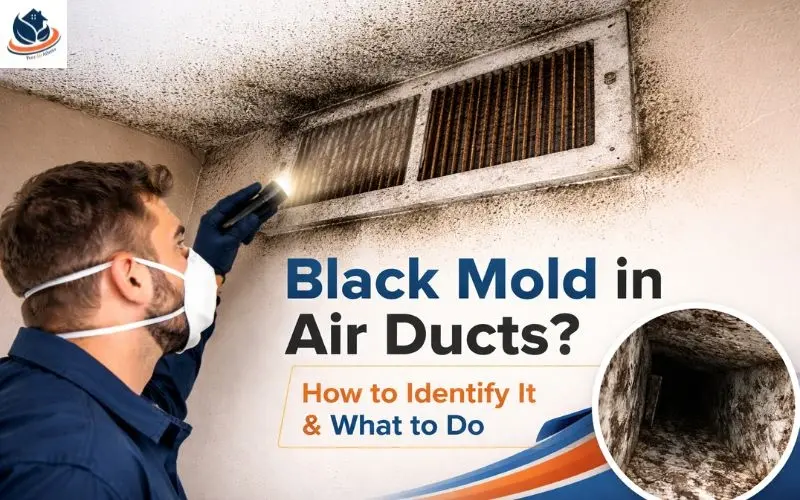
Step 3 — Look at your vent covers Remove vent covers and check the inside surfaces. Look for dark spots, fuzzy growth, or visible discoloration, these are signs of mold inside the duct opening itself. Our guide on signs of mold in HVAC systems covers what each type of visible contamination looks like and what it indicates.
Step 4 — Inspect the drain pan If accessible, check the condensate drain pan beneath your indoor air handling unit. Standing water or slime in the pan is a clear indication of drainage problems and active mold growth.
Step 5 — Check humidity levels Use a basic humidity gauge (hygrometer) to check indoor humidity. According to Energy Star’s indoor air quality recommendations, indoor humidity above 60% consistently creates conditions favorable to mold growth in HVAC systems.
Step 6 — Track when symptoms occur Note whether the musty smell and any health symptoms occur specifically when the HVAC system is running. This pattern strongly suggests HVAC mold rather than surface mold elsewhere in the home.
⚠ Important: If any of these checks reveal visible mold, excessive moisture, or standing water, do not attempt to continue investigating inside the ductwork yourself. Disturbing mold colonies without proper equipment can spread spores further throughout your living spaces.
How to Fix Musty Smell from AC Vents: DIY vs Professional
There are some steps homeowners can take to address a mild musty odor from vents. However, for anything beyond surface-level issues, professional HVAC mold remediation is the only reliable long-term solution.
What you can do yourself:
- Replace a dirty air filter (do this immediately)
- Clean vent covers and grilles with a diluted bleach solution
- Pour distilled white vinegar into the condensate drain line access point to help clear mild buildup
- Set your thermostat fan to “auto” (not “on”) to prevent moisture buildup between cooling cycles
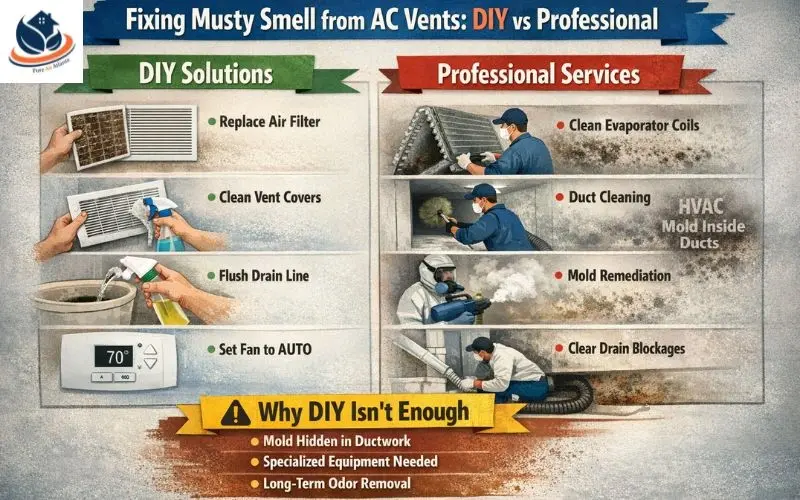
What requires a professional:
- Cleaning evaporator coils (requires specialized chemical treatments)
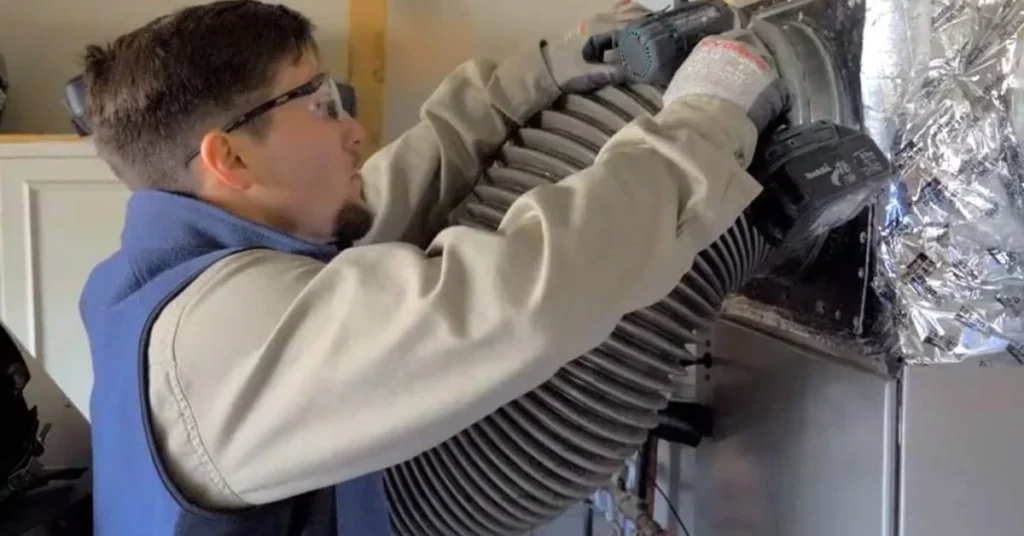
- Deep air duct cleaning (requires HEPA vacuum systems and professional tools)
- Antimicrobial duct treatment (requires EPA-registered fogging products)
- Identifying the specific type of mold present
- Clearing severe condensate drain blockages
- Permanently eliminating the odor at its source
Why DIY alone does not work for HVAC mold: Household cleaners and sprays cannot reach inside ductwork, behind coil fins, or into the narrow passages where mold actually grows. The NADCA’s industry standards for HVAC system cleaning require specialized negative-pressure vacuum equipment and professional-grade antimicrobial agents that are not available to the general public. Without removing the mold at its source, it will continue to grow and the musty smell will return within days or weeks.
What Professional HVAC Mold Remediation Includes
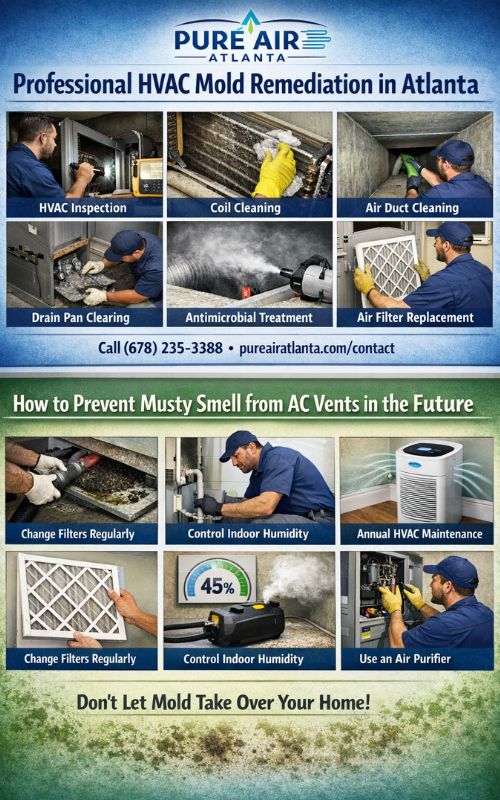
At Pure Air Atlanta, our process for eliminating musty smell from AC vents covers every component where mold can hide:
- Full HVAC inspection — identifying the source and extent of mold contamination
- Evaporator coil cleaning — professional-grade coil cleaners to remove mold and biofilm as part of our complete HVAC cleaning service in Atlanta
- Air duct cleaning — high-powered HEPA vacuum systems that extract debris and mold spores from inside ductwork through our certified air duct cleaning process in Atlanta
- Drain pan and drain line clearing — removing blockages and sanitizing the entire condensate system
- Antimicrobial treatment — EPA-registered fogging solutions applied throughout the duct system to kill mold colonies and prevent regrowth
- Air filter replacement — installing a high-quality filter appropriate for your system’s specifications
- Post-service verification — confirming the problem has been fully resolved before we leave
📞 Ready to fix the problem today? Call (678) 235-3388 or visit: pureairatlanta.com/contact
How to Prevent Musty Smell from AC Vents in the Future
Atlanta’s climate makes HVAC mold prevention especially important year-round. High summer humidity combined with continuous air conditioning creates the exact conditions mold thrives in. Here is how to stay ahead of the problem:
- Change air filters every 1–3 months — more frequently during high-use summer months and if you have pets
- Keep indoor humidity between 30% and 50% — use a standalone dehumidifier if your AC alone cannot maintain this level, as recommended by EPA’s mold prevention guidelines for homeowners
- Schedule annual professional HVAC maintenance — our professional HVAC cleaning team in Atlanta can detect early moisture and mold problems before they become expensive to fix
- Have air ducts professionally cleaned every 3–5 years — NADCA recommends professional duct cleaning whenever occupants experience allergy symptoms or musty odors linked to the ventilation system
- Ensure proper ventilation throughout your home, especially in bathrooms, kitchens, and laundry areas where moisture is regularly generated
- Inspect the condensate drain line seasonally — especially before summer starts — to make sure it is clear and draining properly
- Consider a whole-home air purification system — our air purification solutions for Atlanta homes include UV-C light systems that kill mold spores on coils and in the air stream before they can grow into colonies
- Do not overlook your dryer vent — a blocked dryer vent forces moist air back into your home, contributing to overall humidity levels. Our dryer vent cleaning service in Atlanta removes lint buildup and restores proper airflow to keep moisture out of your living spaces
Atlanta homeowners’ note: If your AC has not been professionally serviced in over a year, there is a significant chance that mold is already beginning to form somewhere in your system — especially after each winter season when the AC sits unused for months.
Frequently Asked Questions
Q: Why does my AC smell musty when I first turn it on?
A musty smell when your AC first turns on is almost always caused by mold or mildew growing on the evaporator coils, inside the drain pan, or within the ductwork. When the system has been off, the mold continues to grow in the moist, dark environment. When you turn the AC back on, air flowing through contaminated areas picks up mold spores and carries that musty odor into your living spaces. The CDC explains that mold thrives in environments with moisture, warmth, and organic material, all of which are present inside an idle HVAC system.
Q: Is a musty smell from AC vents dangerous to my health?
Yes, it can be. The musty odor indicates mold spores are being circulated through your indoor air. Depending on the type of mold and the concentration of spores, exposure can cause sneezing, coughing, eye irritation, headaches, fatigue, and respiratory irritation. People with asthma, allergies, or compromised immune systems face significantly higher risks. Children and the elderly are especially vulnerable. Read our full guide on HVAC mold symptoms and health effects for a complete breakdown.
Q: Can I get rid of the musty AC smell myself?
For mild odors, replacing a dirty air filter and cleaning accessible vent covers can provide temporary relief. However, if the mold has grown on evaporator coils or inside ductwork, DIY methods cannot reach or fully eliminate it. The NADCA recommends professional cleaning whenever mold contamination is suspected inside a ventilation system. Attempting to clean inside ductwork without professional equipment can disturb mold colonies and spread spores further into your home.
Q: How much does it cost to fix a musty AC smell in Atlanta?
Cost depends on the severity and location of the mold. Basic professional HVAC cleaning starts around $150–$300. Full mold remediation including evaporator coil cleaning, duct cleaning, drain line clearing, and antimicrobial treatment typically ranges from $400–$1,000 for a standard residential system in Atlanta. Contact Pure Air Atlanta at (678) 235-3388 for an accurate, no-obligation quote specific to your home.
Q: How long does HVAC mold remediation take?
Most residential HVAC mold remediation jobs are completed in a single visit of 3–6 hours. After service, you should notice the musty smell is gone within the first 24–48 hours as the antimicrobial treatment fully takes effect throughout the duct system.
Q: Will the musty smell come back after professional cleaning?
If the root causes, excess humidity, drainage issues, poor filtration, are addressed alongside the cleaning, the musty smell should not return. Pure Air Atlanta’s antimicrobial treatments inhibit future mold growth. Following up with regular filter changes, annual HVAC maintenance in Atlanta, and proper humidity control as outlined by Energy Star’s home efficiency guidelines will keep your system clean and odor-free long-term.
About Pure Air Atlanta
Pure Air Atlanta provides certified HVAC mold inspection, air duct cleaning, HVAC system cleaning, and professional mold remediation across all of Metro Atlanta and surrounding areas including Marietta, Alpharetta, Roswell, Lawrenceville, Suwanee, Cumming, Woodstock, and Decatur.
Our technicians are available 24 hours a day, 7 days a week and provide free inspections and no-obligation quotes for all residential and commercial properties.
📞 Phone: (678) 235-3388 📧 Email: contactpureairatlanta@gmail.com 🌐 Website: pureairatlanta.com 📍 Address: Peachtree Street NE, Suite 100, Atlanta, GA 30309
Our Services:
- Mold in HVAC System Removal
- Air Duct Cleaning Atlanta
- HVAC Cleaning Atlanta
- Air Purification Systems Atlanta
- Dryer Vent Cleaning Atlanta
© 2025 Pure Air Atlanta. All rights reserved.