Published: June 2025 | By: Pure Air Atlanta Team | Location: Metro Atlanta, GA | Read Time: 9 minutes
⚠ Urgent Health Warning: Black mold in air ducts is one of the most serious indoor air quality problems a homeowner can face. According to the CDC’s mold health guidelines, certain types of black mold produce mycotoxins, toxic compounds that can cause severe respiratory illness, neurological symptoms, and long-term health damage, especially in children and the elderly.
What Is Black Mold in Air Ducts?
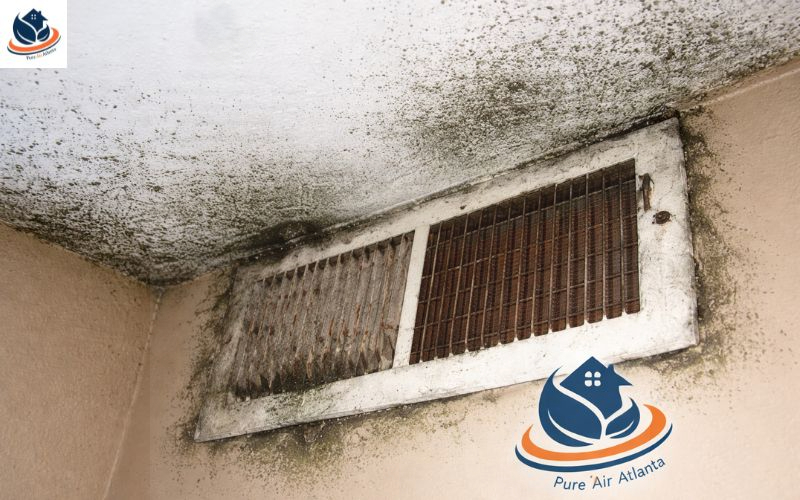
Black mold in air ducts refers to dark-colored mold colonies that grow inside your home’s ventilation system, including the ductwork, evaporator coils, air handler, and drain pan. The term “black mold” is commonly used to describe Stachybotrys chartarum, a particularly toxic species that thrives in persistently damp, cellulose-rich environments.
However, not all dark-colored mold in air ducts is Stachybotrys. Several other mold species, including Cladosporium, Aspergillus, and Penicillium, also appear dark or black and can grow aggressively inside HVAC ductwork. All of them pose serious health risks and require immediate professional attention.
What makes black mold in air ducts especially dangerous compared to surface mold is its location. Because your HVAC system circulates air through every room in your home, mold growing inside ductwork acts like a delivery system — pushing invisible spores into your living spaces, bedrooms, and kitchen every single time the system runs.
According to the EPA’s comprehensive guide to mold and moisture, mold should never be left untreated inside ventilation systems, as the contamination will spread and worsen over time.
➡ See Also: Mold in HVAC System: Signs, Symptoms & Professional Removal
How to Identify Black Mold in Air Ducts
Identifying black mold in air ducts is not always straightforward because most of the ductwork in your home is hidden inside walls, ceilings, and floors. However, there are clear warning signs that indicate mold is present inside your ventilation system.
Visual Signs of Black Mold in Air Ducts
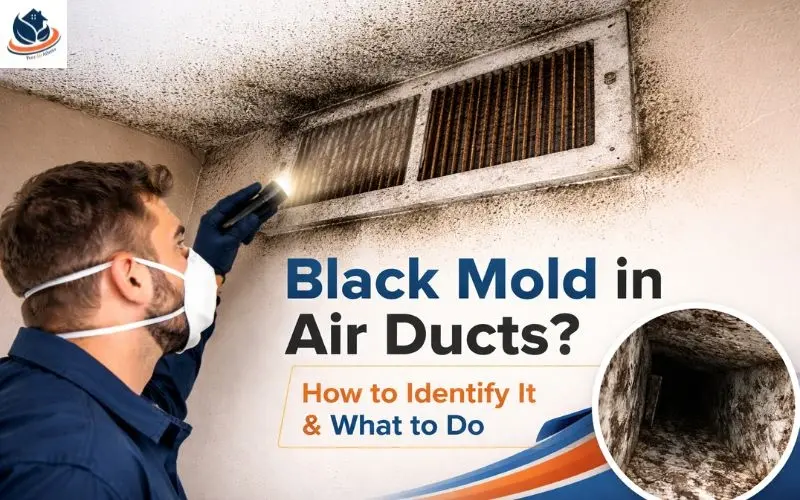
Dark spots or patches around vent openings One of the most visible warning signs is dark discoloration — black, dark green, or dark brown spots — appearing around the edges of air vent covers or registers. These spots are often the outer edge of a mold colony that has grown outward from inside the duct.
Visible growth inside duct openings Remove a vent cover and shine a flashlight into the duct opening. If you can see fuzzy, dark patches on the interior duct surfaces, this is a strong visual confirmation of mold growth.
Black or dark residue on vent covers A greasy or powdery black residue that collects on vent covers and returns quickly after cleaning is a sign that mold spores are being continuously deposited by the airflow from inside contaminated ducts.
Discoloration on the air handler or air filter Dark staining or discoloration on the filter housing, around the air handler cabinet, or on the filter itself can indicate that mold has colonized the area around the air intake.
Non-Visual Signs of Black Mold in Air Ducts
Visual signs are not always present — especially when mold is growing deep inside the duct system. Watch for these non-visual indicators:
- A persistent musty, earthy, or damp odor that appears or intensifies whenever the HVAC system runs
- Allergy or respiratory symptoms that worsen indoors and improve when you leave the house
- Unexplained headaches, fatigue, or brain fog that no other cause explains
- Worsening asthma in household members despite medication
- A feeling of dampness in the air even when outdoor humidity is not particularly high
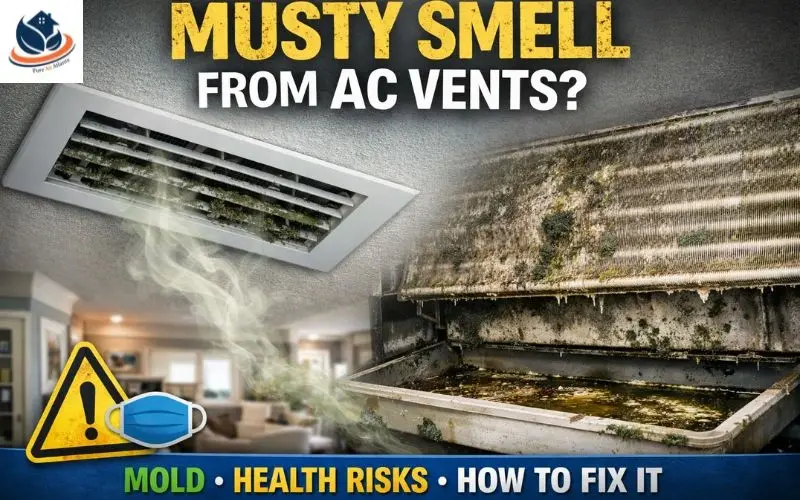
Our detailed guide on musty smell from AC vents explains how odor alone can help you detect the early stages of HVAC mold before it becomes a serious problem.
Can You Test for Black Mold in Air Ducts at Home?
DIY mold test kits are available at hardware stores, but they have significant limitations. They can confirm that mold spores are present in your indoor air, but they cannot identify the specific species, locate the source inside the ductwork, or measure the concentration accurately.
The EPA advises that for HVAC systems, professional mold testing and inspection is the most reliable way to confirm the presence, type, and extent of mold contamination. A certified inspector uses specialized equipment, including borescope cameras and air quality sampling devices, to assess areas of ductwork that are completely inaccessible to homeowners.
What Causes Black Mold to Grow in Air Ducts?
Black mold does not grow randomly, it requires specific conditions. Understanding these causes helps both in addressing the current problem and preventing future growth.
Persistent moisture inside ductwork This is the primary cause. Moisture enters ducts through condensation on cold surfaces, leaks in the duct system, high indoor humidity, or water intrusion events such as flooding or roof leaks.
Condensation on evaporator coils When warm, humid air contacts the cold evaporator coils of your AC system, water condenses on the coil surface. If this moisture is not efficiently drained, it creates a permanently wet environment that black mold colonizes rapidly. Professional HVAC cleaning in Atlanta includes thorough evaporator coil treatment to eliminate this common mold breeding ground.
Blocked or clogged condensate drain line If the drain line that removes condensation from the drain pan becomes clogged, water backs up and sits stagnant. This standing water directly beneath the evaporator coils is one of the fastest paths to severe black mold growth inside an HVAC system.
Dust and organic debris inside ducts Mold needs organic material to feed on. Dust, skin cells, pollen, and debris that accumulate inside ductwork over years provide an abundant food source. This is why professional air duct cleaning in Atlanta is an essential part of both mold prevention and remediation.
High indoor humidity, especially in Atlanta Atlanta’s climate is persistently humid, particularly from May through September. Without adequate dehumidification from your HVAC system, indoor humidity levels can remain above 60% for extended periods, creating ideal conditions for black mold to establish itself inside ductwork. The EPA recommends maintaining indoor humidity between 30% and 50% to prevent mold growth in residential environments.
Infrequent HVAC maintenance Systems that go years without professional inspection and cleaning are significantly more likely to develop black mold. HVAC components accumulate moisture and organic matter slowly over time, and annual maintenance is the most effective way to catch problems before mold colonies become established.
Why Black Mold in Air Ducts Is So Dangerous
Black mold in air ducts is categorically more dangerous than surface mold found on bathroom walls or window frames, for one key reason: your HVAC system actively distributes the contamination throughout your entire home.
Every time your heating or cooling system runs, it draws air through the contaminated ductwork and delivers mold spores and mycotoxins directly into every room — including bedrooms where you sleep for 7–8 hours each night.
Health Effects of Black Mold Exposure
The CDC identifies mold exposure as a cause of a wide range of health conditions. Effects vary depending on the individual’s sensitivity, the type of mold, and the duration of exposure:
Mild to moderate symptoms (common in otherwise healthy adults): – Persistent sneezing, runny nose, and nasal congestion – Itchy, watery, or red eyes – Skin irritation or rashes – Persistent cough – Sore throat – Headaches and difficulty concentrating
Severe symptoms (in sensitive individuals, children, elderly, immunocompromised): – Chronic respiratory infections – Severe asthma attacks – Difficulty breathing or shortness of breath – Neurological symptoms including memory problems and mood changes – Chronic fatigue syndrome-like symptoms – In extreme cases involving Stachybotrys, hemorrhagic pneumonia (rare but documented)
Children are at highest risk. Their lungs are still developing, they spend more time indoors, and they breathe more air relative to their body weight than adults. Black mold exposure during childhood has been linked to the development of asthma and chronic respiratory conditions.
The NADCA (National Air Duct Cleaners Association) recommends immediate professional remediation whenever black mold is confirmed or suspected inside a ventilation system, given the health risks associated with continued exposure.
What to Do If You Find Black Mold in Air Ducts
If you have identified or suspect black mold inside your air ducts, here is exactly what you should do, and what you should avoid doing:
Step 1 — Turn Off Your HVAC System Immediately
The moment you suspect black mold in your ductwork, turn off your heating and cooling system. Every minute the system runs while mold is present, it is spreading spores throughout your home. Stopping the system immediately limits further contamination of your living spaces.
Step 2 — Do Not Attempt DIY Removal
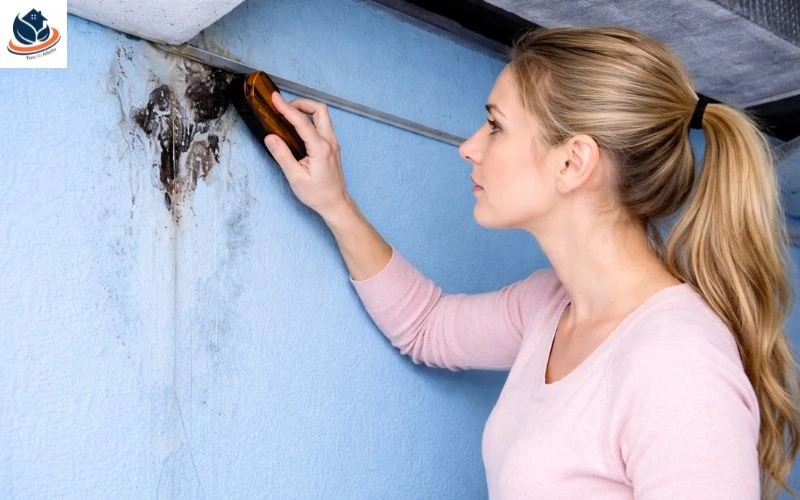
This is critical. Disturbing black mold colonies inside ductwork without professional equipment causes spores to become airborne in large quantities, dramatically worsening the contamination and the health risk to everyone in the home.
Household cleaning products, bleach sprays, and DIY duct cleaning kits cannot safely or effectively remediate black mold inside a ventilation system. The EPA’s mold remediation guidelines state that mold contamination in HVAC systems requires professional remediation due to the complexity of the system and the risk of spore dispersal.
Step 3 — Call a Certified HVAC Mold Remediation Professional
A certified professional will conduct a thorough inspection of your entire HVAC system, including areas of ductwork that are not visible, using borescope cameras and air quality testing equipment. They will identify the extent of contamination, the likely mold species, and the source of the moisture that caused it.
Pure Air Atlanta’s certified mold removal service for HVAC systems covers every component of your heating and cooling system, including ductwork, evaporator coils, drain pans, blower motors, and the air handler.
Step 4 — Address the Moisture Source
Removing the mold without fixing the underlying moisture problem guarantees that the mold will return. A professional will identify and recommend solutions for whatever is causing moisture buildup inside your duct system, whether that is a clogged drain line, high indoor humidity, poor insulation, or a leaking duct.
Step 5 — Consider Air Purification After Remediation
After professional mold removal, installing a quality air purification system in your Atlanta home provides an additional layer of protection. UV-C light purifiers installed inside the HVAC system kill mold spores and bacteria in the air stream before they can settle and re-colonize duct surfaces.
The Professional Black Mold Removal Process for Air Ducts
At Pure Air Atlanta, our black mold remediation process for HVAC systems follows industry standards established by NADCA and EPA guidelines:
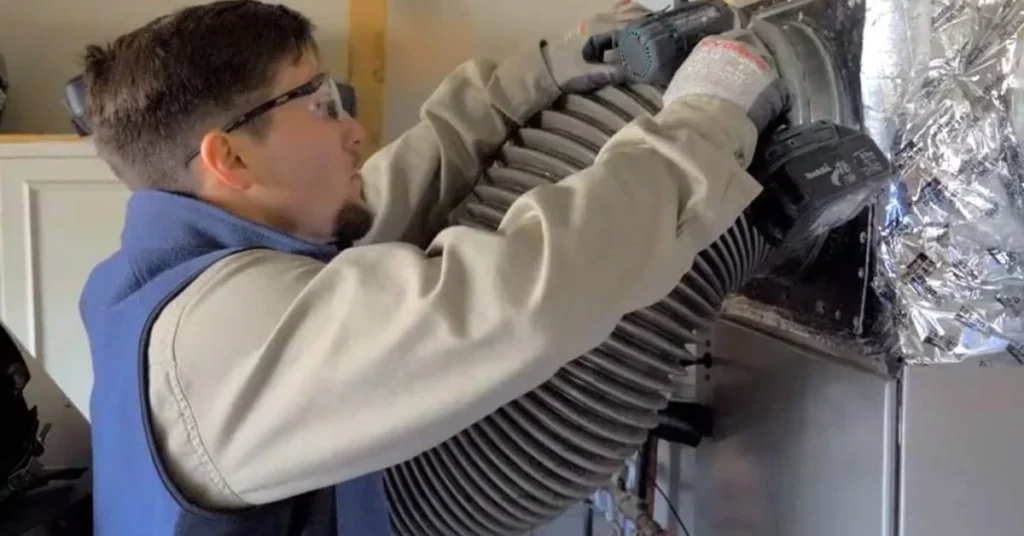
1. Full system inspection Using borescope cameras and air sampling equipment to map the extent of contamination throughout the duct system and identify all affected components.
2. System containment Sealing supply and return vents during the cleaning process to prevent disturbed mold spores from entering living spaces.
3. Negative pressure vacuuming High-powered HEPA vacuum systems create negative pressure inside the ductwork, capturing dislodged mold, debris, and spores before they can escape. This is the core of our professional air duct cleaning process in Atlanta.
4. Mechanical cleaning of all duct surfaces Rotary brushes and compressed air tools physically remove mold colonies, biofilm, and organic debris from duct walls, coils, and system components.
5. Antimicrobial fogging EPA-registered antimicrobial solutions are applied throughout the duct system to kill remaining mold spores and create a protective barrier against future mold growth.
6. Evaporator coil and drain pan cleaning Complete cleaning of coils and drain components as part of our comprehensive HVAC cleaning service in Atlanta.
7. Moisture source correction Clearing drain lines, recommending humidity control solutions, and identifying any duct leaks that are contributing to moisture buildup.
8. Post-remediation verification Air quality testing after remediation to confirm that mold spore counts have returned to safe levels before the system is returned to operation.
How to Prevent Black Mold from Returning in Air Ducts
Once black mold has been professionally removed, these steps will significantly reduce the risk of it returning:
- Control indoor humidity year-round — keep levels between 30% and 50% as recommended by the EPA’s mold prevention guidelines. Use a whole-home dehumidifier if needed, especially during Atlanta’s humid summer months.
- Replace air filters every 1–3 months — a clean filter prevents organic debris from accumulating inside ductwork and reduces moisture retention.
- Schedule annual HVAC maintenance — our professional HVAC cleaning team in Atlanta inspects evaporator coils, drain lines, and duct connections for early signs of moisture and mold.
- Have air ducts cleaned professionally every 3–5 years — the NADCA recommends professional duct cleaning whenever mold, vermin, or excessive debris is detected inside the system.
- Install UV-C light purification inside your HVAC system — our air purification solutions for Atlanta homes include UV systems that continuously destroy mold spores on coil surfaces and in the air stream.
- Keep your dryer vent clear — a blocked dryer vent forces warm, moist air back into your home, raising humidity levels and creating conditions that promote mold growth throughout your HVAC system. Our dryer vent cleaning service in Atlanta removes lint buildup and restores proper venting to keep moisture out.
- Fix any duct leaks promptly — leaking ducts allow warm, humid attic or crawlspace air to enter the duct system and condense on cool duct surfaces, creating persistent moisture that feeds mold.
Frequently Asked Questions
Q: How do I know if I have black mold in my air ducts?
The most common signs of black mold in air ducts include a persistent musty or earthy smell that worsens when the HVAC system runs, dark spots or discoloration around vent covers, and health symptoms such as sneezing, coughing, headaches, or worsening asthma that improve when you leave the home. For a definitive answer, a professional inspection using borescope cameras is the most reliable method. Our HVAC mold inspection team in Atlanta can assess your entire duct system and provide a clear diagnosis. The CDC recommends that suspected mold in HVAC systems always be evaluated by a qualified professional.
Q: Is black mold in air ducts dangerous?
Yes, black mold in air ducts is one of the most serious forms of indoor mold contamination because your HVAC system actively spreads the spores throughout your entire home every time it runs. Exposure can cause respiratory illness, allergic reactions, headaches, fatigue, and, in sensitive individuals such as children, the elderly, and those with asthma, severe and potentially long-term health consequences. The EPA classifies mold in HVAC systems as a serious indoor air quality concern requiring professional remediation.
Q: Can I remove black mold from air ducts myself?
No, and attempting to do so can make the situation significantly worse. Disturbing mold colonies inside ductwork without professional containment and negative-pressure vacuum equipment releases large quantities of spores into your living spaces. The NADCA’s professional cleaning standards exist specifically because HVAC mold removal requires specialized equipment, EPA-registered products, and technical training that is not available to the general public. Always contact a certified professional for black mold removal in air ducts.
Q: How much does it cost to remove black mold from air ducts in Atlanta?
The cost of black mold removal from air ducts in Atlanta depends on the size of your home, the extent of the contamination, and the number of system components affected. A basic professional air duct cleaning starts around $200–$400 for a standard home. Full black mold remediation, including duct cleaning, evaporator coil treatment, antimicrobial fogging, and drain line clearing, typically ranges from $500–$1,500 for a standard residential system. Contact Pure Air Atlanta at (678) 235-3388 for a free, no-obligation inspection and accurate quote for your specific situation.
Q: How long does black mold removal from air ducts take?
Most residential black mold remediation jobs in Atlanta are completed in a single visit of 4–8 hours, depending on the size of the home and the extent of contamination. Severely affected systems or very large homes may require two visits. After remediation, the antimicrobial treatment continues to work for 24–48 hours, after which you should notice the musty odor is completely gone and indoor air quality has significantly improved.
Q: Will black mold in air ducts come back after professional removal?
If the moisture source that caused the mold is identified and corrected alongside the cleaning, the mold should not return. Recurring mold after professional remediation is almost always caused by an unresolved moisture problem, such as a persistently clogged drain line, uncontrolled indoor humidity, or a duct leak. Pure Air Atlanta’s remediation process includes moisture source assessment and recommendations to prevent recurrence. Following up with annual HVAC maintenance and humidity control as outlined in Energy Star’s home efficiency guidelines provides the best long-term protection.
Q: How quickly can black mold spread in air ducts?
Mold can begin establishing itself on a damp surface within 24 to 48 hours under ideal conditions, according to EPA mold growth data. Once a colony is established inside ductwork, it can spread spores throughout the entire duct system relatively quickly, especially in Atlanta’s warm, humid climate. A small localized patch of mold identified early is far easier and less expensive to remediate than a system-wide contamination. This is why annual professional inspection is so important.
About Pure Air Atlanta
Pure Air Atlanta provides certified HVAC mold inspection, air duct cleaning, HVAC system cleaning, and professional mold remediation across all of Metro Atlanta and surrounding areas including Marietta, Alpharetta, Roswell, Lawrenceville, Suwanee, Cumming, Woodstock, and Decatur.
Our technicians are available 24 hours a day, 7 days a week and provide free inspections and no-obligation quotes for all residential and commercial properties.
📞 Phone: (678) 235-3388
📧 Email: contactpureairatlanta@gmail.com
🌐 Website: pureairatlanta.com
📍 Address: Peachtree Street NE, Suite 100, Atlanta, GA 30309
Our Services: – Mold in HVAC System Removal – Air Duct Cleaning Atlanta – HVAC Cleaning Atlanta – Air Purification Systems Atlanta – Dryer Vent Cleaning Atlanta
© 2026 Pure Air Atlanta. All rights reserved.