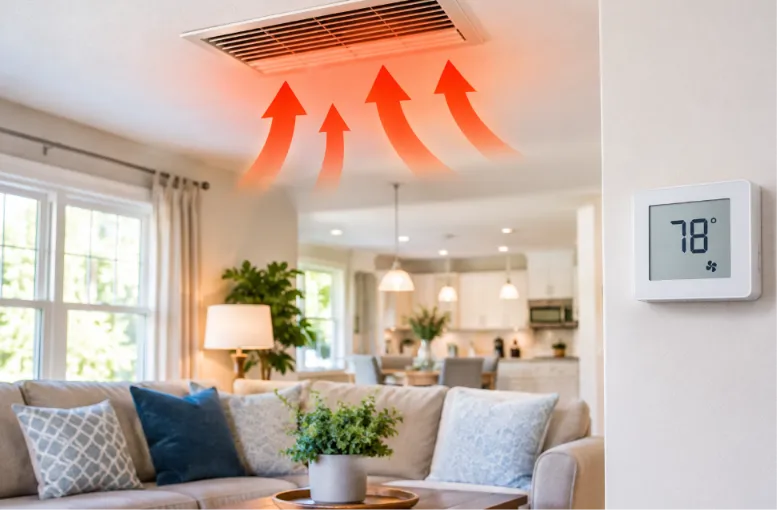
Rooms Hotter Than Others Duct Problems: The Short Answer
Rooms hotter than others duct problems are the most common reason a house cools unevenly, and in most Atlanta homes they are fixable without replacing the air conditioner. The system usually makes plenty of cold air. The ductwork fails to deliver it evenly, so one bedroom, a bonus room over the garage or the entire upstairs sits several degrees behind the rest of the house.
Quick answer
- Most likely cause: leaking, kinked or disconnected supply ducts in the attic or crawl space.
- Other common causes: a long or undersized run to the hot room, uninsulated ducts, weak return air and unbalanced dampers.
- First test: compare airflow at the hot room’s register with a comfortable room (details below).
- Usual fix: duct sealing plus rebalancing, not a bigger air conditioner.
Why Atlanta Homes Run Into Hot Rooms So Often
Metro Atlanta has a long, humid cooling season, and a large share of local houses were built with the air handler and ducts in the attic or crawl space. Summer sun heats an attic far above the outdoor temperature, and every foot of duct that crosses it is exposed. Two-story plans, bonus rooms over garages and finished basements add long duct runs that were never perfectly balanced in the first place.
That lost air has to come from somewhere. The rooms at the end of the longest or leakiest runs get whatever is left, which is why the hot room is rarely the room closest to the air conditioner. If you want the energy side of this problem, our guide to how leaky ducts waste cooling and raise bills shows what the loss looks like in a real home.
7 Duct Problems That Leave Some Rooms Hotter Than Others
These are the duct-side causes we find most often when a homeowner calls about uneven cooling. More than one usually applies at the same time.
1. Leaky duct seams and joints
Every seam, collar and register boot is a place for conditioned air to escape into the attic or crawl space. The leak nearest the air handler hurts the most, because everything downstream gets less air. Sealing with mastic or approved foil tape closes those paths, which is the core of professional duct sealing in Atlanta. ENERGY STAR notes that standard grey cloth duct tape does not last, so a repair that relies on it will fail again.
2. Disconnected, crushed or kinked flex duct
Flexible duct is easy to install and easy to damage. A duct that slipped off its collar, a sharp bend over a rafter, or a run crushed by stored boxes can sharply cut airflow to a room. This is a classic cause of one stubborn room that never cools, even when the rest of the house is comfortable.
3. A long or undersized duct run to the far room
Air takes the easiest path. A branch duct that is too small, too long or full of turns delivers a weak stream at the register, so the room farthest from the air handler runs warmest. Bonus rooms, additions and finished attic spaces are common victims because they were attached to a system sized for the original floor plan.
4. Uninsulated or poorly insulated ducts in a hot attic
Even a perfectly sealed duct can warm up before the air reaches the room. When ducts run through a hot attic with thin or torn insulation, the cold air picks up heat through the duct wall. The Department of Energy points out that in summer ducts gain heat from warm surrounding spaces, which cuts into the cooling that reaches the room. Afternoon temperature gaps between floors are a strong clue.
5. Weak return air and pressure imbalance
A room needs a way for air to return to the system. When a bedroom has one supply register, a closed door and no return or transfer path, pressure builds up and airflow stalls. People often notice that the room gets better with the door open. Undersized returns upstairs also starve the whole system of air and make the second floor warmer.
6. Dampers and registers that are out of balance
Some systems have manual dampers in the trunk lines. If they were never set, or someone closed a register to save energy in a guest room, the air that should reach the hot room is redirected. Closing too many registers raises static pressure, which can increase leakage and strain the blower.
7. Dirty, restricted ducts and filters
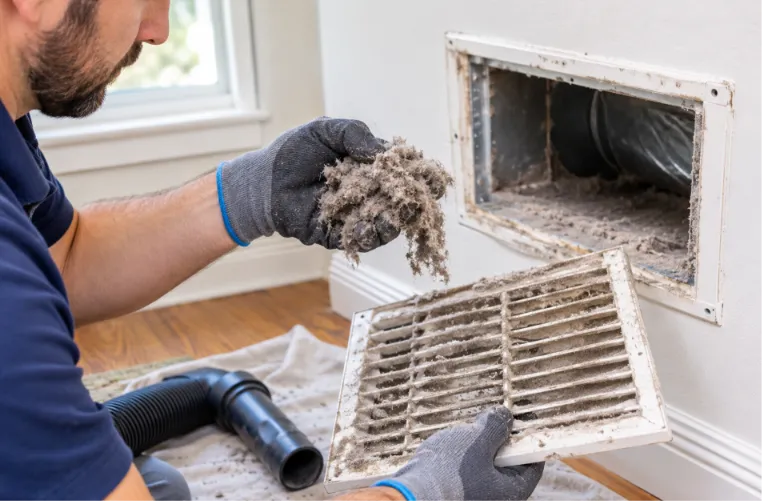
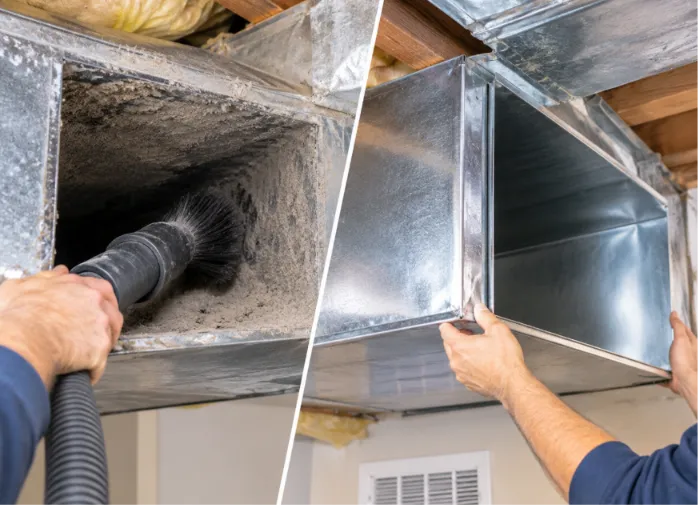
Heavy dust, debris or a collapsed liner can block airflow to a branch. A clogged filter or dirty coil limits air for the whole system. Cleaning helps when the blockage is real, and it is part of our HVAC cleaning service, but it will not seal a leak. If you are not sure which problem you have, read the signs your HVAC system needs cleaning and the checklist of signs you need air duct cleaning in Atlanta before you book anything. Leaky return ducts also pull attic dust into the system, which is one reason dust can come back after duct cleaning.
Non-Duct Causes to Rule Out First
Not every hot room is a duct problem, and an honest inspection should say so. Check these before you assume the worst:
- Sun and windows. West-facing rooms with large glass can gain heat faster than a normal duct can remove it. Blinds, shades or window film help.
- Attic insulation. Thin or compressed insulation lets attic heat pour into the rooms below it, especially upstairs.
- Thermostat location. A thermostat on the cooler first floor turns the system off before the second floor catches up.
- Equipment size and condition. If air is warm at every register, the equipment needs service. A technician can check refrigerant and coil condition.
- Room use. Home offices, kitchens and rooms with lots of electronics produce their own heat.
When a bonus room or addition simply cannot be served well by the existing ducts, a separate unit may be the better answer. Our guide to ductless mini-split installation cost in Atlanta explains what that route involves.
10-Minute Home Check: Are Rooms Hotter Than Others Because of Your Ducts?
This simple test costs nothing and tells you which direction to look. You only need a thermometer and a sheet of tissue.
- Reset the basics. Open every supply register in the house, make sure no furniture or rugs block them, and replace a dirty air filter. Run the system for 30 minutes before you test anything.
- Compare airflow. Hold your hand or a sheet of tissue about an inch from the supply register in the hot room, then do the same in a comfortable room. Noticeably weaker airflow in the hot room points to a leak, a kink, a long run or a closed damper.
- Compare temperatures. Place a basic thermometer at head height in the hot room and in a good room. Write down the readings at 10 a.m., 3 p.m. and 8 p.m. A gap that peaks in the afternoon suggests attic heat gain; a gap that stays constant suggests low airflow.
- Look at the supply air. Feel the air at the hot room’s register after the system has run for 30 minutes. Cool air with low volume means a duct delivery problem; warm or room-temperature air at every register means the equipment needs service.
- Check the visible ductwork. From the attic hatch or crawl space entrance, look for flex duct that is crushed, kinked, sagging or pulled off its collar, torn insulation and dark dust streaks at seams. Do this in the early morning when the attic is cooler, and never step between the joists.
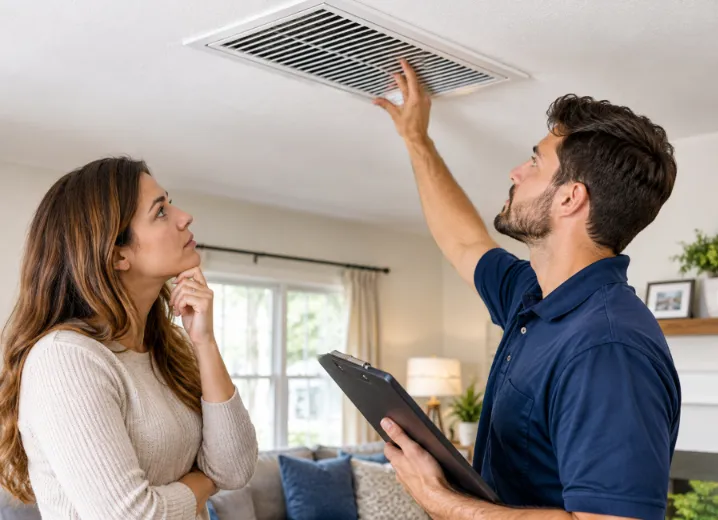
- Book a duct inspection if you find a pattern. Weak airflow in one or two rooms, visible damage or a temperature gap of several degrees all justify a professional airflow and leakage check before you spend money on new equipment.
Safety note: attics can be dangerously hot and have no flooring. If you are not comfortable looking from the hatch, skip the visual check and let a technician do it.
Symptom and Fix: What Your Hot Room Is Telling You
Use this table as a starting point. It matches the most common symptoms to the duct cause behind them.
| What you notice | Likely duct cause | Usual fix |
|---|---|---|
| Weak airflow at one register, cool air only at the unit | Leak, crushed flex duct or a duct pulled off its collar | Duct sealing and reconnecting duct runs |
| Far bedroom or bonus room never reaches the thermostat setting | Long or undersized duct run, or no dedicated return | Duct modification, added return or a separate ductless unit |
| Whole upstairs is several degrees warmer in the afternoon | Leaky attic ducts, uninsulated duct walls and attic heat gain | Seal, insulate and rebalance; add attic insulation if thin |
| Room is warm when the door is closed, better when it is open | Weak return air path and pressure imbalance | Jump duct, transfer grille or an added return |
| Dusty registers, stuffy smell and weak airflow | Heavy debris or a blockage inside ducts | Professional air duct cleaning |
| Some rooms freezing, others hot | Unbalanced dampers, or registers closed by hand | Reopen registers and have dampers balanced |
What Not to Do When You Have Rooms Hotter Than Others
- Do not close vents in cool rooms. It raises duct pressure and usually makes leaks worse.
- Do not patch ducts with cloth duct tape. It dries out and peels, and the leak returns.
- Do not buy a bigger air conditioner first. Extra capacity cannot fix a delivery problem and can cause short cycling and humidity issues.
- Do not turn the thermostat down to 65°F. The cool rooms get colder while the hot room barely changes, and your bill goes up.
If you are unsure whether an upgrade is worth the money, our guide on whether duct sealing is worth it in Atlanta will help you weigh the cost against the comfort gain.
How Professionals Fix Rooms Hotter Than Others Duct Problems
A proper visit goes beyond a quick look at the thermostat. The sequence we follow is simple and measurable:
- Measure airflow and temperature at each register to find the weakest rooms.
- Inspect the duct system in the attic, crawl space and at the air handler for leaks, kinks, disconnected runs and missing insulation.
- Test or locate leakage where needed so repairs go to the leaks that matter.
- Seal and reconnect with mastic or approved tape and mechanical fasteners.
- Insulate and support exposed ducts, straighten kinks and remove sags.
- Rebalance dampers, add a return or transfer path where the room cannot breathe, and re-measure.
ENERGY STAR recommends looking for NATE or BPI certified contractors for duct work. Our technicians follow the same inspect, repair and re-measure process. If the duct system is badly damaged, contaminated or past repair, our comparison of duct cleaning vs duct replacement explains how to decide. If you suspect mold in the airflow path, read about mold in air ducts in Atlanta before the system runs another season.
For city-specific cost questions, see the real-world numbers in our duct sealing cost guide for Smyrna and our general air duct cleaning cost guide for Atlanta, and review our service price ranges for planning. Answers to common service questions are on our frequently asked questions page.
Atlanta Permits and Heat Safety for Hot-Room Fixes
Ductwork that is added, rerouted or tied to new equipment may need a mechanical permit. The City of Atlanta Office of Buildings handles HVAC permits through its online system, and the city lists which repairs to existing equipment are exempt on its permitting services page. You can also review how to apply for a technical permit with the City of Atlanta. Ask your contractor to confirm what applies to your address before work begins.
Heat safety matters while you wait for a fix. Move children, older adults and anyone with a medical condition out of the hottest room. During an extreme heat advisory, the City of Atlanta opens public relief sites; see the current details on the City of Atlanta cooling center information page.
Hot-Room Duct Repairs Across Metro Atlanta
We handle uneven-cooling calls throughout the metro area. Local homeowners can start with our pages for Alpharetta, Roswell, Marietta, Smyrna, Sandy Springs, Kennesaw, Cumming, Decatur, Douglasville and Lawrenceville, or browse the Atlanta neighborhoods we serve. For area-specific duct sealing details, read our guides to duct sealing in Douglasville and duct sealing in Lawrenceville.
Hot Rooms Not Getting Better? Let Us Find the Duct Problem
Tell us which rooms run hot and when. We will inspect the duct system, explain what we find in plain language and give you a clear estimate before any work starts.
Rooms Hotter Than Others Duct FAQ
Why is one room always hotter than the others in my house?
In most homes the cause is airflow, not the air conditioner. A leaking or kinked supply duct, a long or undersized duct run, weak return air or a closed register can starve one room, while sun exposure and thin attic insulation add heat on top. Compare airflow at the hot room’s register with a comfortable room first; weak airflow points to the ducts.
Why is my upstairs so much hotter than my downstairs in Atlanta?
Heat rises, and the second floor sits right under a hot attic. Upstairs supply ducts are often the longest runs and usually travel through that attic, so they leak and gain heat the most. A difference of a few degrees between floors is common in two-story homes; a gap that keeps growing or a room that never reaches the thermostat setting usually means a duct, return or insulation problem worth inspecting.
Should I close vents in cool rooms to push air to the hot room?
It is better not to. Closing registers raises pressure inside the duct system, which can increase leakage and strain the blower, and it rarely fixes the hot room. Proper duct balancing with dampers, or sealing leaks so more air reaches the hot room, works better.
Will air duct cleaning fix rooms that are hotter than others?
Only when the airflow problem is caused by heavy dust, debris or a blockage inside the duct. Cleaning does not seal leaks, reconnect a loose duct or add insulation. A technician should measure airflow first so you pay for the fix that matches the cause.
Does duct sealing make every room the same temperature?
Sealing returns the air that was leaking into the attic or crawl space back to your rooms, which often brings the hot rooms closer to the thermostat setting. It will not fix heat gain from large sunny windows or missing attic insulation, so a good inspection looks at both.
Do I need a permit to repair or change ductwork in Atlanta?
It depends on the scope of work. The City of Atlanta Office of Buildings handles HVAC and mechanical permits, and it publishes a list of exemptions for repairs to existing homes. Ask your contractor to confirm permit requirements for your address before work that adds or changes ductwork or equipment.
How do I know if the problem is my ducts or my air conditioner?
If air at the register is strong but not cold in every room, the equipment or refrigerant side needs a technician. If air is cold at the unit but weak or warm at only some registers, the ducts, returns or dampers are the more likely cause. A duct inspection with airflow readings separates the two quickly.
Bottom Line: Fix the Delivery, Not Just the Equipment
Rooms hotter than others duct problems are cheap to diagnose and usually cheaper to fix than new equipment. Start with the 10-minute check, avoid the common shortcuts and get an airflow-based diagnosis. In many homes, duct sealing and balancing moves the hot room much closer to the rest of the house.

HVAC Service Area — ZIP Code Directory
92 ZIP codes served · Tap any ZIP to call +1 (678) 235-3388 · pureairatlanta.com