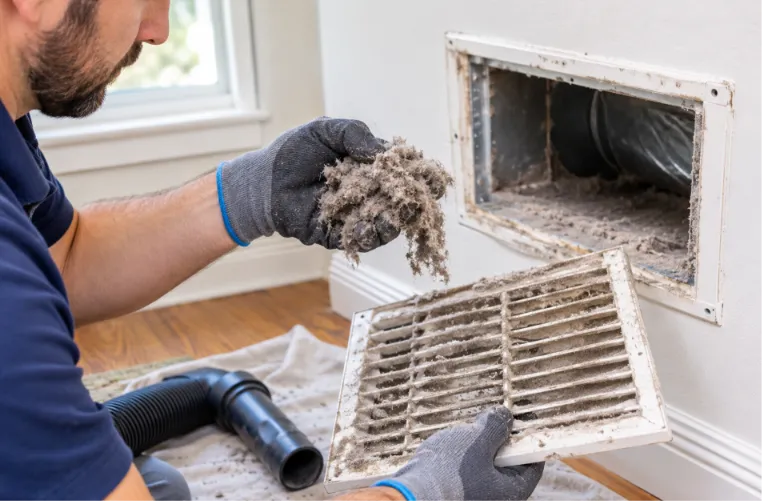
Dust After Duct Cleaning: Is It Normal?
Short answer: Some dust after duct cleaning is completely normal, because most household dust never came from your ducts in the first place. If a fine film is back within a few days, look at your air filter, duct leaks, pets, humidity and what blows in from outside before blaming the cleaning. If heavy dust is still pouring out of your vents the same week, the cleaning may have been incomplete or a leak is feeding the system.
You paid for a duct cleaning, the crew left, and by Sunday you are wiping the same bookshelf again. It is frustrating, and many Atlanta homeowners assume the job was done badly. Sometimes it was. More often, the duct cleaning did exactly what it should, and dust is arriving from somewhere else.
This guide gives you an honest breakdown of why dust after duct cleaning shows up so fast in Metro Atlanta homes, how to tell which cause is yours with a simple 48-hour test, and what actually reduces dust for the long run. We will also say plainly when more duct cleaning will not help.
What Duct Cleaning Does (and Doesn’t Do) About Household Dust
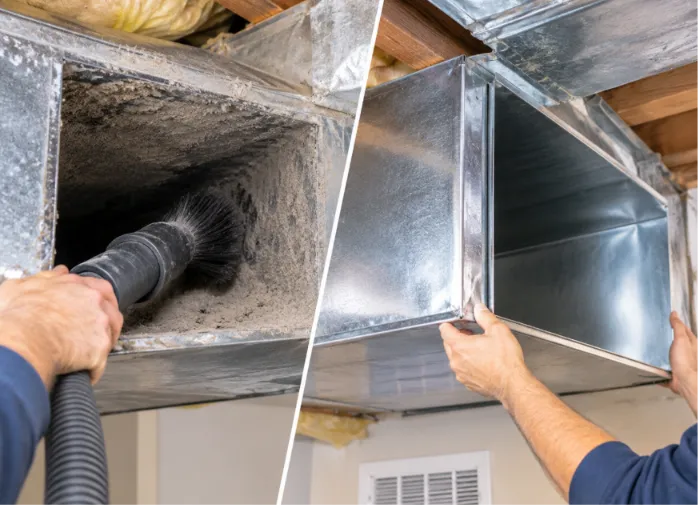
Professional air duct cleaning in Atlanta removes built-up dust, debris and contaminants from the supply and return ducts, registers and the main parts of the air handler. That matters, especially in homes that have never been cleaned, had a remodel, or have visible dust blowing from the vents.
What it does not do is stop dust from being created. Every day your household makes new dust: skin flakes, clothing and bedding fibers, pet dander, cooking residue, tracked-in soil and pollen. The U.S. Environmental Protection Agency notes that dirty air ducts are only one of many possible sources of particles in a home, and it does not recommend routine duct cleaning, only cleaning as needed (EPA guidance on cleaning air ducts). The same guidance points out that it is normal for return registers to look dusty, because dust-laden air is pulled through the grille.
So think of duct cleaning as a reset of one dust source, not a force field around your living room. Whether it was worth it depends on what your ducts looked like before. Our guide to the signs you need air duct cleaning explains what genuinely justifies the service.
8 Reasons Dust Comes Back So Fast After Duct Cleaning
1. A Dirty, Loose or Low-Quality Air Filter
The filter is the only thing standing between your living space and the dust the system pulls in. A clogged filter stops catching particles and restricts airflow. A cheap, thin filter lets fine dust straight through. A filter that does not seat properly lets air slip around its edges, which skips filtration completely.
- Check that the filter size matches the slot and that there is no visible gap around it.
- Most 1-inch filters need replacing every one to three months; homes with pets or during pollen season often need it monthly.
- Many residential systems handle a pleated MERV 8 to 11 filter. Going higher can choke airflow in some systems, so ask your technician before upgrading.
2. Leaky Ducts Pulling in Attic or Crawlspace Dust
This is the most overlooked cause. Ducts in Atlanta homes commonly run through hot attics, crawlspaces and basements. If seams, joints or boots have gaps, the return side can pull in dusty, unfiltered air from those spaces every time the system runs. You can clean the inside of the ducts perfectly and the dust simply comes back through the leaks.
If your cleaning was followed by dust within days, ask whether the system was ever checked for leaks. Read our breakdown of whether duct sealing is worth it in Atlanta, or learn how our duct sealing service closes those gaps. Consumer-advice experts have made the same point for years: cleaning ducts without fixing leaks first can mean the buildup returns quickly.
3. The Cleaning Was Incomplete
A proper job covers the whole air-handling system: supply and return ducts, registers and grilles, the plenum, the blower compartment and the evaporator coil area where accessible. If a crew only vacuumed the vents or cleaned a few accessible runs, dust from untouched sections gets blown back into the house. Ask for before-and-after photos, and check how the provider works against the NADCA standard for duct cleaning.
4. Pets, Shedding and Dander
Dogs and cats shed hair and dander constantly, and that fine material stays airborne long enough to ride your airflow everywhere. Households with pets can see a visible layer on dark furniture within a day or two no matter how clean the ducts are. Brushing pets outdoors, washing pet bedding weekly and vacuuming with a sealed HEPA vacuum all help more than another round of duct work.
5. High Humidity Making Dust Stick and Multiply
Atlanta summers are humid, and humidity changes how dust behaves. Damp air makes particles heavier and stickier, and it supports dust mites and mold growth. The EPA recommends keeping indoor humidity in the 30 to 50 percent range where possible. If your home regularly sits above that, dust will feel constant, and you may also notice a musty smell. If so, read about musty smells from AC vents and mold in air ducts in Atlanta before assuming it is only dust.
6. Carpets, Upholstery, Curtains and Bedding
Soft furnishings act like dust banks. They store particles and release them whenever someone sits, walks or makes the bed. After duct cleaning, you will still be shaking dust out of sofas, rugs and curtains. That is normal household dust, not a duct failure.
7. Outdoor Dust, Pollen and Red Clay Getting Inside
Metro Atlanta has heavy spring pollen, and the red clay soil breaks down into very fine dust that gets tracked in on shoes and blown through every door opening. If your windows and doors leak, or the front door opens often, outside particles walk right back in. During the worst weeks, you can see a yellow-green film within hours. Our guide to air duct cleaning and pollen in Atlanta explains how pollen season interacts with your HVAC system.
8. Remodeling or Construction Nearby
Drywall dust, sanding dust and demolition debris are extremely fine and travel into ducts if the system runs during work. If you renovated, or construction is happening next door, the dust can persist for weeks. Atlanta renovations that involve HVAC, plumbing or electrical work usually require permits through the City of Atlanta; the City of Atlanta technical permit page and the Office of Buildings online permitting page explain how that process works. If you are moving into a renovated or older property, consider cleaning the ducts before moving in.
Dust Causes at a Glance: How to Spot Yours and Fix It
| Likely cause | How to spot it | What actually helps |
|---|---|---|
| Dirty or loose filter | Gray fuzz on the filter, gaps at the edges, weak airflow | Replace with the correct size and a properly fitted pleated filter |
| Leaky ducts | Dust near return grilles, hot or cold rooms, dusty attic or crawlspace | Leak testing and duct sealing |
| Incomplete cleaning | Heavy dust at supply vents within days, no before-and-after photos | Re-clean the full system through a qualified provider |
| Pets | Hair and dander on dark furniture and near pet beds | Grooming, weekly bedding washes, HEPA vacuuming |
| Humidity | Musty smell, window condensation, hygrometer above 50% | Dehumidification and fixing moisture sources |
| Fabrics and carpet | Dust puffs when you sit or shake a cushion | Regular deep cleaning and washing textiles |
| Outdoor dust and pollen | Film worse in spring or after doors and windows open | Door mats, sealed gaps, pollen-season filter changes |
| Renovation dust | Fine white or gray powder after construction | Block vents during work, then clean the system once it is finished |
The 48-Hour Dust Test: Find Out Where Your Dust Comes From
Before you pay for anything else, run this simple test. It takes two days and costs nothing.
- Wipe three spots. Clean a flat surface in a bedroom, the living room and next to a supply vent. Take a quick photo of each.
- Change the filter. Install a correctly sized, properly fitted pleated filter and note the date.
- Keep doors and windows closed for 48 hours and run the system normally.
- Compare the spots. Dust mostly near the vent points to the duct system or leaks. Dust everywhere, especially near windows, doors or soft furnishings, points to outdoor dust, fabrics or pets.
- Check the vents. Shine a flashlight into a supply vent. If you see thick gray fuzz or debris still inside, the cleaning was incomplete.
Quick rule: Dust concentrated at vents suggests a duct problem. Dust spread evenly across the whole house suggests the usual household sources. Both can be true, which is why a technician’s inspection is worth having.
How to Keep Dust Down After Duct Cleaning
- Stay on a filter schedule. Put a reminder in your phone every month and swap when the filter looks gray.
- Vacuum with a sealed HEPA vacuum and wipe surfaces with a damp microfiber cloth instead of a dry duster that only moves dust around.
- Wash bedding weekly in hot water and launder curtains a few times a year.
- Control humidity between 30 and 50 percent. A cheap hygrometer tells you where you stand.
- Use entry mats and a shoes-off habit to keep red clay and pollen outside.
- Seal duct leaks instead of cleaning the same dust again next year. See how often homes should clean ducts in our guide on how often to clean air ducts in Atlanta.
- Clean your dryer vent too, since lint is its own major dust source. Our dryer vent cleaning service handles that.
- Consider air purification if you have allergies. Learn about our air purification options and our guide to duct cleaning for allergy and asthma households.
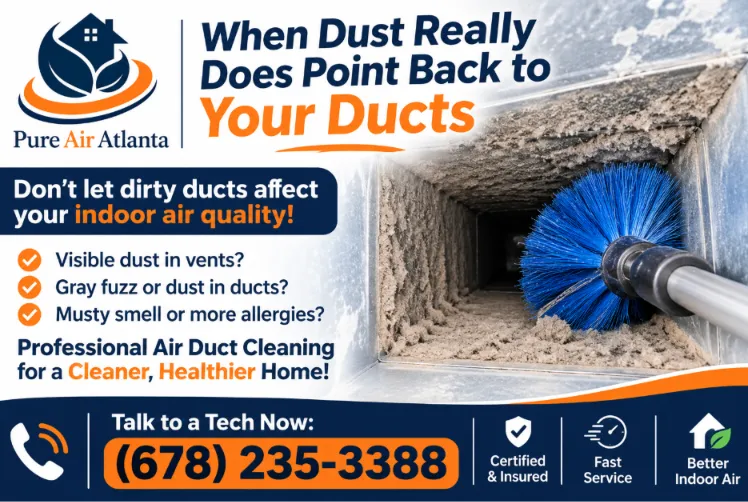
When Dust Really Does Point Back to Your Ducts
Do not rule the ducts out completely. Call for a second look if you see any of the following after a cleaning:
- Visible dust or debris blowing out of the supply registers when the system starts
- Gray fuzz or dirt still coating the inside of the vent boots
- A musty smell or visible mold, which needs a different approach than ordinary dust
- Rooms that are always dustier than others, or uneven airflow
- Crushed, disconnected or damaged duct sections that cleaning cannot fix
If your ducts are old, damaged or contaminated beyond what cleaning can solve, replacement may be the better investment. Compare the two approaches in our guide to duct cleaning versus duct replacement, and see typical numbers in our air duct cleaning cost guide for Atlanta and pricing page. For a deeper system-wide service, see our HVAC cleaning service in Atlanta.
We serve homes across the metro, from Atlanta neighborhoods to the surrounding suburbs on our service locations page.
Still Seeing Dust After Duct Cleaning?
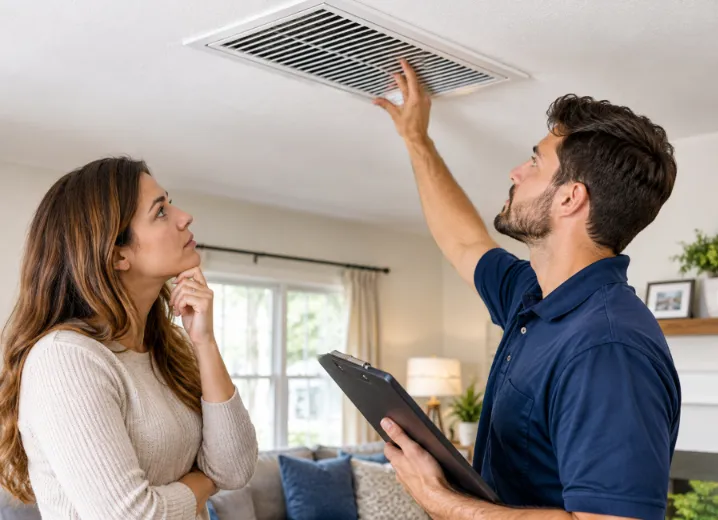
Our Atlanta technicians will inspect the vents, filter and ductwork, and give you an honest answer, even if the fix is not another cleaning.
Frequently Asked Questions About Dust After Duct Cleaning
How soon will dust come back after duct cleaning?
A light layer of dust on surfaces within a few days to a couple of weeks is normal, because everyday household activity creates new dust constantly. If heavy dust is back within a day or two and keeps appearing near the vents, check the filter, look for duct leaks and ask whether the whole system was cleaned.
Why is my house still dusty after duct cleaning?
Most surface dust comes from skin, fabric fibers, pets, outdoor soil and pollen, not from the ducts. Leaky ducts, a poor filter, high humidity and soft furnishings are the usual reasons for a dusty house after duct cleaning.
Does duct cleaning actually reduce dust?
It can, especially when ducts have visible buildup, were never cleaned or just went through a remodel. The EPA says it does not recommend routine duct cleaning and that the benefits depend on the home, so results vary. Cleaning works best together with good filtration and sealed ducts.
Should I change my air filter after duct cleaning?
Yes. Start with a fresh, properly fitted filter, then replace it on a schedule. A dirty filter is one of the fastest ways to bring dust right back.
Can leaky ducts cause dust even after cleaning?
Yes. If the return side has gaps, the system can pull in dusty attic or crawlspace air that never passes through the filter. Sealing the leaks addresses the source instead of cleaning the same dust repeatedly.
Is it normal for dust to blow out of the vents right after cleaning?
A small puff of loosened dust the first time the system starts is possible. Continuous or heavy dust from the supply registers is not normal and is a reason to ask the company to come back.
The Bottom Line on Dust After Duct Cleaning
Dust returning after a duct cleaning does not automatically mean you were ripped off. Most of the time, the real culprits are the filter, leaks, pets, humidity and what comes in from outside. Run the 48-hour test, fix the cheap causes first, and bring in a professional when the evidence points at your ductwork. If you would like a straight answer for your home, call Pure Air Atlanta at +1 678-235-3388 or request a free estimate. You can also browse our FAQ page for more homeowner questions.
HVAC Service Area — ZIP Code Directory
92 ZIP codes served · Tap any ZIP to call +1 (678) 235-3388 · pureairatlanta.com