Updated November 12, 2026 • Written for Atlanta, GA homeowners
Duct Cleaning vs Duct Replacement: The Short Answer
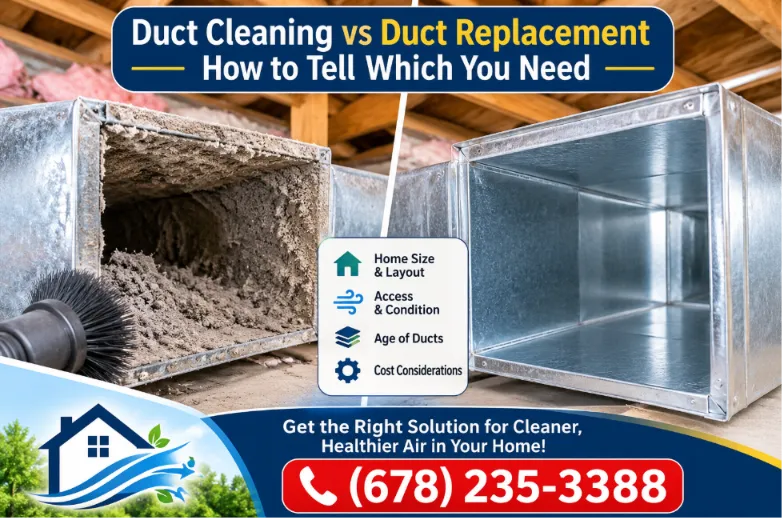
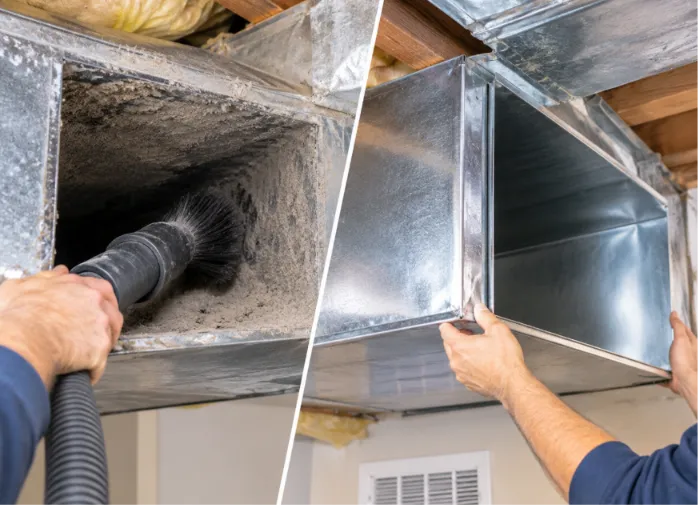
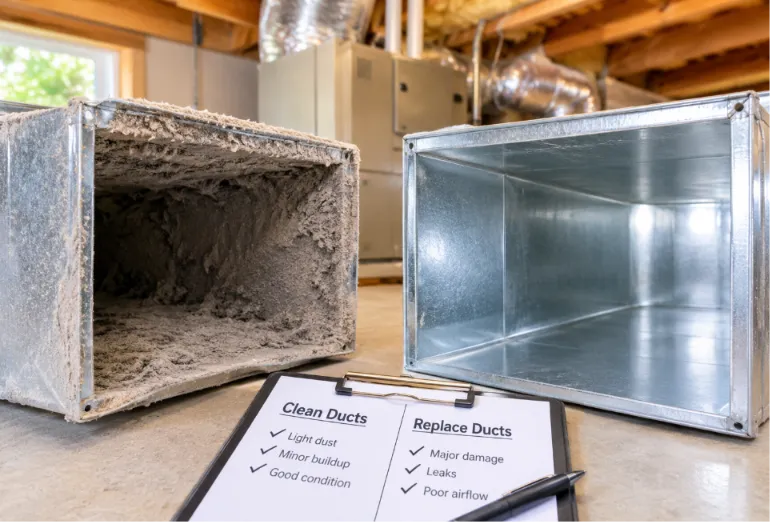
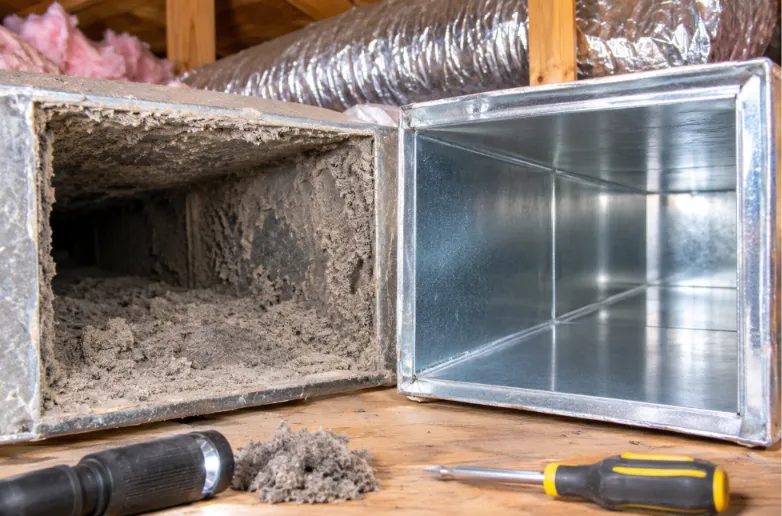
If you are weighing duct cleaning vs duct replacement for your Atlanta home, one rule holds up in almost every house: dirt calls for cleaning, leaks call for sealing, and structural or moisture damage calls for replacement. Most homes only need cleaning, sometimes paired with sealing. A smaller group genuinely needs new ductwork, and that decision should come from what an inspector finds inside your system, not from a sales pitch.
Quick decision guide
- Clean your ducts if they are intact but carry heavy dust, renovation debris, pet hair, pollen or surface mold on sheet metal. Start with our air duct cleaning service in Atlanta.
- Seal your ducts if rooms are uneven, bills feel too high or dust keeps returning. See duct sealing in Atlanta.
- Replace your ducts if runs are crushed, rusted through, soaked, moldy in insulated sections, crumbling inside or undersized for the home.
Atlanta adds its own twist. Humid summers, ductwork running through hot attics and damp crawlspaces, and a housing mix that runs from 1920s bungalows to brand-new builds mean ducts here age in very different ways. The sections below show how to tell which fix your system needs, what each one costs in ranges, and how to avoid paying for work you do not need.
Not sure which one you need?
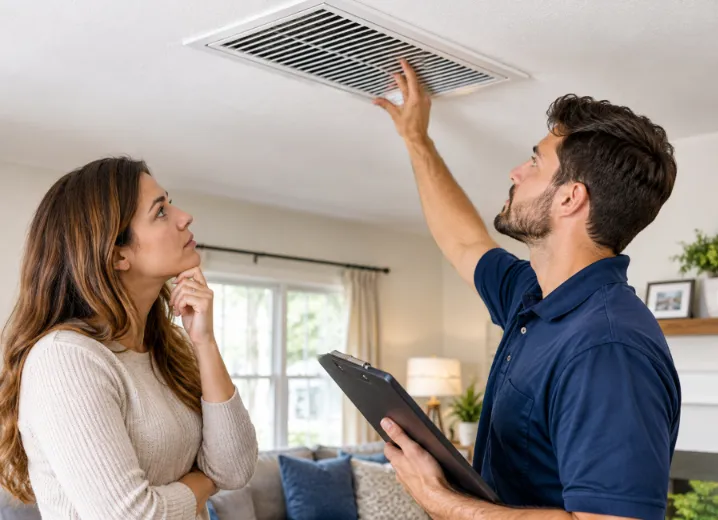
Get an honest inspection first. If cleaning or sealing solves the problem, we will say so.
What Duct Cleaning Actually Fixes (and What It Cannot)
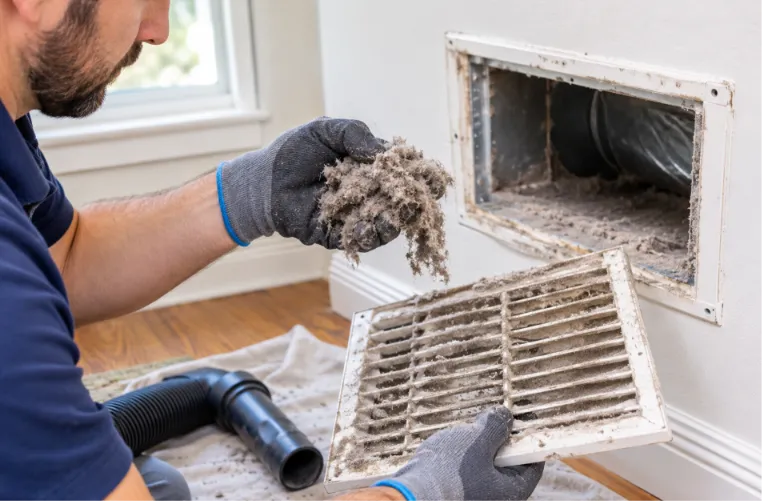
Professional duct cleaning removes dust, debris and contaminants from supply and return ducts, registers and, in a complete job, the blower and coil area. It is a surface treatment for the inside of ducts that are otherwise in good shape. The EPA’s own guidance says you should consider cleaning when there is substantial visible mold in hard-surface ducts, when ducts are infested with vermin, or when they are clogged with dust and debris that is being released from the supply registers. You can read the full guidance in the EPA guide to air duct cleaning.
Cleaning is a good fit when:
- You just finished a remodel or construction and drywall dust got into the system.
- Pets, smokers or heavy spring pollen have loaded the ducts. See our guide to air duct cleaning for pollen season in Atlanta.
- You are moving into a home and do not know its history. Read about air duct cleaning before moving in.
- Someone in the home has allergies or asthma. Our page on duct cleaning for allergy and asthma sufferers in Atlanta covers realistic expectations.
Cleaning cannot fix: leaking seams, disconnected runs, crushed flex duct, wet or moldy insulation, rusted-through metal or a layout that was undersized from day one. If those are the real problems, cleaning only makes a damaged system look tidier. The EPA also does not recommend routine duct cleaning, only cleaning as needed, which is why a proper inspection matters. If you are wondering how often is reasonable, see how often to clean air ducts in Atlanta.
What Duct Replacement Really Involves
Duct replacement means removing failed supply or return ductwork and installing new, correctly sized, sealed and insulated runs. It comes in two forms:
Partial replacement
Only the damaged sections are replaced: a crushed flex run in the attic, a rusted trunk section, or a wet insulated branch. This is often the smartest use of money.
Whole-home replacement
The full duct system is removed and rebuilt. It makes sense when the original design was poor, the material is failing everywhere, or the home was extended without resizing the system.
The cheapest moment to fix ductwork is usually when the equipment is being changed, because the crew already has access and can match duct sizing to the new unit. If you are planning AC replacement in Atlanta, ask for the ducts to be evaluated at the same visit. If your home has no good duct path at all, a ductless system may be the better answer, and our ductless mini-split installation cost guide explains that route.
Duct Cleaning vs Duct Replacement at a Glance
| Factor | Duct Cleaning | Duct Sealing / Repair | Duct Replacement |
|---|---|---|---|
| Solves | Dust, debris, surface contamination | Leaks, loose joints, disconnected runs | Failed, crushed, wet, rusted or badly sized ducts |
| Does not solve | Leaks, damage, poor design | Heavy dirt, collapsed or rotted ducts | Dirty air handler or coil unless cleaned separately |
| Typical visit length | A few hours for many homes | Part of a day to a day | One to several days |
| Disruption | Low | Low to moderate | Moderate to high (attic and ceiling access) |
| Cost level | Lowest | Moderate | Highest |
| Best for | Sound ducts that are dirty | Sound ducts that leak | Ducts that are beyond repair |
If your question is really about which cleaning service to choose, our comparison of air duct cleaning vs HVAC cleaning covers that separate decision.
8 Signs You Need Duct Replacement, Not Just Cleaning
- Insulated or lined ducts that got wet or moldy. The EPA says wet or moldy duct insulation generally cannot be cleaned effectively and should be removed and replaced, and the moisture source must be fixed or the problem returns. See our guide to mold in air ducts after water damage.
- Crushed, kinked, sagging or disconnected flex duct. Cleaning cannot straighten a collapsed run, and a pinched duct starves the room it serves.
- Rust, corrosion or holes in metal trunks. This is common where ducts sit in damp crawlspaces. Holes leak air and pull in whatever is around them.
- A crumbling inner liner. If flakes of liner or plastic show up at registers, aggressive cleaning can make the deterioration worse.
- Rooms that stay uncomfortable after cleaning and sealing. That usually points to undersized or poorly laid-out ducts, a design problem no cleaning can fix.
- Old ducts with repeated repairs. Many industry sources suggest evaluating ductwork around 20 to 25 years of age, sooner for tape-sealed flex duct in hot attics.
- A remodel or addition that was never rebalanced. Extra square footage on an unchanged duct system causes weak airflow and noise.
- Very old duct wrap or tape in pre-1980s homes. Some older insulation and tape can contain asbestos. Do not scrape, cut or vacuum it yourself, and get it tested before any cleaning or replacement.
Safety note: If you see black or green growth on duct board, ceiling stains below a duct, or smell a persistent musty odor, treat the moisture problem first. Read our guide on mold in air ducts in Atlanta, and for HVAC-wide cases see our mold in HVAC system service page. The EPA’s note on duct cleaning and mold stresses that mold control is moisture control.
6 Signs Duct Cleaning Is Enough
- Dust visibly blows out of the supply registers when the system starts.
- The ducts are sheet metal or in good shape, with no crushed or disconnected runs.
- The problem started after construction, a renovation or moving in.
- Pet hair, pollen or lint is the main complaint, not temperature.
- There is no water damage and no wet insulation anywhere in the system.
- Temperatures are even from room to room and airflow feels normal.
If most of these describe your home, review our list of signs you need air duct cleaning in Atlanta and the air duct cleaning cost guide for Atlanta before you book.
The Middle Option Most Atlanta Homeowners Miss: Duct Sealing
The choice is rarely just cleaning or replacement. Leaky ducts are one of the most common problems we see people mistake for “ducts that need replacing.” A leak lets conditioned air escape into the attic or crawlspace and lets dusty unconditioned air get pulled in, which is why dust can come back fast after a cleaning. Sealing the seams with mastic or other proper materials, rather than cloth-backed tape alone, often fixes the symptom at a fraction of the price of new ducts.
Not sure sealing is worth it? Our article is duct sealing worth it in Atlanta walks through when it pays off. For a look at how leakage drives energy loss, see leaky ducts and energy loss, and for cost context read the real duct sealing cost guide for Smyrna. We also publish local duct sealing guides for Lawrenceville and Douglasville.
The best order of operations: fix moisture first, seal leaks second, clean third, and replace only the sections that are truly damaged. Cleaning leaking ducts before sealing them is a half-solution, and replacing ducts that only needed sealing is the most expensive mistake.
How Much Do Duct Cleaning and Duct Replacement Cost?
We quote ranges, not fixed numbers, because the final price depends on the home. For duct cleaning, the main drivers are the number of vents and returns, system count, accessibility and how contaminated the system is. You can see how those factors play out in our air duct cleaning cost breakdown for Atlanta, and our pricing page shows our general ranges.
Duct replacement costs far more, and published industry estimates vary widely. Residential whole-home replacement is commonly quoted from roughly $1,500 to $2,000 on the low end and $5,000 or more for larger or multi-system homes, while replacing only a few damaged runs costs much less. These are general market figures, not a quote from Pure Air Atlanta.
| What drives the price | Cleaning | Replacement |
|---|---|---|
| Home size and layout | More vents and returns add time | More square footage means more runs and trunks |
| Access | Tight attics and crawlspaces add labor | Attic vs crawlspace vs finished ceilings changes labor sharply |
| Material | Minor impact | Flex vs sheet metal, insulation type and sealing method |
| Condition | Heavy contamination takes longer | Partial vs whole-home scope |
| Permits | Normally none | May apply; confirm locally |
Cheap cleaning offers deserve caution too. If you see an ad promising a whole-house cleaning for a tiny flat price, read our explanation of flat-rate air duct cleaning in Atlanta first.
How to Decide Between Duct Cleaning and Replacement in 5 Steps
- Name the symptom. Write down what is actually bothering you: visible dust at the vents, uneven room temperatures, a musty smell, high bills or weak airflow. Dust points toward cleaning, uneven temperatures toward leaks or design, and a musty smell toward moisture.
- Inspect what you can see safely. Look at the registers and any ductwork in the attic or crawlspace for crushed or disconnected runs, rust, wet or stained insulation and loose tape. Stay out of tight or hot attic spaces if you are unsure.
- Identify the duct type and age. Sheet metal, flexible duct and duct board fail in different ways. Older tape-sealed seams and wet duct board are the usual candidates for repair or replacement.
- Ask for evidence. Ask for photos or camera footage of the problem areas. A duct leakage test shows how much air is escaping. Do not approve replacement on a verbal opinion alone.
- Choose the lowest-impact fix that solves the cause. Fix moisture first, then seal leaks, then clean, and replace only the sections that are truly damaged. Full replacement is for failed or badly designed systems.
Permits and Rules: What Atlanta Homeowners Should Know
Cleaning normally does not need a permit. Replacing or altering ductwork is different, because it falls under mechanical (HVAC) work. In the City of Atlanta, the Office of Buildings handles building and trade permits, and its page on getting started with City of Atlanta permitting services lists which HVAC and mechanical repairs are exempt. To apply for a trade permit or ask a question, use the City’s technical permit application page, where electrical, plumbing and HVAC permit questions are directed to 404-865-8550.
Because replacement scope varies, confirm the requirement with the Office of Buildings before work starts, and make sure your contractor pulls permits when they apply. Keep in mind that homes in Marietta, Smyrna, Alpharetta, Roswell and other nearby cities fall under their own local permitting offices, not Atlanta’s.
Red Flags: When a Contractor Pushes Replacement Too Fast
- The quote arrives without anyone opening a register or looking in the attic.
- You are told the EPA “requires” replacement or cleaning. It does not recommend routine cleaning at all.
- No photos, camera footage or leakage test back up the diagnosis.
- The price is a single lump sum with no breakdown of runs, materials or permits.
- Pressure tactics: “today only” pricing or scare stories about the air your family breathes.
- Sealing and cleaning are never mentioned as cheaper options.
For more on vetting a company, see how to choose a reliable air duct cleaning company in Atlanta and our explanation of NADCA air duct cleaning standards.
Questions to Ask Before Approving Either Job
- What exactly did you find, and can you show me photos or footage?
- Would cleaning or sealing solve this at lower cost, and why not?
- Are you recommending partial or whole-home replacement, and which runs?
- What materials and sealing method will you use?
- Will the work be permitted, and who pulls the permit?
- How long will it take, and what happens to the attic or ceilings during the work?
A cleaning job also has timing worth knowing about; see how long air duct cleaning takes. If your concern is the whole system and not only the ducts, our HVAC cleaning service in Atlanta covers the blower, coil and ducts together.
Frequently Asked Questions About Duct Cleaning vs Duct Replacement
Is duct cleaning or duct replacement better for my home?
Neither is better in general. Duct cleaning is the right fix when ducts are structurally sound but dusty or contaminated on the surface. Duct replacement is the right fix when ducts are crushed, rusted through, water-damaged, badly designed or breaking down. In between, duct sealing fixes leaks without the cost of new ductwork. An inspection tells you which one applies.
How do I know if my ducts need to be replaced instead of cleaned?
Look for crushed or disconnected runs, rust or holes in metal trunks, insulation or liners that got wet or moldy, crumbling inner lining, and rooms that stay uncomfortable even after the ducts have been cleaned and sealed. If none of those apply and the main complaint is dust, cleaning is usually enough.
How long do air ducts last?
It depends on the material and the conditions. Many industry sources point to roughly 20 to 25 years as the age when ductwork deserves a serious evaluation, and flexible duct or tape-sealed seams can fail sooner in a hot Georgia attic. Age alone is not a reason to replace; condition is.
Can moldy air ducts be cleaned, or do they have to be replaced?
Per EPA guidance, substantial visible mold on hard-surface (sheet metal) ducts can be cleaned once the moisture source is fixed, but insulated or lined ducts that get wet or moldy generally cannot be cleaned effectively and should be removed and replaced. Our guides on mold in air ducts in Atlanta and black mold in air ducts explain what to look for.
Will replacing my ducts lower my energy bills?
It can, mainly when the old ducts were leaking or badly sized, because conditioned air stops escaping into the attic or crawlspace. We do not promise a specific dollar saving, since results depend on how bad the leaks were and the condition of the rest of the system. Sealing the leaks is often the cheaper way to capture most of that benefit.
Do I need a permit to replace ductwork in Atlanta?
Mechanical (HVAC) permits in the City of Atlanta are handled by the Office of Buildings, and the city publishes a list of exempt repairs. Because duct replacement scope varies, confirm with the Office of Buildings at 404-865-8550 before work starts. Homes in Marietta, Smyrna, Alpharetta and other neighboring cities follow their own local permitting offices.
Next Step: Get an Honest Answer for Your Home
The right answer in the duct cleaning vs duct replacement debate depends on your ducts, not on a rule of thumb. We serve homeowners across Atlanta neighborhoods, including Marietta, Smyrna, Alpharetta, Roswell, Sandy Springs, Decatur, Douglasville and Lawrenceville. If you have questions first, visit our FAQ page or browse all our service locations.
Ready for a straight answer on your ducts?
Call or request a free estimate. We will tell you whether you need cleaning, sealing or replacement.
HVAC Service Area — ZIP Code Directory
92 ZIP codes served · Tap any ZIP to call +1 (678) 235-3388 · pureairatlanta.com