Is Duct Sealing Worth It Atlanta Homeowners Keep Asking About? The Short Answer
So, is duct sealing worth it Atlanta homes actually need? In most cases, yes. If your ducts run through a hot attic or a damp crawl space and your home has uneven rooms or high bills, sealing is one of the cheapest ways to stop paying to heat and cool the wrong places. But it is not a cure-all, and a few homes should skip it. This guide shows you which group you are in before you spend a dollar.
Quick verdict: Duct sealing usually pays for itself when your ducts are accessible, mostly intact, and located outside your conditioned space.
- Typical Atlanta planning cost: about $300 to $2,000 depending on method and access.
- Typical payback: roughly 2 to 4 years in the example below, longer in tight, well-built homes.
- Skip it if the ducts are crushed, undersized, or need replacement. Fix the duct system first.
Want a straight answer for your house? Talk to a local duct pro.
How Much Air Do Leaky Ducts Really Waste?
According to ENERGY STAR’s duct sealing guidance, a typical home loses roughly 20 to 30 percent of the air moving through its duct system to leaks, holes, and poor connections. The same guidance says leaky ducts can reduce heating and cooling efficiency by as much as 20 percent.
Think about what that means during an Atlanta July. Your AC cools the air, then a chunk of it spills into the attic before it ever reaches the bedroom. Your system runs longer to make up the difference, and the room at the end of the line still feels warm.
The leak also works in reverse. On the return side, leaky ducts pull in hot attic air, dust, and humidity. That is why duct leakage is both an energy problem and an air quality problem.
Why Atlanta Homes Are Especially Prone to Duct Leakage
Duct leakage can happen anywhere, but several local conditions make it worse in Metro Atlanta:
- Attic and crawl space ducts. Many Atlanta homes run supply and return ducts through unconditioned spaces, where a small gap leaks conditioned air straight outside the thermal envelope.
- A long cooling season with high humidity. Leaks on the return side can pull moist air into the system, which adds load and can encourage condensation. If moisture is already a concern, read our guide to mold in air ducts in Atlanta.
- Older flex duct and tape-only connections. Original cloth tape dries out and peels over time, and disconnected joints are common in homes that are decades old.
- Contractor shortcuts and later renovations. Past remodels, new equipment, or rushed installs often leave gaps at the plenum, boots, and branch connections.
The same pattern shows up across our service area. We cover it neighborhood by neighborhood in posts like leaky ducts and energy loss in Douglasville, and you can browse the areas we serve on our Atlanta neighborhoods page.
7 Signs Your Atlanta Home Needs Duct Sealing
- Hot or cold rooms. One bedroom never matches the thermostat, especially rooms far from the air handler.
- High summer or winter utility bills with no change in how you use the system.
- A system that runs constantly yet struggles to reach the set temperature.
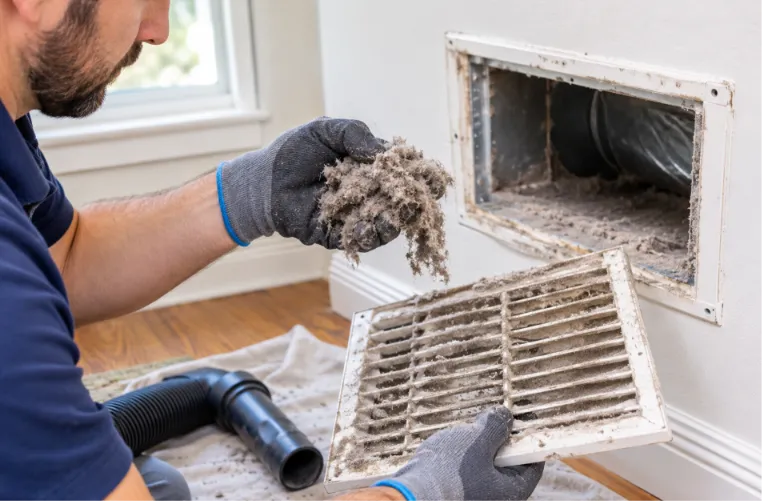
- Dust that returns days after cleaning. Leaky return ducts pull attic dust into your airflow.
- A musty smell at the vents. This can point to moisture or contamination. See our post on the musty smell from AC vents.
- Visible gaps, peeling tape, or disconnected ducts in the attic or crawl space.
- Whistling, rattling, or weak airflow at some registers.
If several of these sound familiar, compare them with the signs you need air duct cleaning in Atlanta, because the symptoms overlap and many homes need a check on both.
How Much Does Duct Sealing Cost in Atlanta?
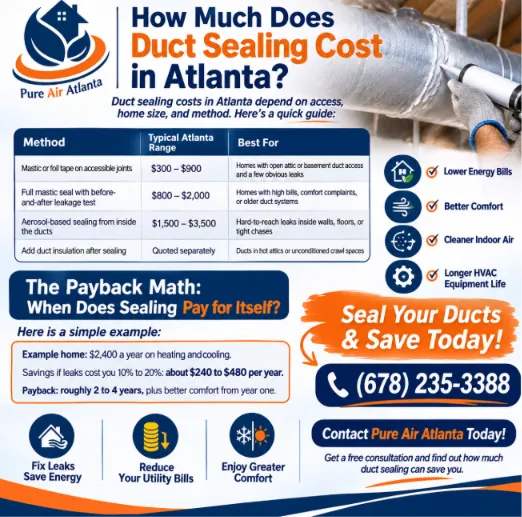
Duct sealing cost in Atlanta depends on access, home size, and method. The ranges below are typical planning figures to help you budget, not a quote. Your final price depends on what the inspection finds.
| Method | Typical Atlanta range | Best for |
|---|---|---|
| Mastic or foil tape on accessible joints | $300 – $900 | Homes with open attic or basement duct access and a few obvious leaks |
| Full mastic seal with before-and-after leakage test | $800 – $2,000 | Homes with high bills, comfort complaints, or older duct systems |
| Aerosol-based sealing from inside the ducts | $1,500 – $3,500 | Hard-to-reach leaks inside walls, floors, or tight chases |
| Add duct insulation after sealing | Quoted separately | Ducts in hot attics or unconditioned crawl spaces |
Want to see how we present ranges? Our pricing page explains what moves a job up or down. For a smaller local breakdown, see the real duct sealing cost in Smyrna. If you are also thinking about a cleaning, our air duct cleaning cost in Atlanta guide covers that side of the budget.
The Payback Math: When Does Sealing Pay for Itself?
Here is a simple, illustrative example. Your numbers will differ, but the logic holds.
Example home: $2,400 a year on heating and cooling.
Savings if leaks cost you 10% to 20%: about $240 to $480 per year
Example job cost: $900 for a mastic seal.
Payback: roughly 2 to 4 years, plus better comfort from year one.
This is an example, not a guarantee. Savings are larger in leaky homes with attic ducts and smaller in tighter, newer systems. ENERGY STAR notes that sealing and insulating ducts can often pay for itself in energy savings.
The less obvious payoff is comfort. Fixing leaks sends more air to the far rooms, so you can often run the system less without feeling the difference. It also reduces strain on the equipment, which matters if you are trying to get more life out of an older unit before an AC replacement.
When Duct Sealing Is Not Worth It
Honest advice matters more than a quick sale. Sealing is a poor investment in these cases:
Worth it
Ducts in an attic or crawl space, mostly intact, with high bills, uneven rooms, or dust and humidity issues.
Maybe
Ducts already inside conditioned space, or a newer home that passed a leakage test. Test first, then decide.
Skip it
Crushed, undersized, or badly designed ducts, or ducts with heavy mold or water damage that need replacement.
- The duct design is the real problem. Sealing an undersized or poorly routed system just gives you a tight version of a bad system. Redesign or replacement may be the better money.
- There is active mold or water damage. Remediate first. Our mold in HVAC system service explains what that process involves.
- The equipment is at end of life. If a replacement is coming soon, ask the contractor to inspect and seal the ducts as part of that project instead of paying twice.
Duct Sealing vs. Duct Cleaning: What Is the Difference?
These two services solve different problems, and homeowners often confuse them.
| Service | What it fixes | Learn more |
|---|---|---|
| Duct sealing | Air leaks, wasted energy, uneven rooms, outside air and dust being pulled in | Duct sealing in Atlanta |
| Air duct cleaning | Dust, debris, and contamination already inside the ducts | Air duct cleaning in Atlanta |
| HVAC cleaning | Coil, blower, and the wider system, not just the ducts | HVAC cleaning in Atlanta |
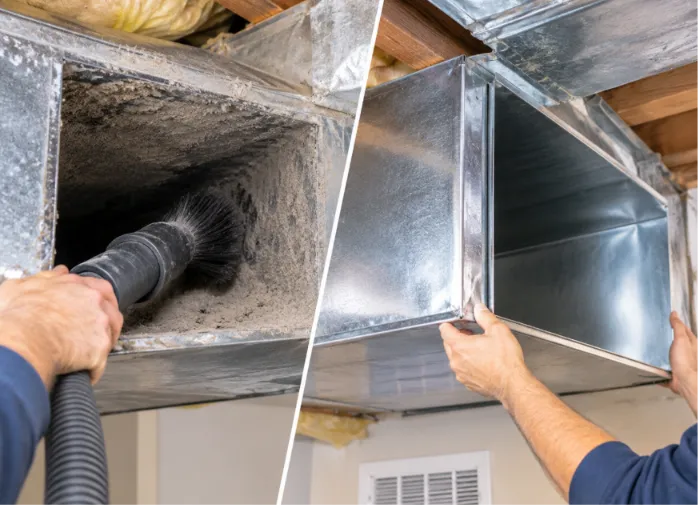
If your ducts are visibly dirty, clean first and seal second. Sealant bonds best to clean surfaces. Not sure whether cleaning is even needed? Read is air duct cleaning worth it and air duct cleaning vs. HVAC cleaning. If you do need a cleaning, our guide on how often to clean air ducts in Atlanta helps you plan the timing.
Mastic, Foil Tape, or Aerosol: What Actually Works?
- Mastic sealant. A paste applied by hand to seams and joints. It flexes with the duct and is a favorite for long-lasting repairs on accessible ductwork.
- UL-listed metal or foil tape. Good on clean, smooth metal joints when installed correctly.
- Aerosol sealing. Seals leaks from the inside of the system, which helps when the leaks are buried where hands cannot reach.
- Cloth duct tape. Avoid it. ENERGY STAR advises against standard duct tape because it does not last.
After sealing, ducts in unconditioned areas should also be insulated. ENERGY STAR guidance recommends insulation with an R-value of 6 or higher, and local code may call for more, so ask your contractor which level applies to your home.
Does Atlanta Require a Permit for Duct Work?
Rules depend on the scope of work. The City of Atlanta lists certain repairs to existing equipment as exempt in its permit exemption list for existing homes, while new or modified HVAC installations generally need a mechanical permit. If your project goes beyond sealing leaks, such as replacing or rerouting ducts, check the Office of Buildings online permitting guide or start from the City of Atlanta technical permit application.
A licensed contractor should tell you upfront whether your job needs a permit and who pulls it. If they will not answer that question, treat it as a warning sign.
How to Hire a Duct Sealing Contractor in Atlanta
- Ask for a duct leakage test. A duct blaster test measures how much air escapes. Testing before and after gives you proof the work actually helped.
- Confirm the materials. You want mastic or UL-listed metal tape, not cloth tape.
- Get the scope in writing. It should name the areas sealed, the method, and any insulation included.
- Verify the license and insurance. HVAC work in Georgia should be done by a properly licensed contractor.
- Check the company’s track record. Meet the people who do the work on our technician page and read what customers say on our testimonials page.
Compare your options in the same way for related services. Our guides on choosing the best air duct cleaning company in Atlanta and how to pick a reliable duct company apply the same checklist.
Duct Sealing Near You: Local Guides
We serve homeowners across Metro Atlanta. If you want details for your area, start with these pages:
- Duct sealing in Douglasville, GA and the Douglasville duct sealing service page
- Duct sealing in Lawrenceville, GA
- Duct sealing cost in Smyrna, GA and the Smyrna duct sealing service page
- Duct sealing in Roswell, duct sealing in Marietta, and duct sealing in Alpharetta
Duct Sealing Questions Atlanta Homeowners Ask
How much does duct sealing cost in Atlanta?
Most Atlanta homeowners should plan on roughly $300 to $900 for sealing accessible leaks with mastic or foil tape, $800 to $2,000 for a full mastic seal with before-and-after leakage testing, and $1,500 to $3,500 for aerosol-based sealing. Final pricing depends on duct access, home size, and how many leaks the test finds.
Will duct sealing lower my energy bill?
Usually, yes. ENERGY STAR reports that leaky ducts can cut heating and cooling efficiency by as much as 20 percent. The size of your savings depends on how leaky the ducts are and where they run. Ducts in a hot attic or a crawl space tend to waste the most energy.
Should I clean or seal my ducts first?
If the ducts are visibly dusty, moldy, or have not been cleaned in years, clean them first and seal them second. Sealing over dirt weakens adhesion, and cleaning after sealing can stress fresh seals.
Can I seal my ducts myself with duct tape?
Cloth duct tape is a poor choice because it dries out and peels. ENERGY STAR recommends mastic sealant or metal tape instead. Most leaks sit in hot attics and tight crawl spaces, so many homeowners hire a professional for both safety and a better seal.
How long does duct sealing last?
Properly applied mastic on clean duct surfaces typically holds for many years, often for the life of the duct system. Cheap tape tends to lose adhesion much sooner.
Does duct sealing improve indoor air quality?
It can. Sealed ducts pull in less attic dust, crawl space moisture, and insulation fibers. Sealing does not replace duct cleaning, so homes with allergies or visible contamination often benefit from both. See our guide to air duct cleaning for allergy and asthma in Atlanta.
How do I know if my ducts are leaking?
Common signs include hot or cold rooms, high utility bills, dusty rooms, a musty smell from the vents, and visible gaps or disconnected joints. The only way to measure leakage accurately is a duct leakage test, often called a duct blaster test. More answers are on our FAQ page.
The Bottom Line: Is Duct Sealing Worth It in Atlanta?
For most Atlanta homes with attic or crawl space ducts, duct sealing is worth it. It cuts wasted energy, evens out room temperatures, and reduces the dust and humidity your system pulls in. The smart move is to test first, fix the right problem, and skip sealing when the duct system needs replacement instead. If your AC is also acting up, a quick look at our AC repair service can rule out an equipment problem at the same visit.
Ready to find out if your ducts are leaking? Get an honest assessment.
HVAC Service Area — ZIP Code Directory
92 ZIP codes served · Tap any ZIP to call +1 (678) 235-3388 · pureairatlanta.com